



叶片突变相关基因可直接参与叶绿素的生物合成、降解及叶绿体发育调控[1],是解析上述通路分子机制的理想研究材料。近年来,多种作物叶色突变基因的克隆与功能解析,推动了叶色变异机理的研究进展。玉米中已鉴定elm1、elm2、vyl-Chr.1、vyl-Chr.9和Zmet9等叶色突变基因[2
本研究以甲基磺酸乙酯(ethyl methyl sulfonate,EMS)对玉米自交系B73诱变获得的玉米黄化突变体et10为材料,开展表型鉴定、光合色素测定、叶绿素相对含量(SPAD值)测定和叶绿体超微结构观察等工作,并利用et10与玉米自交系Mo17构建F2和BC1F1群体,开展遗传效应分析及基因定位研究,筛选到与突变基因连锁的分子标记,逐步缩小定位区间。研究结果为ZmET10的候选基因验证、克隆及功能解析奠定了基础,也为揭示叶色突变体的分子调控机制提供了理论依据。
1 材料与方法
1.1 试验材料
试验材料包括玉米自交系Mo17、B73(野生型)及黄化突变体et10(B73-EMS),其中et10由中国农业大学国家玉米改良中心提供。突变体et10出苗即表现黄化,全生育期不返绿、不致死,雌雄穗发育正常,可正常授粉结实,长势弱于野生型。以Mo17为父本与et10杂交获得F1,再以F1回交et10构建BC1F1分离群体,用于遗传分析和基因定位。
1.2 试验方法
1.2.1 田间种植与表型调查
2023年度,于海南省陵水县南繁育种基地设置田间试验。参试材料包括B73、et10、F1及F2群体,统一采用行长3.00 m、行距0.50 m、株距0.25 m的种植规格。其中,B73与et10各种5行,F1群体种15行(定苗150株),F2群体种30行(定苗300株)。于苗期(三叶一心)对F2群体进行叶色表型分类统计(以叶片黄化为突变型、绿色为野生型),并运用卡方检验解析其遗传规律。成熟期进一步调查记录农艺性状表型数据,包括株高、穗位高、雄穗分枝数、总叶片数、穗长、穗粗、穗行数、轴粗以及关键生育期节点(抽雄、散粉、吐丝)距出苗的天数。
1.2.2 野生型和突变体et10光合色素的测定
取五叶期突变型和野生型植株第3片叶成熟区(顶部)约2 cm2的组织,避开叶脉剪成2 mm的长条,置于10 mL 80%的丙酮溶液中,黑暗浸提24 h至叶片完全脱色为白色。使用UV-1800分光光度计(MAPADA,中国)在645、663和470 nm波长下分别测定叶绿素a(CChl.a)、叶绿素b(CChl.b)和类胡萝卜素含量(CCX-C),计算公式为CChl.a= 12.27×A663-2.69×A645;CChl.b=22.9×A645-4.68×A663;CCX-C=(1000×A470-3.27×CChl.a-104×CChl.b)/229。色素的含量(mg/cm2)=(光合色素的浓度×提取液体积×稀释倍数)/样品面积[20]。
1.2.3 叶绿体超微结构电镜观察
1.2.4 ZmET10基因初定位与精细定位
以et10与Mo17杂交构建F2分离群体,成株期分别选取叶片黄化、叶片绿色的植株各50株,构建2个混合样品池。取样时将叶片用锡箔纸包好并立即用液氮速冻,送至博云华康科技股份有限公司进行BSR-Seq测序。采用DISTANCE方法拟合ΔSNP-index,然后基于关联阈值,选择超过阈值的区域作为性状关联区段。计算公式为SNPindex(aa)=Maa/(Maa+ Paa),式中,Maa表示aa池来源于母本的深度;Paa表示aa池来源于父本的深度;SNPindex(ab)= Mab/(Mab+Pab),式中,Mab表示ab池来源于母本的深度;Pab表示ab池来源于父本的深度;ΔSNPindex(ab)=SNPindex(aa)-SNPindex(ab)。在完成初定位后,基于Mo17和B73的遗传差异,筛选SSR标记并开发KASP标记,对所构建的F2群体中表现为隐性黄化表型的单株进行基因型检测,逐步缩小定位区间。ZmET10基因定位所需引物见表1。
表1 ZmET10基因定位相关引物
Table 1
| 引物Primer | F-序列(5-3′)F-sequence (5-3′) | R-序列(5-3′)R-sequence (5-3′) |
|---|---|---|
| umc1739 | CAAAAAGCTTTAGTTTTTACAGGCAGA | GCGTGTAATTTGCTCCTTCTTCTT |
| bnlg1712 | CTCAGGCTTCACGTGGGTTT | GTTACACTCCCCTGCCAAAA |
| umc1911 | CCCGGAAGCTGTTTTCTTTTTAAT | CGATCTGGAACGTAAGGATCATCT |
| umc1453 | AATACCAAGCTGCACTCAGAAACC | CGTCAAATCCAGCCTAAGCATC |
| umc1330 | AGCAAAGAAGCCAAAGAGCAACT | GTCACCACCGTCTGCTGGTA |
| umc1930 | TCTTCTCCAAGTGTGTTAATGCCC | CACACAGTGAGTCGTTTCTTTCGT |
| bnlg1074 | CATGCTAATAGCCTACCGGG | TTTCCCCCTGATTCGTTATG |
| umc1506 | AAAAGAAACATGTTCAGTCGAGCG | ATAAAGGTTGGCAAAACGTAGCCT |
| umc2221 | ATAATGCTACACTTTTGCGGGGTT | CAGGCGGATAAGAATGACGAGTAG |
| bnlg2190 | TCCTCCTTCATCCCCTTCTT | CCCAGTATCATTGCCCAATC |
| indel-48 | GGCATGCTCCATTAGATCGT | CCGAGAATAGCCACTCAAGC |
| indel-61 | TAGACCTTTTGCCGAGTGCT | CGCGCGATCTCTTATCATTA |
| indel-62 | GCTTCCAAGCATCGTAATCC | GCCTTCGAGCCAACAATAAC |
| indel-64 | ATGCCGCAGTCGTCGCCGAGC | CACTCCTACAAGCAAATAGATT |
| indel-69 | TGCATCGTCATAATCTGAAGC | CTTTCAAACTCCTACCGTGCT |
2 结果与分析
2.1 玉米黄化突变体et10的表型鉴定及农艺性状分析
相较于野生型B73的正常深绿色表型,黄化突变体et10在全生育期均呈现稳定的金黄色(图1)。该黄化特征不仅表现于叶片,还延伸至茎秆、苞叶及花药等组织器官(图1)。与部分导致白化致死的叶色突变不同,et10虽生长势明显减弱,但仍能完成正常生长发育。其雌、雄穗发育协调,花药饱满且花粉量正常,自交结实良好,表明该黄化性状具有稳定的遗传特性。对关键农艺性状的统计分析(表2)表明,et10的株高与穗位高较野生型极显著降低,分别降低50.06和21.13 cm。在营养器官方面,突变体单株叶片数较野生型平均减少1片,穗位叶的叶长与叶宽亦显著减小,而雄穗分枝数则无显著差异。在生殖生长进程方面,et10的生育期出现明显延迟,其出苗至抽雄、散粉及吐丝的天数均较野生型推迟3~4 d。经济产量性状受损严重,主要表现为穗长缩短1.42 cm,百粒重降低7.04 g,穗重下降34.63 g,最终导致单株产量损失接近50%。
图1
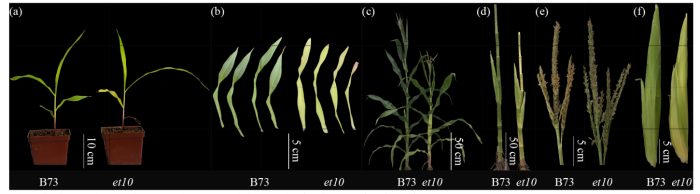
图1
野生型B73与玉米黄化突变体et10田间表型调查
(a) 苗期表型;(b) 苗期叶片;(c) 成株期;(d) 茎秆;(e) 雄穗分枝;(f) 未成熟果穗。
Fig.1
Phenotype investigation of wild-type B73 and maize etiolation mutant et10 in the field
(a) seedling phenotype; (b) seedling leaves; (c) silking period; (d) stalks; (e) tassel branches; (f) immature female ear.
表2 et10及其亲本B73农艺性状考察分析
Table 2
| 性状 Trait | B73 | et10 | P值 P-value |
|---|---|---|---|
| 株高Plant height (cm) | 175.69±9.51 | 125.63±12.86 | 4.08E-21** |
| 穗位高Ear height (cm) | 66.75±5.56 | 45.62±9.57 | 2.16E-09** |
| 雄穗分枝数 Number of tassel branches | 4.69±0.93 | 4.43±1.24 | 0.24 |
| 单株叶片数 Number of leaves per plant | 13.56±0.78 | 12.33±0.54 | 1.51E-08** |
| 叶长Length of leaf (cm) | 73.31±4.68 | 65.94±4.17 | 3.51E-06** |
| 叶宽Width of leaf (cm) | 8.18±0.67 | 8.54±0.70 | 0.05* |
| 穗长Ear length (cm) | 9.25±1.10 | 7.83±1.11 | 0.0006** |
| 穗重Ear weight (g) | 73.01±8.04 | 38.38±7.17 | 4.49E-10** |
| 百粒重100-grain weight (g) | 25.91±1.37 | 18.87±2.03 | 2.71E-09** |
| 抽雄天数Days to tasseling (d) | 75.52±1.62 | 78.69±1.57 | 2.54E-07** |
| 散粉天数Days to shedding (d) | 77.71±1.43 | 80.59±1.51 | 3.17E-11** |
| 吐丝天数Days to silking (d) | 78.54±1.32 | 82.97±1.41 | 4.12E-16** |
“*”和“**”分别表示在P < 0.05和P < 0.01水平差异显著。下同。
“*”and“**”indicate significant differences at P < 0.05 and P < 0.01 levels, respectively. The same below.
2.2 et10的遗传学分析
用B73和Mo17分别与et10杂交进行遗传学分析,结果显示,F1植株均表现为野生型,叶色为绿色,而F2群体野生型和突变体的分离比为3:1(表3),卡方检验结果符合孟德尔隐性遗传定律,表明et10黄化突变表型受1对隐性核基因控制,命名为ZmET10(Zea mays etiolation 10)。
表3 2个杂交组合F1和F2群体的分离
Table 3
| 组合 Combination | 群体Population | 比率 Ratio | 卡方 χ2 | P值 P-value | ||
|---|---|---|---|---|---|---|
| F1 | F2 | |||||
| WT | et | |||||
| B73×et10 | 绿色 | 217 | 74 | 2.9 | 0.31 | 0.65 |
| Mo17×et10 | 绿色 | 206 | 62 | 3.3 | 0.32 | 0.53 |
2.3 et10的光合色素含量测定
光合色素的含量直接影响叶色与光合效率,其含量降低会引起光合速率下降,最终造成植物早衰、产量下降甚至死亡。采用分光光度法对叶片光合色素含量进行检测,发现相较于野生型B73,突变体et10的叶绿素b、叶绿素总量以及SPAD值均表现出显著的降低趋势,但叶绿素a含量无显著差异(图2),表明et10属于总叶绿素缺陷型突变体。光合色素的吸收、传递和转化功能是光合作用进行的基础,光合色素含量的显著减少直接抑制光合作用,是出现黄化表型的重要生理原因。
图2
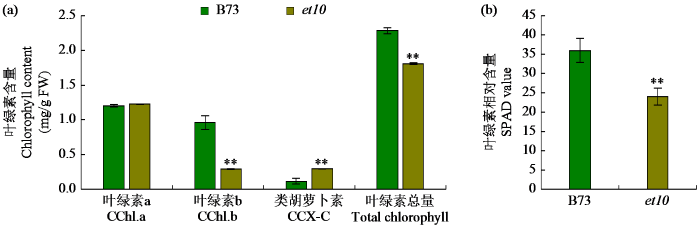
图2
野生型B73与突变体et10色素含量
“**”表示在P < 0.01水平差异显著。
Fig.2
Pigment contents of wild-type B73 and mutant et10
“**”indicates extremely significant differences at P < 0.01 level.
2.4 et10的叶绿体结构分析
图3
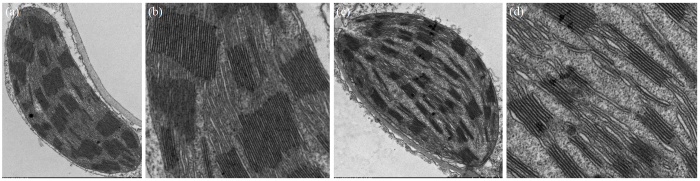
图3
透射电镜下的野生型B73和突变体et10叶绿体结构
Fig.3
Chloroplast structure of wild-type B73 and mutant et10 under transmission electron microscope
2.5 ZmET10初定位与精细定位
从et10×Mo17 F2群体中各取50株野生型与突变型单株叶片,构建混池进行转录组测序。基于贝叶斯算法的BSR-Seq分析将目标基因锁定在第10号染色体122~141 Mb区间内,该区域由10个显著关联峰段组成,总跨度约19 Mb(图4)。
图4
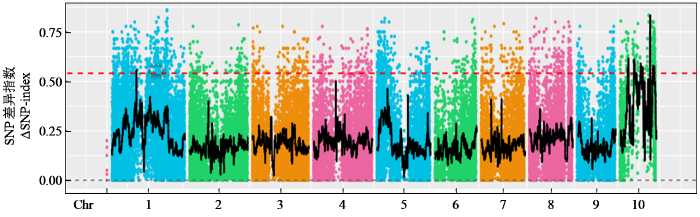
图4
BSR-Seq分析揭示黄化突变基因ZmET10的遗传定位
Fig.4
The genetic mapping of the etiolation mutant gene ZmET10 revealed by BSR-Seq
为进一步验证BSR-Seq的结果并缩小定位区间,根据Mo17和B73在目标区间内的遗传多态性,在目标区段筛选10个SSR标记,并利用et10和Mo17杂交并和et10回交获得的包含324个单株的BC1F1群体,进行重定位验证,将ZmET10锁定在umc1930~umc1506约2.9 Mb范围内(图5a)。基于区间内基因序列差异,进一步开发了5个标记indel-48、indel-61、indel-62、indel-64和indel-69,以3560个BC1F1单株为群体,筛选得到的1628株黄化单株为材料进行精细定位,共鉴定出12个在目标区间内产生了遗传交换的关键单株,包含7种交换类型。最终通过分析这些交换事件的边界,将ZmET10精确定位在标记indel-62和indel-69之间仅30.2 kb的基因组区间内,该区间共包含7个候选基因(图5b)。
图5
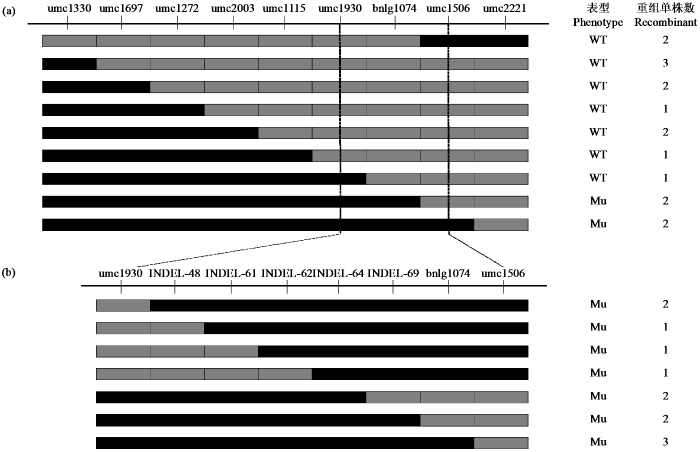
图5
ZmET10的精细定位
WT:野生型;Mu:突变体。
Fig.5
Fine mapping of ZmET10
WT: wild-type, Mu: mutant.
位于精细定位区间的7个基因中,Zm00001d025863编码1个光依赖性短下胚轴蛋白(表4),与拟南芥LSH3基因同源,参与光的形态建成,通过调控COP1蛋白的稳定性影响下胚轴的伸长[22],Zm00001d025864编码MYB结构域蛋白,与拟南芥基因AtMYB15同源,参与细胞分化、代谢途径及胁迫响应等过程,提高MYB结构域蛋白的表达,可增强植物对低温胁迫的耐受能力[23-24]。Zm00001d025868编码细胞分裂素核苷5′-单磷酸磷酸核糖水解酶,其主要功能是能够催化无活性的细胞分裂素核苷酸转化为有活性的细胞分裂素,而细胞分裂素可以延缓蛋白质和叶绿素的降解,从而延缓叶片的衰老过程,因此将Zm00001d025868作为ZmET10的重要候选基因。
表4 精细定位区间内的7个基因
Table 4
| 基因ID Gene ID | 位置Locus | 功能描述Functional description |
|---|---|---|
| Zm00001d025863 | 131891540~131892317 | 光依赖性短下胚轴蛋白 |
| Zm00001d025864 | 131914989~131917182 | MYB结构域蛋白 |
| Zm00001d023172 | 131919025~131919626 | 未知功能蛋白 |
| Zm00001d025865 | 131993604~132007438 | 肌醇磷酸神经酰胺葡萄糖醛酸基转移酶1 |
| Zm00001d025866 | 132009297~132012863 | 核小核糖核蛋白家族蛋白 |
| Zm00001d025867 | 132084448~132087460 | 未知功能蛋白 |
| Zm00001d025868 | 132094786~132098109 | 细胞分裂素核苷5′-单磷酸磷酸核糖水解酶 |
3 讨论
3.1 et10不同于其他黄化突变体类型
在玉米中目前已报道elm1、elm2、ygl-1、vyl和nec-t等5种典型的叶色突变体。淡绿叶突变体elm1具有中胚轴伸长、幼苗叶片及节间淡绿、株高增加等多重表型,并伴随光敏色素缺陷,ELM1基因参与叶片发色团合成通路,其突变会影响色素蛋白合成酶的正常生物合成[25]。elm2黄绿叶突变体的叶片呈现黄绿色,对红光/远红光信号异常,在持续红色/远红色光的环境下会出现细长的中胚轴[3]。ygl-1黄绿叶突变体,因叶绿素合成酶基因YGL1发生变异导致叶绿素合成酶活性下降,使得叶绿素合成速度减缓,叶绿素含量降低,表现为黄绿叶[26]。黄叶突变体vyl在出苗后即为黄化植株,但约14 d后叶色可自行复绿至与野生型无异。该表型的持续时间因遗传背景而异,B73背景下黄化期较短;回交导入PH09B后,温室中黄化期延长,田间种植则导致植株逐渐死亡[4]。nec-t黄化类病变突变体表现为黄绿色的幼苗在叶尖出现坏死,并逐渐扩展至整片叶子,最终导致幼苗死亡[27]。本研究中的黄化突变体et10出苗即表现为稳定黄化,叶鞘及茎秆发黄,尤其是茎秆表现为金黄色,花药和雌穗苞叶也表现出明显的黄化表型,且全生育期不返绿、不致死。与野生型相比,突变体et10生长较为迟缓,抽雄、散粉、吐丝等生育期推迟3~4 d,雌穗长度减少1.42 cm,百粒重减少7.04 g,穗重减少34.63 g,产量下降约50%。生理指标显示,et10仅叶绿素b、类胡萝卜素含量及SPAD值显著降低,叶绿素a无明显变化,区别于et9等叶绿素a、叶绿素b及叶绿素总量均显著降低的突变体[5]。因此,本研究推测et10属于有别于已报道的5种典型叶色突变类型的特异性黄化突变体,丰富了玉米的叶色突变基因资源以及突变体类型,可为深入研究叶绿体发育及叶绿素合成提供新材料。
3.2 ZmET10可能是一个新的调控玉米叶色的遗传位点
在玉米第10号染色体已报道GUN4、Oy1、Y9和W2等多个叶色相关调控位点[28]。GUN4编码的卟啉结合蛋白在叶绿素生物合成与细胞内信号转导过程中发挥双重调控作用。该蛋白能够直接作用于镁螯合酶(MgCh)的催化亚基CHLH,一方面增强MgCh的活性,另一方面可同时结合其底物原卟啉Ⅸ(Proto Ⅸ)及产物镁原卟啉Ⅸ(Mg-Proto Ⅸ),从而实现对叶绿素合成通路的精准调控[29]。半显性油黄1号(Oy1)突变体幼苗呈暗绿色或黄色,其中隐性纯合表现为亮黄致死,杂合则为深黄绿色,生长至成熟期时可能与野生型相似。Oy1在将原卟啉IX转化为镁原卟啉IX的过程中存在缺陷,该步骤是叶绿素生物合成的首个关键环节。带有显性Oy1玉米等位基因的ZmChlI蛋白发生特定氨基酸替换后,不仅会丧失镁螯合必需的催化活性,还会以竞争性抑制的方式干扰野生型ZmChlI蛋白的正常功能,最终表现出半显性表型[19]。Y9编码植物类胡萝卜素生物合成所必需的Z-ISO异构酶,在胡萝卜素异构化反应的上游发挥作用[30]。W2编码1种预测的细胞器DNA聚合酶[31]。
本研究在玉米第10号染色体上,新鉴定到1个调控玉米叶色表型的遗传位点,并将其限定在长度为30.2 kb的物理区间内。一方面,其物理位置与已报道的叶色调控区段不存在重合;另一方面,与已有研究不同的是,et10突变体仅叶绿素b、类胡萝卜素含量及SPAD值显著降低,而叶绿素a含量未呈现显著差异。在本研究中的定位区间内,包含7个候选基因,其中2个基因功能未知。值得注意的是,Zm00001d025868编码细胞分裂素核苷5′-单磷酸磷酸核糖水解酶,可以将无活性的细胞分裂素核苷酸转化为有活性的细胞分裂素。已有研究[32]表明,细胞分裂素可以加快叶片的绿化速率,推动黄化质体向成熟叶绿体发育,此外,细胞分裂素还可通过调控叶绿素合成基因(如HEMA1、GUN4、GUN5和CHLM)表达以维持四吡咯生物合成途径(即叶绿素合成通路)中代谢物的稳态水平,在此过程中,HEMA1基因表达上调增强了其编码的谷氨酰-tRNA还原酶的活性,该酶是叶绿素合成的关键酶之一。在拟南芥中,细胞分裂素信号通路可直接调控叶绿体的发育,其中细胞分裂素受体蛋白AHK2和AHK3起到核心介导作用,而B型响应调节因子ARR1、ARR10和ARR12则负责在黄化质体向叶绿体转换过程中完成转录输出。进一步研究发现,B型ARRs可直接结合HEMA1和LHCB6基因的启动子区域,表明依赖细胞分裂素的转录因子可直接调控叶绿素合成及捕光复合体相关基因的转录水平。上述结果共同证明,细胞分裂素信号通路通过对叶绿素合成相关基因的直接转录调控,在叶绿体发育过程中承担重要功能[32-33]。因此,本研究将Zm00001d025868确定为ZmET10的关键候选基因,并推测细胞分裂素可通过负调控叶绿素分解酶相关基因的表达,诱导叶绿素的降解,是一种新的调控黄化表型的遗传机制,但仍需进一步研究。
4 结论
将玉米黄化突变体et10的控制基因ZmET10精细定位于第10号染色体indel-62与indel-69之间30.2 kb的区间内,该区间包含7个候选基因。其中Zm00001d025868编码细胞分裂素核苷5′-单磷酸磷酸核糖水解酶,其功能缺失可能降低活性细胞分裂素的水平,导致叶绿体结构异常,类囊体堆叠紊乱,进而导致突变体叶绿素b、SPAD值及叶绿素总量显著降低,最终表现为植株黄化、生长势减弱、生育期延迟及产量显著降低。ZmET10是一个新的玉米叶色调控遗传位点,其定位区间和表型特征均不同于第10号染色体上已报道的其他叶色相关基因,为解析玉米叶色形成的分子机制提供了新的基因资源。
参考文献
AtECB2, a pentatricopeptide repeat protein, is required for chloroplast transcript accD RNA editing and early chloroplast biogenesis in Arabidopsis thaliana
DOI:10.1111/tpj.2009.59.issue-6 URL [本文引用: 1]
The Elm1 (ZmHy2) gene of maize encodes a phytochromobilin synthase
DOI:10.1104/pp.104.046417
URL
[本文引用: 2]

The light insensitive maize (Zea mays) mutant elongated mesocotyl1 (elm1) has previously been shown to be deficient in the synthesis of the phytochrome chromophore 3E-phytochromobilin (PΦB). To identify the Elm1 gene, a maize homolog of the Arabidopsis PΦB synthase gene AtHY2 was isolated and designated ZmHy2. ZmHy2 encodes a 297-amino acid protein of 34 kD that is 50% identical to AtHY2. ZmHY2 was predicted to be plastid localized and was targeted to chloroplasts following transient expression in tobacco (Nicotiana plumbaginifolia) leaves. Molecular mapping indicated that ZmHy2 is a single copy gene in maize that is genetically linked to the Elm1 locus. Sequence analysis revealed that the ZmHy2 gene of elm1 mutants contains a single G to A transition at the 3′ splice junction of intron III resulting in missplicing and premature translational termination. However, flexibility in the splicing machinery allowed a small pool of in-frame ZmHy2 transcripts to accumulate in elm1 plants. In addition, multiple ZmHy2 transcript forms accumulated in both wild-type and elm1 mutant plants. ZmHy2 splice variants were expressed in Escherichia coli and products examined for activity using a coupled apophytochrome assembly assay. Only full-length ZmHY2 (as defined by homology to AtHY2) was found to exhibit PΦB synthase activity. Thus, the elm1 mutant of maize is deficient in phytochrome response due to a lesion in a gene encoding phytochromobilin synthase that severely compromises the PΦB pool.
Chlorophyll deficiency in the maize elongated mesocotyl2 mutant is caused by a defective heme oxygenase and delaying grana stacking
DOI:10.1371/journal.pone.0080107 URL [本文引用: 2]
A pair of homoeolog ClpP5 genes underlies a virescent yellow-like mutant and its modifier in maize
DOI:10.1111/tpj.2014.79.issue-2 URL [本文引用: 2]
A chlorophyll-deficient rice mutant with impaired chlorophyllide esterification in chlorophyll biosynthesis
DOI:10.1104/pp.107.100321
PMID:17535821
[本文引用: 1]
Chlorophyll (Chl) synthase catalyzes esterification of chlorophyllide to complete the last step of Chl biosynthesis. Although the Chl synthases and the corresponding genes from various organisms have been well characterized, Chl synthase mutants have not yet been reported in higher plants. In this study, a rice (Oryza Sativa) Chl-deficient mutant, yellow-green leaf1 (ygl1), was isolated, which showed yellow-green leaves in young plants with decreased Chl synthesis, increased level of tetrapyrrole intermediates, and delayed chloroplast development. Genetic analysis demonstrated that the phenotype of ygl1 was caused by a recessive mutation in a nuclear gene. The ygl1 locus was mapped to chromosome 5 and isolated by map-based cloning. Sequence analysis revealed that it encodes the Chl synthase and its identity was verified by transgenic complementation. A missense mutation was found in a highly conserved residue of YGL1 in the ygl1 mutant, resulting in reduction of the enzymatic activity. YGL1 is constitutively expressed in all tissues, and its expression is not significantly affected in the ygl1 mutant. Interestingly, the mRNA expression of the cab1R gene encoding the Chl a/b-binding protein was severely suppressed in the ygl1 mutant. Moreover, the expression of some nuclear genes associated with Chl biosynthesis or chloroplast development was also affected in ygl1 seedlings. These results indicate that the expression of nuclear genes encoding various chloroplast proteins might be feedback regulated by the level of Chl or Chl precursors.
A knockdown mutation of yellow-green leaf2 blocks chlorophyll biosynthesis in rice
DOI:10.1007/s00299-013-1498-y
PMID:24043333
An insert mutation of YELLOW-GREEN LEAF2, encoding Heme Oxygenase 1, results in significant reduction of its transcript levels, and therefore impairs chlorophyll biosynthesis in rice. Heme oxygenase (HO) in higher plants catalyzes the degradation of heme to synthesize phytochrome precursor and its roles conferring the photoperiodic control of flowering in rice have been revealed. However, its involvement in regulating rice chlorophyll (Chl) synthesis is not fully explored. In this study, we isolated a rice mutant named yellow-green leaf 2 (ygl2) from a (60)Co-irradiated population. Normal grown ygl2 seedlings showed yellow-green leaves with reduced contents of Chl and tetrapyrrole intermediates whereas an increase of Chl a/b ratio. Ultrastructural analyses demonstrated grana were poorly stacked in ygl2 mutant, resulting in underdevelopment of chloroplasts. The ygl2 locus was mapped to chromosome 6 and isolated via map-based cloning. Sequence analysis indicated that it encodes the rice HO1 and its identity was verified by transgenic complementation test and RNA interference. A 7-Kb insertion was found in the first exon of YGL2/HO1, resulting in significant reduction of YGL2 expressions in the ygl2 mutant. YGL2 was constitutively expressed in a variety of rice tissues with the highest levels in leaves and regulated by temperature. In addition, we found expression levels of some genes associated with Chl biosynthesis and photosynthesis were concurrently altered in ygl2 mutant. These results provide direct evidence that YGL2 has a vital function in rice Chl biosynthesis.
YGL3 Encoding an IPP and DMAPP Synthase Interacts with OsPIL11 to regulate chloroplast development in rice
DOI:10.1186/s12284-024-00687-y
PMID:38228921
As the source of isoprenoid precursors, the plastidial methylerythritol phosphate (MEP) pathway plays an essential role in plant development. Here, we report a novel rice (Oryza sativa L.) mutant ygl3 (yellow-green leaf3) that exhibits yellow-green leaves and lower photosynthetic efficiency compared to the wild type due to abnormal chloroplast ultrastructure and reduced chlorophyll content. Map-based cloning showed that YGL3, one of the major genes involved in the MEP pathway, encodes 4-hydroxy-3-methylbut-2-enyl diphosphate reductase, which is localized in the thylakoid membrane. A single base substitution in ygl3 plants resulted in lower 4-hydroxy-3-methylbut-2-enyl diphosphate reductase activity and lower contents of isopentenyl diphosphate (IPP) compared to the wild type. The transcript levels of genes involved in the syntheses of chlorophyll and thylakoid membrane proteins were significantly reduced in the ygl3 mutant compared to the wild type. The phytochrome interacting factor-like gene OsPIL11 regulated chlorophyll synthesis during the de-etiolation process by directly binding to the promoter of YGL3 to activate its expression. The findings provides a theoretical basis for understanding the molecular mechanisms by which the MEP pathway regulate chloroplast development in rice.© 2024. The Author(s).
Mapped clone and functional analysis of leaf-color gene Ygl7 in a rice hybrid (Oryza sativa L. ssp. indica)
DOI:10.1371/journal.pone.0099564 URL
YGL138(t), encoding a putative signal recognition particle 54 kDa protein, is involved in chloroplast development of rice
DOI:10.1186/1939-8433-6-7
PMID:24280537
[本文引用: 1]
Background: Normal development of chloroplast is vitally important to plants, but its biological mechanism is still far from fully being understood, especially in rice.;Results: In this study, a novel yellow-green leaf mutant, ygl138, derived from Nipponbare (Oryza sativa L. ssp. japonica) treated by ethyl methanesulfonate (EMS), was isolated. The mutant exhibited a distinct yellow-green leaf phenotype throughout development, reduced chlorophyll level, and arrested chloroplast development. The phenotype of the ygl138 mutant was caused by a single nuclear gene, which was tentatively designed as YGL138(t). The YGL138(t) locus was mapped to chromosome 11 and isolated into a confined region of 91.8 kb by map-based cloning. Sequencing analysis revealed that, Os11g05552, which was predicted to encode a signal recognition particle 54 kDa (SRP54) protein and act as a chloroplast precursor, had 18 bp nucleotides deletion in the coding region of ygl138 and led to a frameshift. Furthermore, the identity of Os11g05552 was verified by transgenic complementation.;Conclusions: These results are very valuable for further study on YGL138(t) gene and illuminating the mechanism of SRP54 protein involving in chloroplast development of rice.
A chromodomain protein encoded by the Arabidopsis CAO gene is a plant-specific component of the chloroplast signal recognition particle pathway that is involved in LHCP targeting
DOI:10.1105/tpc.11.1.87 URL [本文引用: 1]
EGY1 encodes a membrane-associated and ATP-independent metalloprotease that is required for chloroplast development
DOI:10.1111/tpj.2005.41.issue-3 URL
Functional analysis of the 37 kDa inner envelope membrane polypeptide in chloroplast biogenesis using a Ds-tagged Arabidopsis pale-green mutant
DOI:10.1046/j.1365-313X.2003.01763.x
URL
[本文引用: 2]
To study the functions of the nuclear genes involved in chloroplast development, we systematically analyzed albino and pale‐green Arabidopsis thaliana mutants by using a two‐component transposon system based on the Ac/Ds element of maize as a mutagen. One of the pale‐green mutants, albino or pale green mutant 1 (designated as apg1), did not survive beyond the seedling stage, when germinated on soil. The chloroplasts of the apg1 plants contained decreased numbers of lamellae with reduced levels of chlorophyll. A gene encoding a 37 kDa polypeptide precursor of the chloroplast inner envelope membrane was disrupted by insertion of the Ds transposon in apg1. The 37 kDa protein had partial sequence similarity to the S‐adenosylmethionine‐dependent methyltransferase. The apg1 plants lacked plastoquinone (PQ), suggesting that the APG1 protein is involved in the methylation step of PQ biosynthesis, which is localized at the envelope membrane. Our results demonstrate the importance of the 37 kDa protein of the chloroplast inner envelope membrane for chloroplast development in Arabidopsis.
Arabidopsis VARIEGATED3 encodes a chloroplast-targeted, zinc-finger protein required for chloroplast and palisade cell development
DOI:10.1242/jcs.01360
URL
[本文引用: 2]
The stable, recessive Arabidopsis variegated 3 (var3) mutant exhibits a variegated phenotype due to somatic areas lacking or containing developmentally retarded chloroplasts and greatly reduced numbers of palisade cells. The VAR3 gene, isolated by transposon tagging, encodes the 85.9 kDa VAR3 protein containing novel repeats and zinc fingers described as protein interaction domains. VAR3 interacts specifically in yeast and in vitro with NCED4, a putative polyene chain or carotenoid dioxygenase, and both VAR3 and NCED4 accumulate in the chloroplast stroma. Metabolic profiling demonstrates that pigment profiles are qualitatively similar in wild type and var3, although var3 accumulates lower levels of chlorophylls and carotenoids. These results indicate that VAR3 is a part of a protein complex required for normal chloroplast and palisade cell development.
Identification of a vinyl reductase gene for chlorophyll synthesis in Arabidopsis thaliana and implications for the evolution of Prochlorococcus species
DOI:10.1105/tpc.104.027276 URL [本文引用: 1]
Green genes gleaned
A recent paper by Ayumi Tanaka and colleagues identifying an Arabidopsis thaliana gene for 3,8-divinyl(proto)chlorophyllide 8-vinyl reductase brings a satisfying conclusion to the hunt for genes encoding enzymes for the steps in the chlorophyll biosynthetic pathway. Now, at least in angiosperm plants represented by Arabidopsis, genes for all 15 steps in the pathway from glutamyl-tRNA to chlorophylls a and b have been identified.
The evolution of the starch biosynthetic pathway in cereals and other grasses
DOI:10.1093/jxb/erp141
PMID:19505928
[本文引用: 1]
In most species, the precursor for starch synthesis, ADPglucose, is made exclusively in the plastids by the enzyme ADPglucose pyrophosphorylase (AGPase). However, in the endosperm of grasses, including the economically important cereals, ADPglucose is also made in the cytosol via a cytosolic form of AGPase. Cytosolic ADPglucose is imported into plastids for starch synthesis via an ADPglucose/ADP antiporter (ADPglucose transporter) in the plastid envelope. The genes encoding the two subunits of cytosolic AGPase and the ADPglucose transporter are unique to grasses. In this review, the evolutionary origins of this unique endosperm pathway of ADPglucose synthesis and its functional significance are discussed. It is proposed that the genes encoding the pathway originated from a whole-genome-duplication event in an early ancestor of the grasses.
Antisense HEMA1 RNA expression inhibits heme and chlorophyll biosynthesis in Arabidopsis
DOI:10.1104/pp.122.1.49
PMID:10631248
[本文引用: 1]
5-aminolevulinic acid (ALA) is a precursor in the biosynthesis of tetrapyrroles including chlorophylls and heme. The formation of ALA involves two enzymatic steps which take place in the chloroplast in plants. The first enzyme, glutamyl-tRNA reductase, and the second enzyme, glutamate-1-semialdehyde-2,1-aminomutase, are encoded by the nuclear HEMA and GSA genes, respectively. To assess the significance of the HEMA gene for chlorophyll and heme synthesis, transgenic Arabidopsis plants that expressed antisense HEMA1 mRNA from the constitutive cauliflower mosaic virus 35S promoter were generated. These plants exhibited varying degrees of chlorophyll deficiency, ranging from patchy yellow to total yellow. Analysis indicated that these plants had decreased levels of chlorophyll, non-covalently bound hemes, and ALA; their levels were proportional to the level of glutamyl-tRNA reductase expression and were inversely related to the levels of antisense HEMA transcripts. Plants that lacked chlorophyll failed to survive under normal growth conditions, indicating that HEMA gene expression is essential for growth.
The maize Oil yellow1 (Oy1) gene encodes the I subunit of magnesium chelatase
DOI:10.1007/s11103-005-2880-0 URL [本文引用: 2]
Starch phosphorylase 2 is essential for cellular carbohydrate partitioning in maize
DOI:10.1111/jipb.13328
[本文引用: 1]
Carbohydrate partitioning is essential for plant growth and development, and its hindrance will result in excess accumulation of carbohydrates in source tissues. Most of the related mutants in maize (Zea mays L.) display impaired whole-plant sucrose transport, but other mechanisms affecting carbohydrate partitioning have seldom been reported. Here, we characterized chlorotic leaf3 (chl3), a recessive mutation causing leaf chlorosis with starch accumulation excessively in bundle sheath chloroplasts, suggesting that chl3 is defective in carbohydrate partitioning. Positional cloning revealed that the chl3 phenotype results from a frameshift mutation in ZmPHOH, which encodes starch phosphorylase 2. Two mutants in ZmPHOH exhibited the same phenotype as chl3, and both alleles failed to complement the chl3 mutant phenotype in an allelism test. Inactivation of ZmPHOH in chl3 leaves reduced the efficiency of transitory starch conversion, resulting in increased leaf starch contents and altered carbohydrate metabolism patterns. RNA-seq revealed the transcriptional downregulation of genes related to photosynthesis and carbohydrate metabolism in chl3 leaves compared to the wild type. Our results demonstrate that transitory starch remobilization is very important for cellular carbohydrate partitioning in maize, in which ZmPHOH plays an indispensable role.
CUP-SHAPED COTYLEDON1 transcription factor activates the expression of LSH4 and LSH3, two members of the ALOG gene family, in shoot organ boundary cells
DOI:10.1111/j.1365-313X.2011.04571.x
PMID:21435050
[本文引用: 1]
The establishment of organ boundaries is a fundamental process for proper morphogenesis in multicellular organisms. In plants, the shoot meristem repetitively forms organ primordia from its periphery, and boundary cells are generated between them to separate their cellular fates. The genes CUP-SHAPED COTYLEDON1 (CUC1) and CUC2, which encode plant-specific NAC transcription factors, play central roles in establishment of the shoot organ boundaries in Arabidopsis thaliana. Here we show that CUC1 protein activates expression of LIGHT-DEPENDENT SHORT HYPOCOTYLS 4 (LSH4) and its homolog LSH3 in shoot organ boundary cells. Both genes encode nuclear proteins of the Arabidopsis LSH1 and Oryza G1 (ALOG) family, the members of which are widely conserved in land plants. Expression of LSH4 and LSH3 is detected in the boundary cells of various shoot organs, such as cotyledons, leaves and floral organs, and requires the activity of CUC1 and CUC2. Experiments using the glucocorticoid receptor system indicate that transcription of LSH4 and LSH3 is directly up-regulated by CUC1. Constitutive expression of LSH4 in the shoot apex causes inhibition of leaf growth in the vegetative phase, and formation of extra shoots or shoot organs within a flower in the reproductive phase. Together, our results indicate that CUC1 directly activates transcription of the nuclear factor genes LSH4 and LSH3, which may suppress organ differentiation in the boundary region.© 2011 The Authors. The Plant Journal © 2011 Blackwell Publishing Ltd.
ZmMYB31, a R2R3-MYB transcription factor in maize, positively regulates the expression of CBF genes and enhances resistance to chilling and oxidative stress
DOI:10.1007/s11033-019-04840-5 [本文引用: 1]
Genetic variation in ZmVPP1 contributes to drought tolerance in maize seedlings
Elongated mesocotyl1, a phytochrome-deficient mutant of maize
To begin the functional dissection of light signal transduction pathways of maize (Zea mays), we have identified and characterized the light-sensing mutant elm1 (elongated mesocotyl1). Seedlings homozygous for elm1 are pale green, show pronounced elongation of the mesocotyl, and fail to de-etiolate under red or far-red light. Etiolated elm1 mutants contain no spectrally active phytochrome and do not deplete levels of phytochrome A after red-light treatment. High-performance liquid chromatography analyses show that elm1 mutants are unable to convert biliverdin IX alpha to 3Z-phytochromobilin, preventing synthesis of the phytochrome chromophore. Despite the impairment of the phytochrome photoreceptors, elm1 mutants can be grown to maturity in the field. Mature plants retain aspects of the seedling phenotype and flower earlier than wild-type plants under long days. Thus, the elm1 mutant of maize provides the first direct evidence for phytochrome-mediated modulation of flowering time in this agronomically important species.
Fine mapping and candidate gene analysis of the leaf-color gene ygl-1 in maize
DOI:10.1371/journal.pone.0153962 URL [本文引用: 1]
A maize necrotic leaf mutant caused by defect of coproporphyrinogen III oxidase in the porphyrin pathway
DOI:10.3390/genes13020272
URL
[本文引用: 1]
Lesion mimic mutants provide ideal genetic materials for elucidating the molecular mechanism of cell death and disease resistance. The maize necrotic leaf mutant (nec-t) is a recessive mutant with necrotic spots and yellow-green leaves. In this study, we found that nec-t was a light and temperature-dependent mutant. Map-based cloning and the allelic test revealed that nec-t was a novel allelic mutant of the Necrotic4 gene. Necrotic4 encodes the coproporphyrinogen III oxidase (CPX1), a key enzyme in the tetrapyrrole pathway, catalyzing coproporphyrinogen III oxidate to protoporphyrinogen IX. Subcellular localization showed that the necrotic4 protein was localized in the chloroplast. Furthermore, RNA-seq analysis showed that the Necrotic4 mutation caused the enhanced chlorophyll degradation and reactive oxygen species (ROS) response. The mechanism of plant lesion formation induced by light and temperature is not clear. Our research provides a basis for understanding the molecular mechanism of necrosis initiation in maize.
GUN4-porphyrin complexes bind the ChlH/GUN5 subunit of Mg-chelatase and promote chlorophyll biosynthesis in Arabidopsis
DOI:10.1105/tpc.110.082503
PMID:21467578
[本文引用: 1]
The GENOMES UNCOUPLED4 (GUN4) protein stimulates chlorophyll biosynthesis by activating Mg-chelatase, the enzyme that commits protoporphyrin IX to chlorophyll biosynthesis. This stimulation depends on GUN4 binding the ChlH subunit of Mg-chelatase and the porphyrin substrate and product of Mg-chelatase. After binding porphyrins, GUN4 associates more stably with chloroplast membranes and was proposed to promote interactions between ChlH and chloroplast membranes-the site of Mg-chelatase activity. GUN4 was also proposed to attenuate the production of reactive oxygen species (ROS) by binding and shielding light-exposed porphyrins from collisions with O₂. To test these proposals, we first engineered Arabidopsis thaliana plants that express only porphyrin binding-deficient forms of GUN4. Using these transgenic plants and particular mutants, we found that the porphyrin binding activity of GUN4 and Mg-chelatase contribute to the accumulation of chlorophyll, GUN4, and Mg-chelatase subunits. Also, we found that the porphyrin binding activity of GUN4 and Mg-chelatase affect the associations of GUN4 and ChlH with chloroplast membranes and have various effects on the expression of ROS-inducible genes. Based on our findings, we conclude that ChlH and GUN4 use distinct mechanisms to associate with chloroplast membranes and that mutant alleles of GUN4 and Mg-chelatase genes cause sensitivity to intense light by a mechanism that is potentially complex.
Maize Y9 encodes a product essential for 15-cis-zeta-carotene isomerization
DOI:10.1104/pp.107.098996
URL
[本文引用: 1]
Carotenoids are a diverse group of pigments found in plants, fungi, and bacteria. They serve essential functions in plants and provide health benefits for humans and animals. In plants, it was thought that conversion of the C40 carotenoid backbone, 15-cis-phytoene, to all-trans-lycopene, the geometrical isomer required by downstream enzymes, required two desaturases (phytoene desaturase and ζ-carotene desaturase [ZDS]) plus a carotene isomerase (CRTISO), in addition to light-mediated photoisomerization of the 15-cis-double bond; bacteria employ only a single enzyme, CRTI. Characterization of the maize (Zea mays) pale yellow9 (y9) locus has brought to light a new isomerase required in plant carotenoid biosynthesis. We report that maize Y9 encodes a factor required for isomerase activity upstream of CRTISO, which we term Z-ISO, an activity that catalyzes the cis- to trans-conversion of the 15-cis-bond in 9,15,9′-tri-cis-ζ-carotene, the product of phytoene desaturase, to form 9,9′-di-cis-ζ-carotene, the substrate of ZDS. We show that recessive y9 alleles condition accumulation of 9,15,9′-tri-cis-ζ-carotene in dark tissues, such as roots and etiolated leaves, in contrast to accumulation of 9,9′-di-cis-ζ-carotene in a ZDS mutant, viviparous9. We also identify a locus in Euglena gracilis, which is similarly required for Z-ISO activity. These data, taken together with the geometrical isomer substrate requirement of ZDS in evolutionarily distant plants, suggest that Z-ISO activity is not unique to maize, but will be found in all higher plants. Further analysis of this new gene-controlled step is critical to understanding regulation of this essential biosynthetic pathway.
Effects of reduced chloroplast gene copy number on chloroplast gene expression in maize
DOI:10.1104/pp.112.204198
PMID:22977281
[本文引用: 1]
Chloroplasts and other members of the plastid organelle family contain a small genome of bacterial ancestry. Young chloroplasts contain hundreds of genome copies, but the functional significance of this high genome copy number has been unclear. We describe molecular phenotypes associated with mutations in a nuclear gene in maize (Zea mays), white2 (w2), encoding a predicted organellar DNA polymerase. Weak and strong mutant alleles cause a moderate (approximately 5-fold) and severe (approximately 100-fold) decrease in plastid DNA copy number, respectively, as assayed by quantitative PCR and Southern-blot hybridization of leaf DNA. Both alleles condition a decrease in most chloroplast RNAs, with the magnitude of the RNA deficiencies roughly paralleling that of the DNA deficiency. However, some RNAs are more sensitive to a decrease in genome copy number than others. The rpoB messenger RNA (mRNA) exhibited a unique response, accumulating to dramatically elevated levels in response to a moderate reduction in plastid DNA. Subunits of photosynthetic enzyme complexes were reduced more severely than were plastid mRNAs, possibly because of impaired translation resulting from limiting ribosomal RNA, transfer RNA, and ribosomal protein mRNA. These results indicate that chloroplast genome copy number is a limiting factor for the expression of a subset of chloroplast genes in maize. Whereas in Arabidopsis (Arabidopsis thaliana) a pair of orthologous genes function redundantly to catalyze DNA replication in both mitochondria and chloroplasts, the w2 gene is responsible for virtually all chloroplast DNA replication in maize. Mitochondrial DNA copy number was reduced approximately 2-fold in mutants harboring strong w2 alleles, suggesting that w2 also contributes to mitochondrial DNA replication.
Cytokinin regulates the etioplast-chloroplast transition through the two- component signaling system and activation of chloroplast-related genes
DOI:10.1104/pp.16.00640
PMID:27388681
[本文引用: 2]
One of the classical functions of the plant hormone cytokinin is the regulation of plastid development, but the underlying molecular mechanisms remain elusive. In this study, we employed a genetic approach to evaluate the role of cytokinin and its signaling pathway in the light-induced development of chloroplasts from etioplasts in Arabidopsis (Arabidopsis thaliana). Cytokinin increases the rate of greening and stimulates ultrastructural changes characteristic for the etioplast-to-chloroplast transition. The steady-state levels of metabolites of the tetrapyrrole biosynthesis pathway leading to the production of chlorophyll are enhanced by cytokinin. This effect of cytokinin on metabolite levels arises due to the modulation of expression for chlorophyll biosynthesis genes such as HEMA1, GUN4, GUN5, and CHLM Increased expression of HEMA1 is reflected in an enhanced level of the encoded glutamyl-tRNA reductase, which catalyzes one of the rate-limiting steps of chlorophyll biosynthesis. Mutant analysis indicates that the cytokinin receptors ARABIDOPSIS HIS KINASE2 (AHK2) and AHK3 play a central role in this process. Furthermore, the B-type ARABIDOPSIS RESPONSE REGULATOR1 (ARR1), ARR10, and ARR12 play an important role in mediating the transcriptional output during etioplast-chloroplast transition. B-type ARRs bind to the promotors of HEMA1 and LHCB6 genes, indicating that cytokinin-dependent transcription factors directly regulate genes of chlorophyll biosynthesis and the light harvesting complex. Together, these results demonstrate an important role for the cytokinin signaling pathway in chloroplast development, with the direct transcriptional regulation of chlorophyll biosynthesis genes as a key aspect for this hormonal control.© 2016 American Society of Plant Biologists. All rights reserved.
Cytokinin signaling and its inhibitor AHP6 regulate cell fate during vascular development
DOI:10.1126/science.1118875
PMID:16400151
[本文引用: 1]
The cell lineages that form the transporting tissues (xylem and phloem) and the intervening pluripotent procambial tissue originate from stem cells near the root tip. We demonstrate that in Arabidopsis, cytokinin phytohormones negatively regulate protoxylem specification. AHP6, an inhibitory pseudophosphotransfer protein, counteracts cytokinin signaling, allowing protoxylem formation. Conversely, cytokinin signaling negatively regulates the spatial domain of AHP6 expression. Thus, by controlling the identity of cell lineages, the reciprocal interaction of cytokinin signaling and its spatially specific modulator regulates proliferation and differentiation of cell lineages during vascular development, demonstrating a previously unrecognized regulatory circuit underlying meristem organization.


