



GA通过GA受体发挥作用,而Gibberellin Insensitive Dwarf1(GID1)蛋白作为重要的GA受体,是GA信号转导的媒介。近年来,随着对GID1受体蛋白研究的不断深入,目前已经对GA的作用机理有了更加清晰的认识[5-6]。首先,GA与受体GID1结合并形成复合体GA-GID1,然后结合负调控因子DELLA蛋白形成GA-GID1-DELLA复合体,该复合体能够被E3泛素连接酶复合体(SCFSLY1/GID2)识别,使DELLA蛋白的抑制作用减弱[7],从而启动GA应答基因的表达,调控植物发育[1,7]。GID1最先在水稻中被克隆出来,然后在水稻中对其进行系统研究。Xu等[8]发现GID1参与GA对水稻叶宽的负调控;许雨晨[9]研究表明,gid1突变体对稻瘟菌表现出更强的抗性;Kim等[10]证明,GID1蛋白能与OsDOR1互作抑制GA信号并调控种子休眠;Chen等[11]发现过表达GID1能增强对虫害的抵抗力。拟南芥(Arabidopsis thaliana)的同源基因GID1s被克隆出来,分别命名为AtGID1A、AtGID1B和AtGID1C,它们在水解途径中具有特殊的功能[12]。棉花(Gossypium hirsutum)同源基因GhGID1在伸长期的纤维中优势表达,可能参与纤维伸长的调控[13]。玉米(Zea mays)同源基因ZmGID1的研究[14-15]表明其可能对胚轴生长有重要影响。2个蒿柳GA途径相关基因SvGID1b和SvGID1c在拟南芥中过表达可增加植株对活性GA的敏感性而促进开花[16]。马铃薯(Solanum tuberosum)相关研究[17]表明StGID1对其表型有一定的影响。同时,参薯(Dioscorea alata)基因组中有4个GA受体GID1基因成员被克隆出来,分别为DaGID1C-1、DaGID1C-2、DaGID1C-3和DaGID1C-4[18],且DaGID1C-1在参薯茎和块茎中有显著差异表达,在茎中高表达[19]。桃树(Prunus persica)基因PpGID1c具有正调控桃树株高的作用,突变会导致桃树出现矮化表型,且不会影响果实的正常发育[20-21]。最新的研究还从茶树[22]、高羊茅[23]和芒果[24]中分别鉴定到3、12和2个GA受体家族成员。从现有研究来看,与GID1同源的基因均有促进植物生长的作用,预测基因OsGID1L2在水稻中也能起到促进作用。
尽管目前GA受体GID1与DELLA的关系在水稻中有了相关研究,但是该家族的其他成员是否有类似的或其他功能还未阐述清楚。本研究从水稻‘中花11’中克隆到一个新的GA受体家族蛋白GID1L2基因,通过生物信息学分析了其基因结构和蛋白结构,并构建了系统进化树;利用实时荧光定量qRT-PCR技术检测了不同处理条件下OsGID1L2的时空表达量和亚细胞定位,为深入研究GA受体OsGID1L2在植物抗逆性与代谢调控中的作用机制提供参考。
1 材料与方法
1.1 试验材料
将水稻粳稻品种‘中花11’(Oryza sativa subsp. japonica. Zhonghua 11,ZH11)置于人工气候培养系统(光/暗周期12 h/12 h,昼夜温度为28 ℃/25 ℃,湿度控制在60%±5%)中,采用50%木村B营养液(北京酷莱搏科技有限公司)水培,每3 d更换1次[25]。同时,将完成萌发、长势相近的ZH11水稻栽培材料于2024年定植于仲恺农业工程学院广州地区大田试验基地。
1.2 试验方法
1.2.1 基因克隆
通过NCBI GenBank数据库检索获取水稻GID1L2基因(LOC_Os09g28230)染色体参考序列(登录号:NC_089043)。基于Primer- BLAST工具设计特异性全长扩增引物,采用热启动高保真DNA聚合酶体系进行PCR扩增,设置3步温度程序:95 ℃预变性5 min;98 ℃变性5 s,65 ℃退火30 s,68 ℃延伸62 s,共30个循环;最后72 ℃延伸5 min。
1.2.2 生物信息学分析
对OsGID1L2基因开展多维度生物信息学分析。从NCBI数据库获取该基因的编码序列(CDS)、启动子区(ATG上游5000 bp)及氨基酸序列,利用InterPro在线工具预测其蛋白质结构域。为解析进化关系,通过BLASTP比对在UniProt数据库中筛选出14个物种的同源蛋白,使用MEGA 11.0软件进行多序列比对(ClustalW算法),基于邻接法(NJ)构建系统发育树(Bootstrap=1000)。针对启动子调控元件,联合使用Plant CARE和New PLACE数据库进行双重验证,重点识别与光照响应、激素响应和逆境胁迫相关的顺式作用元件。
1.2.3 植物激素处理
水稻幼苗发育至3~4叶期后,通过外源添加法分别导入不同种类植物生长调节剂进行干预处理,包括6-苄氨基嘌呤(1×10⁻⁵ mol/L 6-BA)、生长素(1×10⁻⁵ mol/L IAA)、赤霉酸(1×10⁻⁵ mol/L GA3)和脱落酸(1×10⁻⁵ mol/L ABA)。处理时段设置为0(对照组)、1、2、8和24 h共5个梯度,除处理变量外,其他培养条件相同且适宜。各处理时间结束时,立即采集水稻叶片组织样品。
1.2.4 非生物胁迫处理
将培养至3~4叶期的水稻幼苗,分别转移到模拟盐胁迫(200 mmol/L NaCl)、诱导干旱胁迫[20%(w/v)PEG 6000]的水培营养液中培养;将培养至3~4叶期的水稻幼苗分别置于高温(42 ℃)和低温(4 ℃)胁迫的培养箱中培养,所有处理均设置0(对照)、1、2、8和24 h 5个梯度,立即采集水稻叶片组织样品。试验过程中,除非生物胁迫处理外,保证其他培养条件相同且适宜。
1.3 RNA提取和qRT-PCR扩增
当水培苗长至3~4叶期时,采集幼根组织。土培苗培养至抽穗初期(穗长2~3 cm)时,采集正常生长的植株茎、叶及穗组织。采用TRIzol试剂(Glpbio公司,美国)提取各组织总RNA,并利用Nanodrop测定A260/A280比值介于1.8~2.0的合格样本。使用南京诺唯赞生物科技股份有限公司的逆转录试剂盒(MR101)将1 µg总RNA反转录合成第一链cDNA。以水稻Actin1为内参。实时荧光定量PCR(quantitative real-time PCR,qRT-PCR)通过7500 Real Time PCR System(赛默飞世尔科技公司)完成,使用的荧光染料为SYBR® Green Reagents。qRT-PCR反应体系为20 µL,反应程序为95 ℃预变性3 min,1个循环;95 ℃变性5 s,60 ℃延伸30 s,40个循环,从65~95 ℃获取溶解曲线。每个样品均设置3个技术重复,采用2-ΔΔCT计算OsGID1L2基因的相对表达量,通过单因素方差进行差异显著性分析,P<0.05视为基因表达量发生显著变化,P<0.01视为基因表达量发生极显著变化。用于扩增OsGID1L2基因CDS区的引物,以及qRT-PCR扩增OsGID1L2和Actin1基因的引物见表1。
表1 本研究所用引物
Table 1
| 用途Usage | 引物Primer | 引物序列(5′-3′)Primer sequence (5′-3′) |
|---|---|---|
| qRT-PCR | GID1L2-qF | CATTCAGCTGGCAGAAGAGAAT |
| GID1L2-qR | TCACCCTAGTTTCAGGGATAT | |
| Actin1-qF | GCATCTCTCAGCACATTCCA | |
| Actin1-qR | ACCACAGGTAGCAATAGGT | |
| CDS扩增 CDS amplification | Primer-F | ACTACTGAATTCATGGATTCCAGCAGCGCCGAGATCCT |
| Primer-R | AGCTATGGTACCAATGGCCAGCAATGAAAGCAGCCACT |
1.4 GID1L2蛋白的亚细胞定位
通过GID1L2特异性引物扩增其全长cDNA后,采用高保真DNA聚合酶(Phanta Max Super-Fidelity DNA Polymerase,南京诺唯赞生物科技股份有限公司)进行PCR扩增。利用限制性内切酶EcoR I和Kpn I(赛默飞世尔科技公司)对目的片段及植物瞬时表达载体p35S-N-GFP进行双酶切,经琼脂糖凝胶电泳(StarMarker D2000 II DNA Marker,北京康润诚业生物科技有限公司)验证后,通过T4 DNA连接酶(南京诺唯赞生物科技股份有限公司)将GID1L2编码框定向克隆至线性化载体中,构建重组载体P35S::GID1L2:GFP。将重组质粒转化水稻原生质体后,通过激光共聚焦显微镜观察GFP荧光信号,确定GID1L2的亚细胞定位。
2 结果与分析
2.1 OsGID1L2的蛋白结构分析
通过整合NCBI数据库、国家水稻基因组数据库及InterPro蛋白质功能分析平台,本研究明确了OsGID1L22的分子特征:该基因定位于水稻第9号染色体(Chr9:17147124-17145734),基因结构无内含子,其CDS全长963 bp,编码320个氨基酸(分子量34.14 kDa,理论等电点pI=5.54)。进一步的功能域预测显示,OsGID1L2蛋白的第79~ 297位氨基酸存在典型的Abhydrolase_3结构域(pfam:PF07859),属于羧酸酯酶/赤霉素受体超家族(Carboxylesterase/Gibberellin receptor,IPR050466),该结构域在GA信号感知中具有关键作用(图1a)。
图1
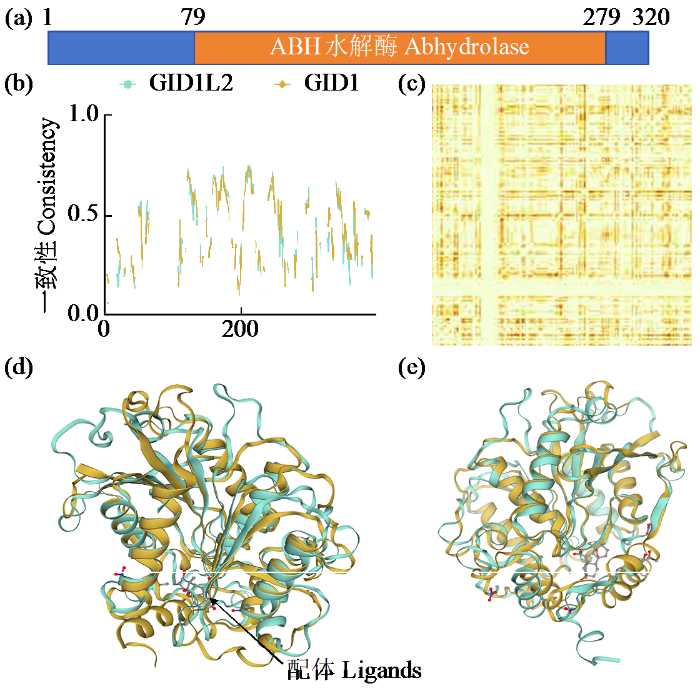
图1
OsGID1L2蛋白的结构预测与分析
(a) OsGID1L2的结构域,数字为对应的氨基酸位置,橙色区域为Abhydrolase结构域。(b) 蛋白结构模型重合一致性图;(c) 结构集合方差评估图;(d~e) OsGID1和OsGID1L2蛋白的结构重合图,分别为正视图与后视图,蓝色的为GID1L2蛋白预测结构,黄色的为GID1蛋白结构。
Fig.1
Structure prediction and analysis of the OsGID1L2 protein
(a) Structural domains of OsGID1L2, numbers are the corresponding amino acid positions, and the orange region is the Abhydrolase structural domain. (b) Consistency of protein structural model overlap plots; (c) Structural ensemble variance assessment plots; (d~e) Structural alignment diagrams of the OsGID1 and OsGID1L2 proteins, showing the front view and rear view, respectively. The blue markings indicate the predicted structure of the GID1L2 protein, while the yellow markings indicate the structure of the GID1 protein.
2.2 GID1L2同源蛋白序列比对及进化分析
通过对多物种氨基酸序列比对及系统进化分析发现,GID1L2蛋白在禾本科植物中具有较高的保守性(图2)。系统发育树构建(图3)表明,OsGID1L2(XP_015610938.1)与光稃稻(Oryza glaberrima,XP_052168097.1)、大麦(Hordeum vulgare,KAE8821587.1)及二穗短柄草(Brachypodium distachyon,XP_003576601.2)的亲缘关系最近(Bootstrap支持率>95%),与稷(Panicum miliaceum,RLM87594.1)、黍(Panicum hallii,XP 025802236.1)和柳枝稷(Panicum virgatum,XP_039818528.1)等作物进化关系较近,而与双子叶模式植物拟南芥(Arabidopsis thaliana,NP_191860.1)进化距离差较大。
图2
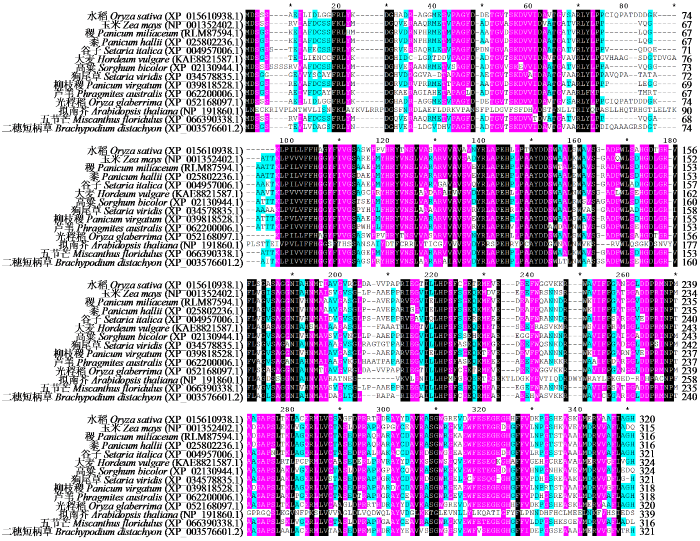
图2
OsGID1L2及其同源蛋白的氨基酸序列比对
Fig.2
Amino acid sequences alignment of OsGID1L2 and its homologous proteins
图3
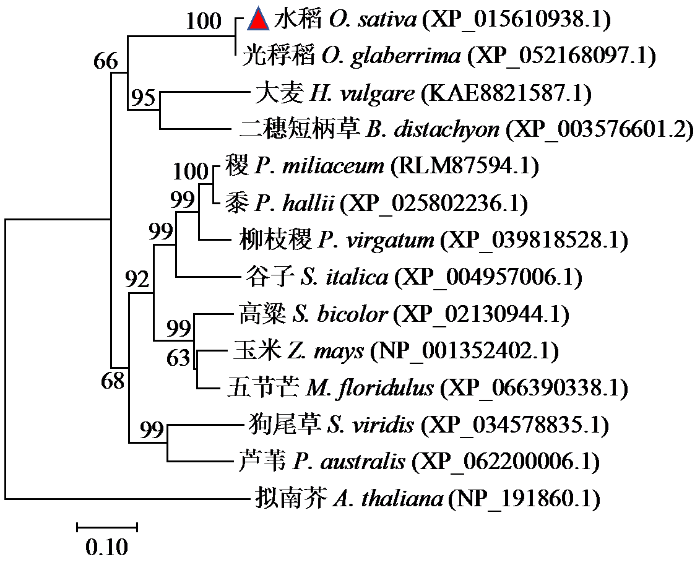
图3
OsGID1L2及其同源蛋白的进化关系分析
Fig.3
Phylogenetic analysis of OsGID1L2 and its homologous proteins
2.3 OsGID1L2基因启动子区域的顺式作用元件分析
为了研究OsGID1L2基因对外界响应的顺势作用元件,利用New PLACE与Plant CARE数据库联合分析OsGID1L2基因启动子上游2000 bp区域(该区域无其他基因)。结果(表2)表明,在该区域共鉴定到3种类型、75个顺式作用元件。其中激素响应调控元件16个,包括2个细胞分裂素调控元件、6个ABA响应元件、1个GA响应元件与1个水杨酸响应元件以及IAA和类IAA响应元件;环境胁迫响应元件30个,包含13个光响应元件、3个干旱响应元件、2个低温响应元件、2个高盐和寒冷胁迫响应元件及10个多种非生物胁迫响应元件;转录调控元件29个,包括7个MYB发育相关结合位点和22个增强子。这些结果表明,OsGID1L2基因可能参与了激素响应和环境胁迫等调控过程。
表2 OsGID1L2启动子上与逆境响应相关的主要顺式作用元件
Table 2
| 顺式作用元件类型 Types of cis-acting element | 顺式作用元件 Cis-acting element | 数量 Number |
|---|---|---|
| 激素响应 Hormone response | 细胞分裂素调控因子结合元件 | 2 |
| ABA响应元件 | 6 | |
| GA响应元件 | 1 | |
| 水杨酸响应元件 | 1 | |
| IAA和类IAA响应元件 | 2 | |
| 茉莉酸响应 | 4 | |
| 环境响应 Environment response | 光响应 | 13 |
| 干旱响应元件 | 3 | |
| 低温响应元件 | 2 | |
| 高盐和寒冷胁迫响应元件 | 2 | |
| 多种非生物胁迫响应元件 | 10 | |
| 转录调控 Transcript regulation | MYB转录因子结合 | 4 |
| 增强子 | 22 | |
| 类MYB转录因子结合元件 | 2 | |
| MYC转录因子结合元件 | 1 |
2.4 OsGID1L2的表达模式分析
为了进一研究OsGID1L2的表达特性,利用实时荧光定量技术(qRT-PCR)检测OsGID1L2在ZH11苗期的根以及孕穗期的叶、茎、穗(2~3 cm)的表达模式。结果(图4)显示,OsGID1L2在叶中的表达水平最高,在茎与穗中的表达水平较低,叶的表达水平约为茎的525倍,为穗的180倍。这表明OsGID1L2基因可能在水稻叶片中发挥主要作用。
图4
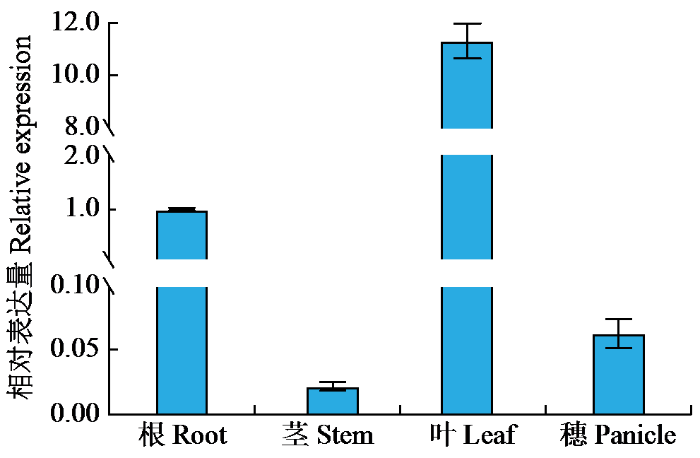
图4
OsGID1L2在水稻不同组织中的表达水平分析
Fig.4
Expression level analysis of OsGID1L2 in rice different tissues
2.5 外源激素处理对OsGID1L2的表达影响
上述生物信息分析表明,OsGID1L2基因可能参与了激素响应和环境胁迫等调控过程。为了分析OsGID1L2基因在幼苗期是否对激素响应,进一步对ZH11幼苗分别进行1×10⁻⁵ mol/L IAA、1×10⁻⁵ mol/L GA3、1×10⁻⁵ mol/L 6-BA和1×10⁻⁵ mol/L ABA的激素处理,利用qRT-PCR技术检测叶片基因OsGID1L2的表达水平。结果(图5)表明,IAA处理后,叶片中OsGID1L2在2 h时表达量显著升高,相较0 h时提高了约53倍;GA3处理后,OsGID1L2的表达量在24 h时有所提高;6-BA处理后,OsGID1L2的表达量在24 h时显著提高,约为0 h的2倍;ABA处理后,OsGID1L2的表达量在24 h时约为0 h的5倍。这些结果表明OsGID1L2基因的表达在幼苗期均受IAA、GA、6-BA和ABA这4种激素诱导,其中最易受到IAA的诱导表达。
图5
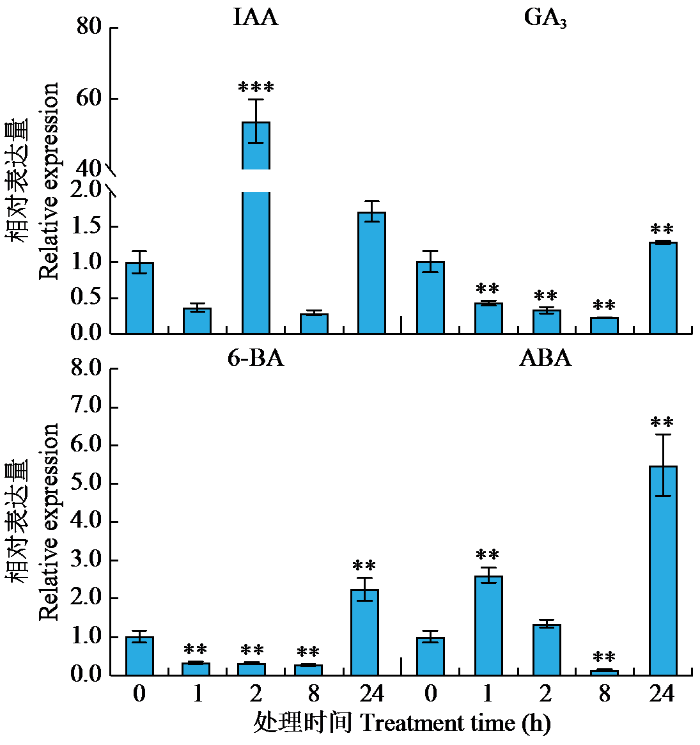
图5
不同激素处理后OsGID1L2在水稻叶片中的表达水平分析
“**”代表差异达极显著(P < 0.01)水平:“***”代表差异达极显著(P < 0.001)水平。下同。
Fig.5
Expression level analysis of OsGID1L2 in rice leaf after different hormone treatments
“**”indicates extremely significant differences at P < 0.01 level,“***”indicates extremely significant differences at P < 0.001 level. The same below.
2.6 非生物胁迫处理对OsGID1L2的表达影响
OsGID1L2启动子区域存在若干个与逆境响应相关的元件,推测OsGID1L2可能参与水稻逆境胁迫响应。本研究利用qRT-PCR技术检测水稻ZH11苗期叶片,OsGID1L2在4 ℃、42 ℃、20% PEG6000和200 mmol/L NaCl处理后的表达水平。结果(图6)表明,在4 ℃处理后,水稻叶片OsGID1L2表达水平在处理8 h时最高,约为0 h的27倍;在42 ℃处理后,水稻叶片OsGID1L2表达水平先降低后升高,在24 h最高,约为0 h的2倍;在20% PEG 6000处理后,水稻叶片OsGID1L2表达水平先升高后降低,在处理1 h时OsGID1L2表达量最高,约为0 h的1倍;在200 mmol/L NaCl处理后,水稻叶片OsGID1L2表达水平有所降低。这表明OsGID1L2基因的表达最易受到温度的影响,而干旱和盐胁迫则相对不明显。
图6
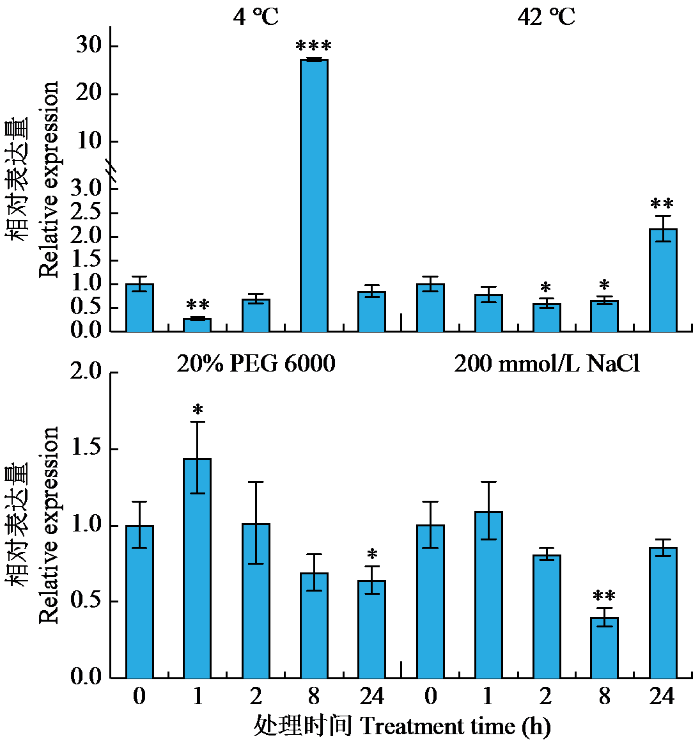
图6
不同胁迫处理后OsGID1L2在水稻叶片中的表达水平分析
“*”代表差异达显著(P < 0.05)水平。
Fig.6
Expression level analysis of OsGID1L2 in rice root and leaf tissues after different stress treatments
“*”indicates significant differences at P < 0.05 level.
2.7 GID1L2蛋白的亚细胞定位
为了进一步研究OsGID1L2蛋白的亚细胞定位,以粳稻品种‘中花11’三叶期幼苗的cDNA为模板,采用OsGID1L2基因特异性引物(表1)扩增OsGID1L2的全长CDS,构建至GFP载体中。结果(图7)表明,经琼脂糖凝胶电泳检测,PCR扩增产物总长度与预期的1039 bp(含76 bp引物序列和CDS区段为963 bp)大小相似,进一步测序发现该序列与水稻基因组注释数据库(RGAP)LOC_Os09g28230/Os09g0455500的注释完全一致。然后将OsGID1L2的CDS与GFP构建载体,并转化水稻原生质体。利用激光共聚焦显微镜观察,发现OsGID1L2在细胞核和细胞质上均有荧光信号,这表明GID1L2蛋白定位于细胞核和细胞质上(图8)。
图7
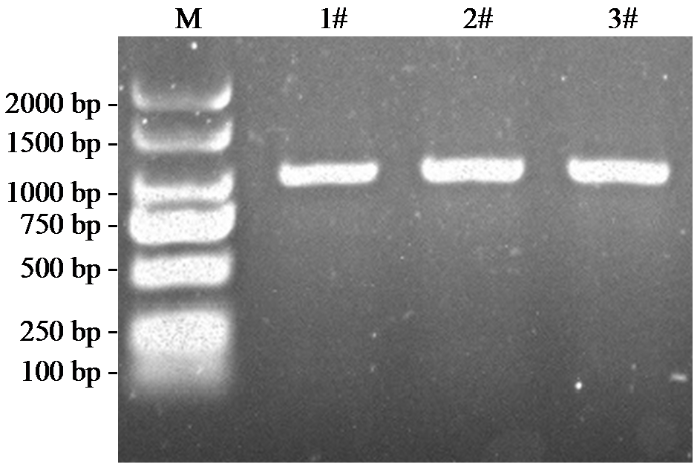
图7
OsGID1L2扩增产物的琼脂凝胶电泳检测
1#、2#、3#均为OsGID1L2扩增产物。
Fig.7
Agar gel electrophoresis detection of OsGID1L2 amplification products
1#, 2#, and 3# are OsGID1L2 amplification products; M: D2000 II.
图8
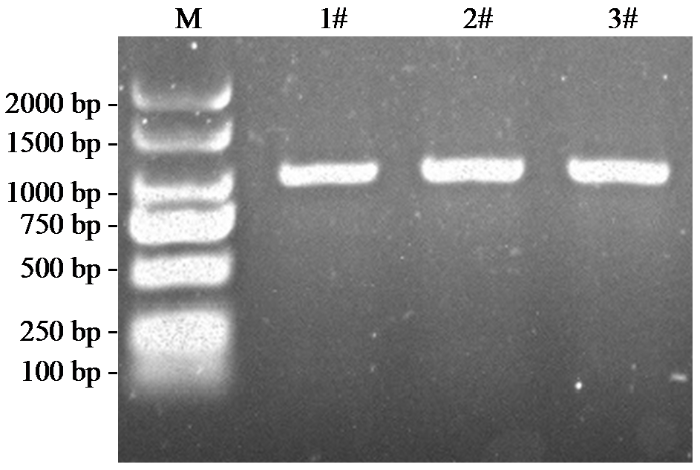
图8
OsGID1L2蛋白的亚细胞定位
(a) GFP空载体在水稻原生质体瞬时表达;(b) OsGID1L2-GFP融合蛋白在水稻原生质体中的瞬时表达;(a)和(b)比例尺为10 µm。
Fig.8
Subcellular localization of OsGID1L2 protein
(a) Transient expression of GFP empty vector in rice protoplasts; (b) Transient expression of OsGID1L2-GFP fusion protein in rice protoplasts. Scale bar: 10 µm.
3 讨论
GID1在GA信号通路中起着至关重要的作用,它能够通过DELLA蛋白减缓GA的泛素化降解,解除其对下游基因的抑制作用,从而促进植物生长[1,26]。GID1基因的克隆与其分子机制解析最早是在水稻中进行[3],随后在小麦[27]、紫花苜宿[28]和唐菖蒲[29]等多种植物中相继鉴定到GID1的同源基因,这些研究揭示了该受体在植物中的功能保守性。然而,目前对水稻GID1家族成员的功能多样性仍缺乏系统研究,并且水稻中仍然存在的大量GA受体成员有待阐明[30]。OsGID1L2是本研究发现的水稻GA受体家族成员之一。前期研究[31]表明,GID1家族成员在植物中可能通过功能分化以适应不同环境,但OsGID1L2是否具有类似功能仍然未知。本研究发现OsGID1L2有一个典型的Abhydrolase_3结构域蛋白,该结构域被认为在植物中普遍参与脂质代谢或激素信号转导[32],在参薯DaGID1[33]和芒果MiGID1A/B[24]中均发现有此结构域。OsGID1L2的同源蛋白序列分析和系统发育分析表明,OsGID1L2可能在禾本科植物中具有保守的生物学功能。
亚细胞定位试验表明,OsGID1L2定位于细胞核和细胞质。这一双定位特性与水稻GID1家族成员主要定位于细胞核、少量定位于细胞质一致[7],同样,在玉米[8]、葡萄[34]和杜仲[35]中也发现此双定位结果。此外,OsGID1L2在根、茎、叶和穗中均有表达,在叶中表达量最高。在拟南芥中,AtGID1基因在叶、花和根等组织部位均大量表达[12]。在葡萄中,VvGID1A基因在老叶片和花序中高表达[34]。在梨中,PbGID1基因在根和叶中高表达,在茎中几乎不表达[36]。在芒果中,MiGID1A基因在叶中高表达,而MiGID1B基因则在不开花枝条的芽、开花枝条的叶和花中显著表达[24]。这表明OsGID1L2在不同物种组织中的表达模式可能存在差异。环境变化对植物的生长发育有较大影响,植物生长与激素和温度之间存在复杂的调控网络。GA水平和信号传导已被证明参与了对几种胁迫的响应,包括水淹胁迫、冷胁迫、盐胁迫、干旱胁迫和渗透胁迫。例如冷胁迫使得植物生长缓慢是通过CBF介导的生长抑制蛋白DELLA,进而降低GA的水平来实现[37-38]。叶作为植物感知环境胁迫(如低温、强光)的主要器官,高表达的胁迫相关基因可快速启动防御反应[31]。这说明OsGID1L可能在不同物种中具有相似的表达模式,在叶中高表达,表明OsGID1L主要在叶中响应外界条件变化并发挥重要作用。
研究[39]证明叶片中的水稻OsGID1和拟南芥AtGID1基因在盐和干旱处理下的表达量显著增加。高羊茅叶片的12个GA受体基因在4种逆境胁迫处理下的定量表达分析结果表明,冷胁迫24 h内FaGID1L2s的表达量整体呈先下降后上升的趋势,并且基本在6 h达到最高表达水平。在热胁迫下,FaGID1L2a在12 h前表达水平低,在24 h时表达量达到最高水平,FaGID1d则于热处理12 h时在叶片中表达量最高,其他相关基因的表达量呈下降趋势;在干旱和盐胁迫处理下,FaGID1L2s的表达水平均呈先降低后升高或先升高后降低的趋势[23]。在本研究中也发现了相似的结果,特别是在4 ℃处理8 h时OsGID1L2表达量急剧上升(上调27倍),随后于24 h时恢复至正常水平,呈现典型的“抑制―激活”双相响应模式,可能反映其早期参与冷信号感知、后期激活抗冻基因的转录调控功能[30,40-41],因此本研究推测OsGID1L2对逆境胁迫具有响应。
植物激素在植物生长发育中发挥重要的作用。GAs是一类在植物生长发育中发挥核心作用的植物激素,参与调控种子萌发、茎伸长、开花时间及逆境响应等关键生物学过程[32]。研究[42]表明,GA信号通路能够调控IAA的生物合成基因表达来控制SL的生物合成,而这一过程又取决于GA受体GID1和F-box蛋白GID2。在拟南芥中,GID1表达受GA控制[43]。在番茄中高浓度GA会使GID1b1和GID1b2的表达被强烈抑制[44]。外源施加GA后,PtGID1转基因品系的根长比野生型植株长[45]。此外,在桃子相关研究中,过表达PpGID1的转基因拟南芥种子萌发会受到外源GA的促进[21]。PbGID1对GA处理具有响应,其表达水平显著增加[46],而过表达GID1基因的水稻对GA敏感性更高,同时还表现出更高的抗稻飞虱特性[11]。由此,假设过表达OsGID1L2也能表现出类似的作用,将有助于创制出抗虫害的水稻新品种。ABA是胁迫响应和生长抑制的核心调节因子,对植物生长发育具有调控作用。Golldack等[47]指出,GRAS型蛋白(特别是DELLA等亚型)是GA和ABA信号网络的关键枢纽,它通过整合二者拮抗互作调控植物。水稻中,ABA诱导、GA抑制的WRKY转录因子在糊粉细胞中连接ABA和GA信号通路,证明这种激素互作具有普遍性[48]。在ABA处理下,OsGID1的表达量呈先下调随后恢复正常表达水平的变化趋势[39]。近期研究[24]还表明,芒果MiGID1A和MiGID1B对GA有较强的响应,同时在ABA处理下二者的种子萌发率有所差异。在本研究中OsGID1L2在不同浓度的激素处理下,均具有显著的响应,与前人研究中基因的表达量趋势具有一定的相似性,同时也与该基因启动子区域发现的大量激素相关元件相符合。值得注意的是,IAA处理2 h即引发OsGID1L2表达量显著升高(53倍),结合启动子中的生长素响应元件,推测GID1L2蛋白可能作为IAA信号通路的下游靶点参与胁迫诱导的快速应答,或是整合多种植物激素信号,对生长代谢进行调控。不同激素之间的协同与拮抗作用对植物生长有重要作用[2],因此本研究推测OsGID1L2对激素处理具有响应作用,研究结果为进一步深度研究完善赤霉素受体GID1家族功能机制提供参考。
4 结论
分析GA受体家族成员OsGID1L2编码1个Abhydrolase_3结构域的蛋白,其在禾本科植物中具有较为保守的序列。OsGID1L2启动子区域存在大量环境因子与植物激素响应元件,在激素处理与温度处理下均有显著表达。OsGID1L2在根、茎、叶和穗中均有表达,在叶中表达量最高,在细胞核和细胞质中发挥作用。
参考文献
Molecular interactions of a soluble gibberellin receptor, GID1, with a rice DELLA protein, SLR1, and gibberellin
DOI:10.1105/tpc.106.043729
URL
[本文引用: 3]

GIBBERELLIN INSENSITIVE DWARF1 (GID1) encodes a soluble gibberellin (GA) receptor that shares sequence similarity with a hormone-sensitive lipase (HSL). Previously, a yeast two-hybrid (Y2H) assay revealed that the GID1-GA complex directly interacts with SLENDER RICE1 (SLR1), a DELLA repressor protein in GA signaling. Here, we demonstrated, by pull-down and bimolecular fluorescence complementation (BiFC) experiments, that the GA-dependent GID1–SLR1 interaction also occurs in planta. GA4 was found to have the highest affinity to GID1 in Y2H assays and is the most effective form of GA in planta. Domain analyses of SLR1 using Y2H, gel filtration, and BiFC methods revealed that the DELLA and TVHYNP domains of SLR1 are required for the GID1–SLR1 interaction. To identify the important regions of GID1 for GA and SLR1 interactions, we used many different mutant versions of GID1, such as the spontaneous mutant GID1s, N- and C-terminal truncated GID1s, and mutagenized GID1 proteins with conserved amino acids replaced with Ala. The amino acid residues important for SLR1 interaction completely overlapped the residues required for GA binding that were scattered throughout the GID1 molecule. When we plotted these residues on the GID1 structure predicted by analogy with HSL tertiary structure, many residues were located at regions corresponding to the substrate binding pocket and lid. Furthermore, the GA–GID1 interaction was stabilized by SLR1. Based on these observations, we proposed a molecular model for interaction between GA, GID1, and SLR1.
Fine-tuning gibberellin improves rice alkali-thermal tolerance and yield
DOI:10.1038/s41586-024-08486-7 [本文引用: 2]
赤霉素代谢调控与绿色革命
DOI:10.13560/j.cnki.biotech.bull.1985.2021-0389
[本文引用: 1]
赤霉素作为重要的植物激素,参与了植物诸多发育过程的调控。一些涉及赤霉素生物合成和信号传导途径的重要调控基因对作物的株型、产量和品质能够产生积极的影响,已在农业生产中得到广泛应用。其中,Rht-1和sd-1等位基因由于分别赋予了小麦和水稻半矮化的特性,从而促成了20世纪后半叶的“绿色革命”。本文回顾了与“绿色革命”相关的赤霉素代谢调控在影响作物株高、产量、养分利用等方面的研究成果,并对未来如何合理开发和利用赤霉素调控基因,培育出更多的“绿色革命”作物品种进行了展望。
GIBBERELLIN INSENSITIVE DWARF1 encodes a soluble receptor for gibberellin
DOI:10.1038/nature04028 [本文引用: 3]
Identification of a rice leaf width gene Narrow Leaf 22 (NAL22) through genome-wide association study and gene editing technology
DOI:10.3390/ijms24044073
URL
[本文引用: 2]
Rice leaf width (RLW) is a crucial determinant of photosynthetic area. Despite the discovery of several genes controlling RLW, the underlying genetic architecture remains unclear. In order to better understand RLW, this study conducted a genome-wide association study (GWAS) on 351 accessions from the rice diversity population II (RDP-II). The results revealed 12 loci associated with leaf width (LALW). In LALW4, we identified one gene, Narrow Leaf 22 (NAL22), whose polymorphisms and expression levels were associated with RLW variation. Knocking out this gene in Zhonghua11, using CRISPR/Cas9 gene editing technology, resulted in a short and narrow leaf phenotype. However, seed width remained unchanged. Additionally, we discovered that the vein width and expression levels of genes associated with cell division were suppressed in nal22 mutants. Gibberellin (GA) was also found to negatively regulate NAL22 expression and impact RLW. In summary, we dissected the genetic architecture of RLW and identified a gene, NAL22, which provides new loci for further RLW studies and a target gene for leaf shape design in modern rice breeding.
A rice seed-specific glycine-rich protein OsDOR1 interacts with GID1 to repress GA signaling and regulates seed dormancy
DOI:10.1007/s11103-023-01343-7 [本文引用: 1]
Overexpression of OsGID1 enhances the resistance of rice to the brown planthopper Nilaparvata lugens
DOI:10.3390/ijms19092744
URL
[本文引用: 2]
Gibberellins (GAs) play pivotal roles in plant growth and development, and in defenses against pathogens. Thus far, how the GA-mediated signaling pathway regulates plant defenses against herbivores remains largely unknown. In this study, we cloned the rice GA receptor gene OsGID1, whose expression was induced by damage from the brown planthopper (BPH) Niaparvata lugens, mechanical wounding, and treatment with salicylic acid (SA), but not jasmonic acid. The overexpression of OsGID1 (oe-GID1) decreased BPH-induced levels of SA, H2O2, and three SA-pathway-related WRKY transcripts, but enhanced BPH-induced levels of ethylene. Bioassays in the laboratory revealed that gravid BPH females preferred to feed and lay eggs on wild type (WT) plants than on oe-GID1 plants. Moreover, the hatching rate of BPH eggs on oe-GID1 plants was significantly lower than that on WT plants. In the field, population densities of BPH adults and nymphs were consistently and significantly lower on oe-OsGID1 plants than on WT plants. The increased resistance in oe-GID1 plants was probably due to the increased lignin level mediated by the GA pathway, and to the decrease in the expression of the three WRKY genes. Our findings illustrated that the OsGID1-mediated GA pathway plays a positive role in mediating the resistance of rice to BPH.
Identification and characterization of Arabidopsis gibberellin receptors
DOI:10.1111/tpj.2006.46.issue-5 URL [本文引用: 2]
Gibberellin-induced mesocotyl elongation in deep-sowing tolerant maize inbred line 3681-4
DOI:10.1111/pbr.2010.129.issue-1 URL [本文引用: 1]
Comprehensive transcriptome profiling and phenotyping of rootstock and scion in a tomato/potato heterografting system
DOI:10.1111/ppl.2019.166.issue-3 URL [本文引用: 1]
A brachytic dwarfism trait (dw) in peach trees is caused by a nonsense mutation within the gibberellic acid receptor PpeGID1c
DOI:10.1111/nph.13772
PMID:26639453
[本文引用: 1]
Little is known about the genetic factors controlling tree size and shape. Here, we studied the genetic basis for a recessive brachytic dwarfism trait (dw) in peach (Prunus persica) that has little or no effect on fruit development. A sequencing-based mapping strategy positioned dw on the distal end of chromosome 6. Further sequence analysis and fine mapping identified a candidate gene for dw as a non-functional allele of the gibberellic acid receptor GID1c. Expression of the two GID1-like genes found in peach, PpeGID1c and PpeGID1b, was analyzed. GID1c was predominantly expressed in actively growing vegetative tissues, whereas GID1b was more highly expressed in reproductive tissues. Silencing of GID1c in plum via transgenic expression of a hairpin construct led to a dwarf phenotype similar to that of dw/dw peaches. In general, the degree of GID1c silencing corresponded to the degree of dwarfing. The results suggest that PpeGID1c serves a primary role in vegetative growth and elongation, whereas GID1b probably functions to regulate gibberellic acid perception in reproductive organs. Modification of GID1c expression could provide a rational approach to control tree size without impairing fruit development. No claim to original US government works New Phytologist © 2015 New Phytologist Trust.
高羊茅赤霉素受体家族成员鉴定及其在不同逆境下的表达模式分析
DOI:10.11733/j.issn.1007-0435.2024.06.008
[本文引用: 2]
赤霉素受体(Gibberellin insensitive dwarf1)可感知赤霉素信号,参与调控植物的生长发育及逆境胁迫。高羊茅(Festuca arundinacea)是低养护成本的冷季型草坪草,面临多种逆境胁迫,但其赤霉素受体在逆境和发育中的作用尚未明确。本研究从高羊茅的转录组中鉴定到12个赤霉素受体基因序列,它们含有高度保守的结构域,可划分为两个进化枝,Ⅰ类为GID1L2,Ⅱ类为GID1。采用实时荧光定量PCR技术分析短期低温胁迫(0℃)、高温胁迫(38℃)、盐胁迫(120 mmol·L-1 NaCl)及干旱(15%聚乙二醇6000)逆境下高羊茅分蘖节和叶片中赤霉素受体基因的表达模式。结果表明,高羊茅赤霉素受体基因对各类逆境胁迫均有响应,GID1L2s在分蘖节和叶片中表达模式不同,GID1s则相似。除冷胁迫下叶片中FaGID1d表达模式独特,其余GID1s在不同逆境胁迫下表达模式一致。研究结果为进一步开展赤霉素受体基因参与逆境胁迫的功能解析提供了理论依据。
Functional identification of mango MiGID1A and MiGID1B genes confers early flowering and stress tolerance
Positive regulator of IRON HOMEOSTASIS1, OsPRI1, facilitates iron homeostasis
DOI:10.1104/pp.17.00794 URL [本文引用: 1]
Gibberellin-GID1-DELLA: a pivotal regulatory module for plant growth and development
DOI:10.1104/pp.110.161554 URL [本文引用: 1]
Molecular characterization of three Gibberellin-insensitive dwarf1 homologous genes in hexaploid wheat
DOI:10.1016/j.jplph.2012.11.010 URL [本文引用: 1]
Sensing the environment: key roles of membrane-localized kinases in plant perception and response to abiotic stress
DOI:10.1093/jxb/ers354
PMID:23307915
[本文引用: 2]
Adverse environmental conditions have negative effects on plant growth and development. Receptor proteins on the plasma membrane sense various environmental stimuli and transduce them to downstream intra- and intercellular signalling networks. Receptor-like kinases (RLKs) play important roles in perceiving the extracellular ligands and activating the downstream pathway via phosphorylation of intracellular serine/threonine kinase domains. The Arabidopsis genome possesses >600 RLK-encoding genes, some of which are implicated in the perception of environmental signals during the life cycle of the sessile plants. Histidine kinases are also membrane-localized kinases and perceive osmotic stress and plant hormones. In this review, we focus on the RLKs and histidine kinases that play a role in plant response to abiotic stresses. We summarize our recent understanding of their specific roles in stress responses and absicisic acid (ABA) regulation. Elucidation of the functions of these kinases in the osmotic stress response will provide a better understanding of stress-sensing mechanisms in plants and help to identify potential candidate genes for genetic engineering of improved stress-tolerant crops.
Auxin and gibberellin signaling cross-talk promotes hypocotyl xylem expansion and cambium homeostasis
DOI:10.1093/jxb/erab089
PMID:33619529
[本文引用: 2]
During secondary growth, the thickening of plant organs, wood (xylem) and bast (phloem) is continuously produced by the vascular cambium. In Arabidopsis hypocotyl and root, we can distinguish two phases of secondary growth based on cell morphology and production rate. The first phase, in which xylem and phloem are equally produced, precedes the xylem expansion phase in which xylem formation is enhanced and xylem fibers differentiate. It is known that gibberellins (GA) trigger this developmental transition via degradation of DELLA proteins and that the cambium master regulator BREVIPEDICELLUS/KNAT1 (BP/KNAT1) and receptor like kinases ERECTA and ERL1 regulate this process downstream of GA. However, our understanding of the regulatory network underlying GA-mediated secondary growth is still limited. Here, we demonstrate that DELLA-mediated xylem expansion in Arabidopsis hypocotyl is mainly achieved through DELLA family members RGA and GAI, which promote cambium senescence. We further show that AUXIN RESPONSE FACTOR 6 (ARF6) and ARF8, which physically interact with DELLAs, specifically repress phloem proliferation and induce cambium senescence during the xylem expansion phase. Moreover, the inactivation of BP in arf6 arf8 background revealed an essential role for ARF6 and ARF8 in cambium establishment and maintenance. Overall, our results shed light on a pivotal hormone cross-talk between GA and auxin in the context of plant secondary growth.© The Author(s) 2021. Published by Oxford University Press on behalf of the Society for Experimental Biology. All rights reserved. For permissions, please email: journals.permissions@oup.com.
Gibberellin biosynthesis and its regulation
葡萄赤霉素受体基因VvGID1A的分离、亚细胞定位及表达分析
以‘藤稔’葡萄(Vitis vinifera × V. labrusca‘Fujiminori’)的花序、茎尖、叶片以及果实为试材,应用RT-PCR 结合RACE 技术克隆得到GID1A 同源基因全长cDNA 序列,命名为VvGID1A(基因登录号:JQ669511),全长1 681 bp,含有1 个1 035 bp 的开放阅读框,编码344 个氨基酸,该氨基酸序列还包含两个激素敏感酯酶家族保守的结构域HGG 和GXSXG。系统进化分析表明,VvGID1A 与蒺藜苜蓿、棉花和拟南芥之间的一致性分别为70.25%、70.08%和68.21%。荧光定量RT-PCR 结果表明,VvGID1A在葡萄花序、老叶和卷须中表达水平高于茎尖和幼叶,而在GA 处理果实中的表达水平低于未处理的对照样品。瞬时表达载体的构建及洋葱表皮细胞转化后,洋葱表皮细胞的瞬时表达结果显示,该基因的表达产物定位在细胞核上。
Cloning and characterization of EuGID1 in Eucommia ulmoides oliver
The role of gibberellin signalling in plant responses to abiotic stress
DOI:10.1242/jeb.089938
URL
[本文引用: 1]
Plant hormones are small molecules that regulate plant growth and development, as well as responses to changing environmental conditions. By modifying the production, distribution or signal transduction of these hormones, plants are able to regulate and coordinate both growth and/or stress tolerance to promote survival or escape from environmental stress. A central role for the gibberellin (GA) class of growth hormones in the response to abiotic stress is becoming increasingly evident. Reduction of GA levels and signalling has been shown to contribute to plant growth restriction on exposure to several stresses, including cold, salt and osmotic stress. Conversely, increased GA biosynthesis and signalling promote growth in plant escape responses to shading and submergence. In several cases, GA signalling has also been linked to stress tolerance. The transcriptional regulation of GA metabolism appears to be a major point of regulation of the GA pathway, while emerging evidence for interaction of the GA-signalling molecule DELLA with components of the signalling pathway for the stress hormone jasmonic acid suggests additional mechanisms by which GA signalling may integrate multiple hormone signalling pathways in the response to stress. Here, we review the evidence for the role of GA in these processes, and the regulation of the GA signalling pathway on exposure to abiotic stress. The potential mechanisms by which GA signalling modulates stress tolerance are also discussed.
The cold-inducible CBF1 factor-dependent signaling pathway modulates the accumulation of the growth-repressing DELLA proteins via its effect on gibberellin metabolism
DOI:10.1105/tpc.108.058941
URL
[本文引用: 1]
Plants have evolved robust mechanisms to respond and adapt to unfavorable environmental conditions, such as low temperature. The C-repeat/drought-responsive element binding factor CBF1/DREB1b gene encodes a transcriptional activator transiently induced by cold that controls the expression of a set of genes responding to low temperature (the CBF regulon). Constitutive expression of CBF1 confers freezing tolerance but also slows growth. Here, we propose that low temperature–induced CBF1 expression restrains growth at least in part by allowing the accumulation of DELLAs, a family of nuclear growth-repressing proteins, the degradation of which is stimulated by gibberellin (GA). We show that cold/CBF1 enhances the accumulation of a green fluorescent protein (GFP)–tagged DELLA protein (GFP-RGA) by reducing GA content through stimulating expression of GA-inactivating GA 2-oxidase genes. Accordingly, transgenic plants that constitutively express CBF1 accumulate less bioactive GA and as a consequence exhibit dwarfism and late flowering. Both phenotypes are suppressed when CBF1 is expressed in a line lacking two DELLA proteins, GA-INSENSITIVE and REPRESSOR OF GA1-3. In addition, we show that DELLAs contribute significantly to CBF1-induced cold acclimation and freezing tolerance by a mechanism that is distinct from the CBF regulon. We conclude that DELLAs are components of the CBF1-mediated cold stress response.
GID1 modulates stomatal response and submergence tolerance involving abscisic acid and gibberellic acid signaling in rice
DOI:10.1111/jipb.12313
[本文引用: 2]
<p>Plant responses to abiotic stresses are coordinated by arrays of growth and developmental programs. Gibberellic acid (GA) and abscisic acid (ABA) play critical roles in the developmental programs and environmental responses, respectively, through complex signaling and metabolism networks. However, crosstalk between the two phytohormones in stress responses remains largely unknown. In this study, we report that GIBBERELLIN-INSENSITIVE DWARF 1 (GID1), a soluble receptor for GA, regulates stomatal development and patterning in rice (<em>Oryza sativa</em> L.). The gid1 mutant showed impaired biosynthesis of endogenous ABA under drought stress conditions, but it exhibited enhanced sensitivity to exogenous ABA. Scanning electron microscope and infrared thermal image analysis indicated an increase in the stomatal conductance in the gid1 mutant under drought conditions. Interestingly, the gid1 mutant had increased levels of chlorophyll and carbohydrates under submergence conditions, and showed enhanced reactive oxygen species (ROS)-scavenging ability and submergence tolerance compared with the wild-type. Further analyses suggested that the function of GID1 in submergence responses is partially dependent on ABA, and GA signaling by GID1 is involved in submergence tolerance by modulating carbohydrate consumption. Taken together, these findings suggest GID1 plays distinct roles in stomatal response and submergence tolerance through both the ABA and GA signaling pathways in rice.</p><p> </p><p>Du H, Chang Y, Huang F, Xiong L (2015) GID1 modulates stomatal response and submergence tolerance involving abscisic acid and gibberellic acid signaling in rice. <strong>J Integr Plant Biol</strong> 57: 954–968 doi: 10.1111/jipb.12313</p>
The COG1-OsSERL2 complex senses cold to trigger signaling network for chilling tolerance in japonica rice
DOI:10.1038/s41467-023-38860-4
[本文引用: 1]
Improvement of chilling tolerance is a key strategy to face potential menace from abnormal temperature in rice production, which depends on the signaling network triggered by receptors. However, little is known about the QTL genes encoding membrane complexes for sensing cold. Here, C hilling-t o lerance in G engdao / japonica rice 1 ( COG1 ) is isolated from a chromosome segment substitution line containing a QTL ( qCS11-jap ) for chilling sensitivity. The major gene COG1 is found to confer chilling tolerance in japonica rice. In natural rice populations, only the haplogroup1 encodes a functional COG1. Evolutionary analysis show that COG1 originates from Chinese O. Rufipogon and is fixed in japonica rice during domestication. COG1, a membrane-localized LRR-RLP, targets and activates the kinase OsSERL2 in a cold-induced manner, promoting chilling tolerance. Furthermore, the cold signal transmitted by COG1-OsSERL2 activates OsMAPK3 in the cytoplasm. Our findings reveal a cold-sensing complex, which mediates signaling network for the chilling defense in rice.\n
解析植物冷信号转导途径:植物如何感知低温
DOI:10.11983/CBB18039
[本文引用: 1]
低温胁迫(冷害和冻害)严重影响植物的生长发育和地理分布, 是制约作物产量和品质的主要因素之一。在自然界, 植物通过感知低温信号并启动一系列响应机制来抵御冷冻伤害。MAP蛋白激酶家族在植物响应逆境胁迫信号过程中发挥重要作用, 但其是否参与冷冻胁迫信号传递仍不清楚。最近, 朱健康、杨淑华和种康研究团队先后报道了拟南芥(Arabidopsis thaliana)和水稻(Oryza sativa)通过MAPK级联反应途径参与冷冻胁迫应答反应, 通过磷酸化ICE1来调控其稳定性, 并阐明了ICE1提高植物抗冷冻能力的分子机制。他们的研究完善了ICE1介导的低温应答网络, 是植物低温应答研究领域的重要突破, 并为未来的作物分子设计育种提供了强有力的理论依据。
Regulation of strigolactone biosynthesis by gibberellin signaling
DOI:10.1104/pp.17.00301
PMID:28404726
[本文引用: 1]
Strigolactones (SLs) are a class of plant hormones that regulate diverse physiological processes, including shoot branching and root development. They also act as rhizosphere signaling molecules to stimulate the germination of root parasitic weeds and the branching of arbuscular mycorrhizal fungi. Although various types of cross talk between SLs and other hormones have been reported in physiological analyses, the cross talk between gibberellin (GA) and SLs is poorly understood. We screened for chemicals that regulate the level of SLs in rice () and identified GA as, to our knowledge, a novel SL-regulating molecule. The regulation of SL biosynthesis by GA is dependent on the GA receptor GID1 and F-box protein GID2. GA treatment also reduced the infection of rice plants by the parasitic plant witchers weed (). These data not only demonstrate, to our knowledge, the novel plant hormone cross talk between SL and GA, but also suggest that GA can be used to control parasitic weed infections.© 2017 American Society of Plant Biologists. All Rights Reserved.
Mathematical modeling elucidates the role of transcriptional feedback in gibberellin signaling
Multiple gibberellin receptors contribute to phenotypic stability under changing environments
DOI:10.1105/tpc.19.00235
PMID:31076539
[本文引用: 1]
The pleiotropic and complex gibberellin (GA) response relies on targeted proteolysis of DELLA proteins mediated by a GA-activated GIBBERELLIN-INSENSITIVE DWARF1 (GID1) receptor. The tomato () genome encodes for a single DELLA protein, PROCERA (PRO), and three receptors, SlGID1a (GID1a), GID1b1, and GID1b2, that may guide specific GA responses. In this work, clustered regularly interspaced short palindromic repeats (CRISPR) /CRISPR associated protein 9-derived mutants were generated and their effect on GA responses was studied. The triple mutant was extremely dwarf and fully insensitive to GA. Under optimal growth conditions, the three receptors function redundantly and the single mutants exhibited very mild phenotypic changes. Among the three receptors, GID1a had the strongest effects on germination and growth. Yeast two-hybrid assays suggested that GID1a has the highest affinity to PRO. Analysis of lines with a single active receptor demonstrated a unique role for GID1a in protracted response to GA that was saturated only at high doses. When the mutants were grown in the field under ambient changing environments, they showed phenotypic instability, the high redundancy was lost, and exhibited dwarfism that was strongly exacerbated by the loss of another receptor gene. These results suggest that multiple GA receptors contribute to phenotypic stability under environmental extremes.© 2019 American Society of Plant Biologists. All rights reserved.
The gibberellin GID1-DELLA signalling module exists in evolutionarily ancient conifers
DOI:10.1038/s41598-017-11859-w
PMID:29192140
[本文引用: 1]
Gibberellins (GAs) participate in controlling various aspects of basic plant growth responses. With the exception of bryophytes, GA signalling in land plants, such as lycophytes, ferns and angiosperms, is mediated via GIBBERELLIN-INSENSITIVE DWARF1 (GID1) and DELLA proteins. To explore whether this GID1-DELLA mechanism is present in pines, we cloned an orthologue (PtGID1) of Arabidopsis AtGID1a and two putative DELLA proteins (PtDPL; PtRGA) from Pinus tabuliformis, a widespread indigenous conifer species in China, and studied their recombinant proteins. PtGID1 shares with AtGID1a the conserved HSL motifs for GA binding and an N-terminal feature that are essential for interaction with DELLA proteins. Indeed, A. thaliana 35S:PtGID1 overexpressors showed a strong GA-hypersensitive phenotype compared to the wild type. Interactions between PtGID1 and PtDELLAs, but also interactions between the conifer-angiosperm counterparts (i.e. between AtGID1 and PtDELLAs and between PtGID1 and AtDELLA), were detected in vivo. This demonstrates that pine has functional GID1-DELLA components. The Delta 17-domains within PtDPL and PtRGA were identified as potential interaction sites within PtDELLAs. Our results show that PtGID1 has the ability to interact with DELLA and functions as a GA receptor. Thus, a GA-GID1-DELLA signalling module also operates in evolutionarily ancient conifers.
Endodormancy release can be modulated by the GA4-GID1c-DELLA 2 module in peach leaf buds
DOI:10.3389/fpls.2021.713514
URL
[本文引用: 1]
Gibberellin (GA) plays a key role in the release of bud dormancy and the GA receptor GID1 (GIBBERELLIN INSENSITIVE DWARF1) and DELLA protein are the GA signaling parts, but the molecular mechanism of GA-GID1-DELLA module regulating leaf bud dormancy in peach (Prunus persica) is still not very clear. In this study, we isolated and characterized the GID1 gene PpGID1c from the peach cultivar “Zhong you No.4.” Overexpressing PpGID1c in Arabidopsis promoted seed germination, which indicated that PpGID1c has an important function in dormancy. The expression level of PpGID1c in peach leaf buds during endodormancy release was higher than that during ecodormancy and was positively correlated with GA4 levels. Our study also found that GA4 had the most obvious effect on promoting the bud break, indicating that GA4 may be the key gibberellin to promoting peach leaf bud endodormancy release. Moreover, a quantitative real-time PCR (qRT-PCR) found that GA4 could increase the expression of the gibberellin signaling gene PpDELLA2. A yeast two-hybrid (Y2H) assay suggested that the PpGID1c interaction with the PpDELLA1 protein was not dependent on gibberellin, while the PpGID1c interaction with PpDELLA2 required GA4 or another gibberellin. These findings suggested that the GA4-GID1c-DELLA2 module regulates peach leaf bud endodormancy release, with this finding significantly enhancing our comprehensive understanding of bud endodormancy release and revealing a new mechanism for regulating leaf bud endodormancy release in peach.
Gibberellins and abscisic acid signal crosstalk: living and developing under unfavorable conditions
DOI:10.1007/s00299-013-1409-2
PMID:23525744
[本文引用: 1]
Plants adapt to adverse environments by integrating growth and development to environmentally activated cues. Within the adaptive signaling networks, plant hormones tightly control convergent developmental and stress adaptive processes and coordinate cellular responses to external and internal conditions. Recent studies have uncovered novel antagonizing roles of the plant hormones gibberellin (GA) and abscisic acid (ABA) in integrating growth and development in plants with environmental signaling. According to current concepts, GRAS transcription factors of the DELLA and SCARECROW-LIKE (SCL) types have a key role as major growth regulators and have pivotal functions in modulating GA signaling. Significantly, current models emphasize a function of DELLA proteins as central regulators in GA homeostasis. DELLA proteins interact with the cellular GA receptor GID1 (GA-INSENSITIVE DWARF1) and degradation of DELLAs activates the function of GA. Supplementary to the prevailing view of a pivotal role of GRAS family transcriptional factors in plant growth regulation, recent work has suggested that the DELLA and SCL proteins integrate generic GA responses into ABA-controlled abiotic stress tolerance. Here, we review and discuss how GRAS type proteins influence plant development and versatile adaptation as hubs in GA and ABA triggered signaling pathways.
Interactions of two abscisic- acid induced WRKY genes in repressing gibberellin signaling in aleurone cells
DOI:10.1111/tpj.2006.46.issue-2 URL [本文引用: 1]


