

作物杂志,2026, 第2期: 172–179 doi: 10.16035/j.issn.1001-7283.2026.02.021
藜麦生长发育特性及养分吸收分配动态变化规律研究
和桂青( ), 李兆光, 袁文珏, 和琼姬, 杨文高, 李燕, 王蕊, 叶磊, 侯志江()
云南省农业科学院高山经济植物研究所, 674100, 云南丽江
Study on the Growth Characteristics and Dynamic Changes of Nutrient Absorption and Distribution in Quinoa
He Guiqing(), Li Zhaoguang, Yuan Wenjue, He Qiongji, Yang Wengao, Li Yan, Wang Rui, Ye Lei, Hou Zhijiang()
Institute of Alpine Economic Plants ,Yunnan Academy of Agricultural Sciences Lijiang 674100, Yunnan, China
摘要:
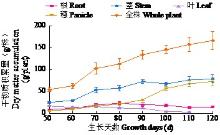
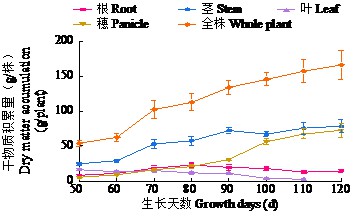
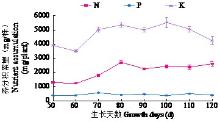
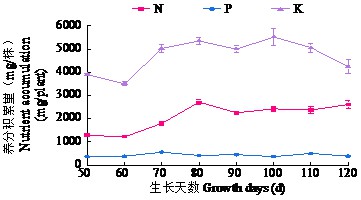
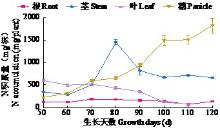
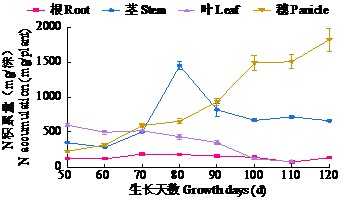
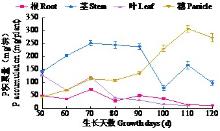
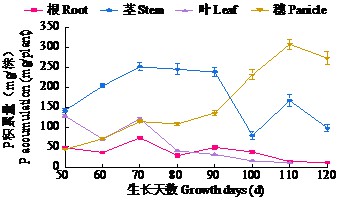
于不同生长期对藜麦进行田间采样,测定不同生育阶段主要农艺性状、干物质积累和营养元素含量的变化。结果表明,藜麦干物质积累呈现“S”形曲线,生长60~90 d是干物质积累的关键期。不同生长期藜麦各部位(根、茎、叶和穗)的干物质分配比例和养分吸收率存在显著差异,其中,氮、磷和钾的吸收量在生长60~80 d达到高峰,钾的吸收量最大,氮次之,磷最少,吸收比为4.88:1.00:11.00。藜麦的营养元素分配随着生长期的变化表现出动态变化规律,生长前期养分主要集中在叶和茎,后期更多向穗部转移。还发现藜麦的农艺性状与干物质积累量存在显著相关性,根重、茎重和穗重与株高、茎粗、叶长等主要农艺性状呈显著正相关。

| [1] |
Walters H, Carpenter-Boggs L, Desta K, et al. Effect of irrigation, intercrop, and cultivar on agronomic and nutritional characteristics of quinoa. Agroecology and Sustainable Food Systems, 2016, 40 (8):783-803.
doi: 10.1080/21683565.2016.1177805 |
| [2] |
Vega-Gálvez A, Miranda M, Vergara J, et al. Nutrition facts and functional potential of quinoa (Chenopodium quinoa Willd.), an ancient Andean grain: A review. Journal of the Science of Food and Agriculture, 2010, 90(15):2541-2547.
doi: 10.1002/jsfa.4158 pmid: 20814881 |
| [3] |
Vilcacundo R, Hernández-Ledesma B. Nutritional and biological value of quinoa (Chenopodium quinoa Willd.). Current Opinion in Food Science, 2017, 14:1-6.
doi: 10.1016/j.cofs.2016.11.007 |
| [4] | 王晨静, 赵习武, 陆国权, 等. 藜麦特性及开发利用研究进展. 浙江农林大学学报, 2014, 31(2):296-301. |
| [5] | Huchzermeyer B, Koyro H W. Salt and drought stress effects on photosynthesis//Pessaraki M. Handbook of Photosynthesis. 2nd ed. New York: CRC Press,2005:751-777. |
| [6] |
Shabala S, Jacobsen S E, Bendevis M, et al. Sensitivity of two quinoa (Chenopodium quinoa Willd.) varieties to progressive drought stress. Journal of Agronomy and Crop Science, 2014, 200(1):12-23.
doi: 10.1111/jac.2013.200.issue-1 |
| [7] |
Bois J F, Winkel T, Lhomme J P, et al. Response of some Andean cultivars of quinoa (Chenopodium quinoa Willd.) to temperature: Effects on germination, phenology, growth and freezing. European Journal of Agronomy, 2006, 25(4):299-308.
doi: 10.1016/j.eja.2006.06.007 |
| [8] |
Jacobsen S E, Mujica A, Jensen C R. The resistance of quinoa (Chenopodium quinoa Willd.) to adverse abiotic factors. Food Reviews International, 2003, 19:99-109.
doi: 10.1081/FRI-120018872 |
| [9] | 杨发荣, 黄杰, 魏玉明, 等. 藜麦生物学特性及应用. 草业科学, 2017, 34(3):607-613. |
| [10] |
Abugoch James L E. Quinoa (Chenopodium quinoa Willd.): Composition, chemistry, nutritional, and functional properties. Advances in Food and Nutrition Research, 2009, 58:1-31.
doi: 10.1016/S1043-4526(09)58001-1 pmid: 19878856 |
| [11] |
Repo-Carrasco R, Espinoza C, Jacobsen S E. Nutritional value and use of the Andean crops quinoa (Chenopodium quinoa) and Kañiwa (Chenopodium pallidicaule). Food Reviews International, 2003, 19(1/2):179-189.
doi: 10.1081/FRI-120018884 |
| [12] | 刘正杰, 李玉平, 张盟, 等. 云南省藜麦引进栽培及产业发展现状研究. 现代农业科技, 2021(10):4-9. |
| [13] |
Wang S N, Zhu F. Formulation and quality attributes of quinoa food products. Food and Bioprocess Technology, 2016, 9(1):49-68.
doi: 10.1007/s11947-015-1584-y |
| [14] |
Bhargava A, Shukla S, Ohri D. Genetic variability and interrelationship among various morphological and quality traits in quinoa (Chenopodium quinoa Willd.). Field Crops Research, 2007, 101(1):104-116.
doi: 10.1016/j.fcr.2006.10.001 |
| [15] | 黄杰, 杨发荣. 藜麦在甘肃的研发现状及前景. 甘肃农业科技, 2015(1):49-52. |
| [16] | 任永峰, 王志敏, 赵沛义, 等. 内蒙古阴山北麓区藜麦生态适应性研究. 作物杂志, 2016(2):79-82. |
| [17] | 姚庆, 西尔娜依, 崔宏亮. 新疆伊犁河谷藜麦适应性研究初报. 山西农业科学, 2018, 46(4):576-579. |
| [18] | 王艳青, 李勇军, 李春花, 等. 藜麦主要农艺性状与单株产量的相关和通径分析. 作物杂志, 2019(6):156-161. |
| [19] | 彭识, 李朝凤, 王灿星, 等. 丽江优质藜麦栽培技术. 中国农技推广, 2018, 34(12):44-45. |
| [20] |
徐天才, 和桂青, 李兆光, 等. 不同海拔藜麦的营养成分差异性研究. 中国农学通报, 2017, 33(17):129-133.
doi: 10.11924/j.issn.1000-6850.casb16100121 |
| [21] |
刘敏国, 王士嘉, 杨惠敏, 等. 河西走廊藜麦C、N、P生态化学计量学特征对物候期的响应. 干旱区研究, 2018, 35(1):192-198.
doi: 10.13866/j.azr.2018.01.24 |
| [22] |
齐天明, 李志坚, 秦培友, 等. 藜麦栽培技术研究与应用展望. 中国农业科技导报, 2022, 24(3):157-165.
doi: 10.13304/j.nykjdb.2021.0190 |
| [23] | 宋娇, 姚有华, 刘洋, 等. 6个藜麦品种(系)农艺性状的主成分分析. 青海大学学报, 2017, 35(6):6-10. |
| [24] | 王思宇, 左文博, 朱凯莉, 等. 71份藜麦品种资源的农艺性状及营养品质分析与评价. 作物杂志, 2022(3):63-72. |
| [25] | 魏玉明, 杨发荣, 刘文瑜, 等. 藜麦不同生育期营养物质积累与分配规律. 草业科学, 2018, 35(7):1720-1727. |
| [26] | 王斌, 赵圆峰, 聂督, 等. 旱作藜麦养分吸收规律及养分限制因子研究. 中国土壤与肥料, 2020(4):172-177. |
| [27] |
庞春花, 张紫薇, 张永清. 水磷耦合对藜麦根系生长、生物量积累及产量的影响. 中国农业科学, 2017, 50(21):4107-4117.
doi: 10.3864/j.issn.0578-1752.2017.21.005 |
| [28] |
李兆光, 杨文高, 和桂青, 等. 滇西北藜麦氮磷钾生态化学计量特征的物候期动态. 植物生态学报, 2023, 47(5):724-732.
doi: 10.17521/cjpe.2021.0226 |
| [29] |
黄杰, 杨发荣, 李敏权, 等. 13个藜麦材料在甘肃临夏旱作区适应性的初步评价. 草业学报, 2016, 25(3):191-201.
doi: 10.11686/cyxb2015423 |
| [30] | 张燕红, 郭占斌, 刘瑞香. 50份藜麦种质资源农艺性状的综合分析与评价. 中国农业科技导报, 2024, 26(6):45-54. |
| [31] |
王艳青, 李春花, 卢文洁, 等. 135份国外藜麦种质主要农艺性状的遗传多样性分析. 植物遗传资源学报, 2018, 19(5):887-894.
doi: 10.13430/j.cnki.jpgr.20180209001 |
| [32] | 黄杰, 刘文瑜, 吕玮, 等. 38份藜麦种质资源农艺性状与产量的关系分析. 甘肃农业科技, 2018(12):72-75. |
| [33] | 马丽娜, 魏玉明, 文莉芳, 等. 云南元谋地区22份藜麦种质的农艺性状及营养品质分析. 作物杂志, 2024(6):47-54. |
| [34] |
邓妍, 王娟玲, 王创云, 等. 生物菌肥与无机肥配施对藜麦农艺性状、产量性状及品质的影响. 作物学报, 2021, 47(7):1383-1390.
doi: 10.3724/SP.J.1006.2021.04171 |
| [35] |
闫江伟, 张国娟, 田景山, 等. 不同施肥量对早熟陆地棉品种干物质累积及产量品质的影响. 新疆农业科学, 2021, 58(11):2000-2010.
doi: 10.6048/j.issn.1001-4330.2021.11.005 |
| [36] | 何佩云, 申欣然, 张欣, 等. 中国藜麦栽培生理研究进展. 贵州师范大学学报(自然科学版), 2021, 39(1):114-120. |
| [37] | 卢建武, 邱慧珍, 张文明, 等. 半干旱雨养农业区马铃薯干物质和钾素积累与分配特性. 应用生态学报, 2013, 24(2):423-430. |
| [38] | 齐文增, 陈晓璐, 刘鹏, 等. 超高产夏玉米干物质与氮、磷、钾养分积累与分配特点. 植物营养与肥料学报, 2013, 19(1):26-36. |
| [39] |
刘灵娣, 刘梦星, 孙学, 等. 菘蓝干物质积累及氮磷钾吸收、分配动态变化规律研究. 中国农业科技导报, 2017, 19(6):39-45.
doi: 10.13304/j.nykjdb.2017.0151 |
| [40] | 曹新川, 郭伟锋, 胡守林, 等. 不同开花时期陆地棉铃部干物质积累规律. 西北农业学报, 2020, 29(2):224-230. |
| [41] | 任永峰, 梅丽, 杨亚东, 等. 播期对藜麦农艺性状及产量的影响. 中国生态农业学报, 2018, 26(5):643-656. |
| [42] | 许瑞, 周祯莹, 刘敏国. 藜麦地上部干物质积累特征及饲用品质分析. 草原与草坪, 2023, 43(4):90-96. |
| [43] | 韩彦龙, 晋凡生, 郑普山, 等. 红芸豆养分限制因子及养分吸收、积累和分配特征研究. 中国生态农业学报, 2016, 24(7):902-909. |
| [44] | 周喜荣, 张丽萍, 蒋鹏, 等. 宁夏枸杞生育期干物质与氮磷钾积累动态和养分需求规律. 中国土壤与肥料, 2021(1):262-272. |
| [45] | 王斌, 聂督, 赵圆峰, 等. 水氮耦合对藜麦产量、氮素吸收和水氮利用的影响. 灌溉排水学报, 2020, 39(9):87-94. |
| [46] | 王建瑞, 刘瑞香, 郭占斌, 等. 不同品系藜麦干物质和氮素积累转运对产量的影响. 农业与技术, 2024, 44(9):9-15. |
| [47] | 惠薇, 李丽君, 王斌, 等. 磷肥对藜麦生长及养分吸收的影响. 山西农业科学, 2021, 49(4):444-448. |
| [48] | DeDatta J G, Mikkelson D S. Potassium Nutrition in Rice. Madison WI,USA:American Society of Agronomy, 1985:665-699. |
| [49] |
Wang M, Zheng Q S, Shen Q R, et al. The critical role of potassium in plant stress response. International Journal of Molecular Sciences, 2013, 14(4):7370-7390.
doi: 10.3390/ijms14047370 pmid: 23549270 |
| [50] | 惠薇, 王斌, 李丽君, 等. 钾肥对藜麦生长及养分吸收的影响. 山西农业科学, 2021, 49(6):734-738. |
| [1] | 马愿强, 刘丽君, 马骊, 徐新宇, 张亚宏, 王娟, 蒲媛媛, 王旺田, 杨刚, 武军艳. 强冬性冬油菜抗裂角性鉴定筛选及其与相关农艺性状的相关性状分析[J]. 作物杂志, 2026, (2): 12–22 |
| [2] | 李文琦, 段雪妍, 胡一晨, 黄朝晖, 秦培友. 品种和采收期对藜麦芽苗菜总黄酮、总多酚及其抗氧化活性的影响[J]. 作物杂志, 2026, (2): 134–142 |
| [3] | 拜伟俊, 黄杰, 魏玉明, 刘文瑜, 柴继宽, 杨发荣, 李小雨. 藜麦种子丸粒化配方的筛选及效果验证[J]. 作物杂志, 2026, (2): 253–258 |
| [4] | 张金文, 包兴涛, 任续伟, 毛正云, 夏建红, 姚彦斌, 李光文, 田彦龙, 刘文静, 王杰, 董妙音. 蒙古黄芪新品系选育及其农艺性状和活性药物成分比较分析[J]. 作物杂志, 2026, (2): 51–58 |
| [5] | 胡亮亮, 曹榕, 陈天晓, 宋倩楠, 王素华, 程须珍, 王丽侠, 陈红霖. 小豆新品种(系)多点联合鉴定及产量与生态适应性评价[J]. 作物杂志, 2026, (2): 74–81 |
| [6] | 陆楚盛, 赖嘉俊, 唐偲, 梁开明, 覃元钰, 钟旭华, 潘俊峰, 刘彦卓, 胡香玉, 胡锐, 李妹娟, 王昕钰, 尹媛红, 叶群欢, 沈宏, 傅友强. 铵、硝营养条件下不同酸碱度对水稻苗期生长和养分吸收的影响[J]. 作物杂志, 2026, (2): 90–97 |
| [7] | 朱柃羽, 杨乔惠, 刘亦迅, 袁健, 王名花, 向达兵, 邹亮, 王俊珍, 范昱. 野生和栽培燕麦灌浆过程的光合特性与农艺性状研究[J]. 作物杂志, 2026, (1): 167–174 |
| [8] | 高艳梅, 冯鹏睿, 陈薇薇, 张萌, 张永清. 抗旱性藜麦幼苗对干旱胁迫的生理响应[J]. 作物杂志, 2026, (1): 182–188 |
| [9] | 徐浩, 魏全全, 谭洪伟, 芶久兰, 冉雪松, 张萌, 宋南伶, 柳玲玲, 顾小凤, 吕锡斌. 酒糟有机无机复混肥对酒用高粱产量、品质、养分吸收及利用的影响[J]. 作物杂志, 2026, (1): 208–216 |
| [10] | 杨文高, 袁文珏, 李兆光, 和桂青, 和琼姬, 王蕊, 李燕, 叶磊, 侯志江. 播期对滇西北冬播藜麦农艺性状和产量的影响[J]. 作物杂志, 2026, (1): 257–265 |
| [11] | 刘晓涵, 唐玉劼, 刘新宇, 乔钲岩, 石贵山, 于淼, 李扬, 王鼐, 祁宏英, 陈冰嬬. 春播早熟区高粱骨干亲本主要性状配合力及杂种优势分析[J]. 作物杂志, 2026, (1): 47–53 |
| [12] | 高凤云, 伊六喜, 周宇, 斯钦巴特尔, 何瑞超, 贾霄云. 亚麻种质资源遗传多样性分析[J]. 作物杂志, 2026, (1): 60–71 |
| [13] | 李文俊, 郭延平, 杨生华, 邵扬. 513份蚕豆种质资源主要农艺性状遗传多样性分析[J]. 作物杂志, 2026, (1): 85–93 |
| [14] | 俞华先, 安汝东, 桃联安, 郎荣斌, 边芯, 张钰, 刘新龙, 刘家勇, 赵丽萍, 刘洪博, 张革民, 张保青. 基于农艺性状对57NG208与南涧果蔗正反交后代的综合评价[J]. 作物杂志, 2026, (1): 94–103 |
| [15] | 张业猛, 卢柯欣, 毛文钰, 张晓燕, 李文静, 杨修. 藜麦LEA基因家族鉴定及盐胁迫下的表达分析[J]. 作物杂志, 2025, (6): 100–111 |
|
||