

作物杂志,2026, 第4期: 171–179 doi: 10.16035/j.issn.1001-7283.2026.04.020
河套地区无膜浅埋滴灌对玉米产量及经济效益的影响
张梦楠1,2( ), 张国强2, 薛军2, 朱西雅2, 谢瑞芝2, 许高平3, 李少昆2, 王克如2, 明博2, 葛均筑1()
- 1
天津农学院农学与资源环境学院/天津市主要农作物智能育种重点实验室, 300392, 天津
2中国农业科学院作物科学研究所/农业农村部作物生理生态重点实验室, 100081, 北京
3天津农学院现代农业科学技术研究院, 300392, 天津
Effects of No-Film Shallow Buried Drip Irrigation on Maize Yield and Economic Benefits in the Hetao Region
Zhang Mengnan1,2(), Zhang Guoqiang2, Xue Jun2, Zhu Xiya2, Xie Ruizhi2, Xu Gaoping3, Li Shaokun2, Wang Keru2, Ming Bo2, Ge Junzhu1()
- 1
College of Agronomy and Resources and Environment ,Tianjin Agricultural University / Tianjin Key Laboratory of Intelligent Breeding of Main Crops Tianjin 300392, China
2Institute of Crop Sciences ,Chinese Academy of Agricultural Sciences / Key Laboratory of Crop Physiology and Ecology, Ministry of Agriculture and Rural Affairs Beijing 100081, China
3Institute of Modern Agricultural Science and Technology ,Tianjin Agricultural University Tianjin 300392, China
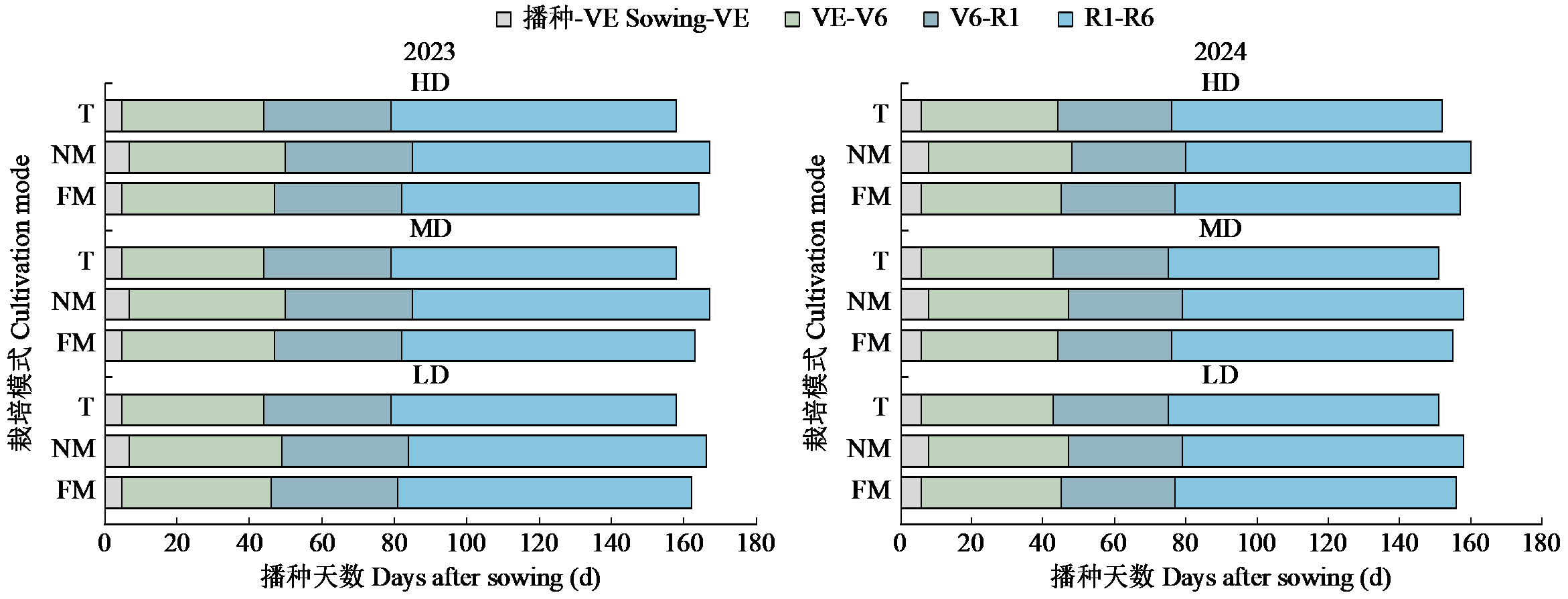
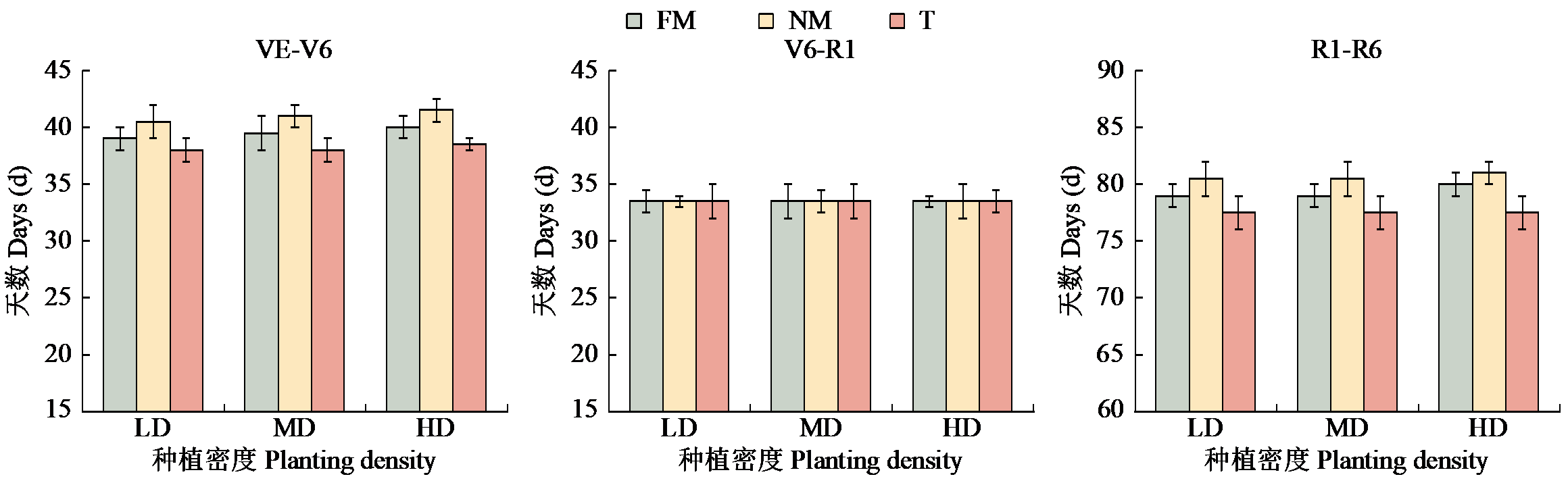
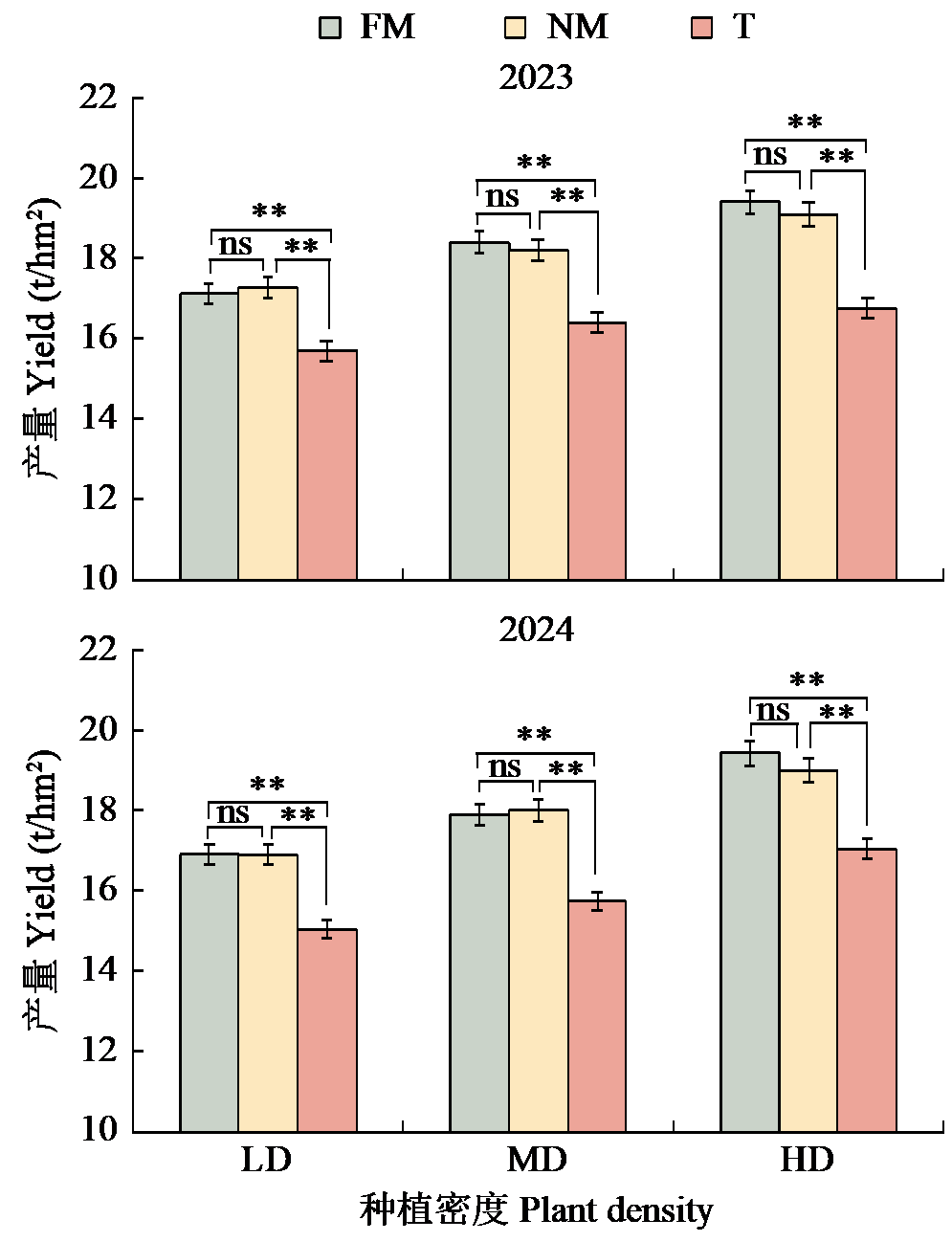
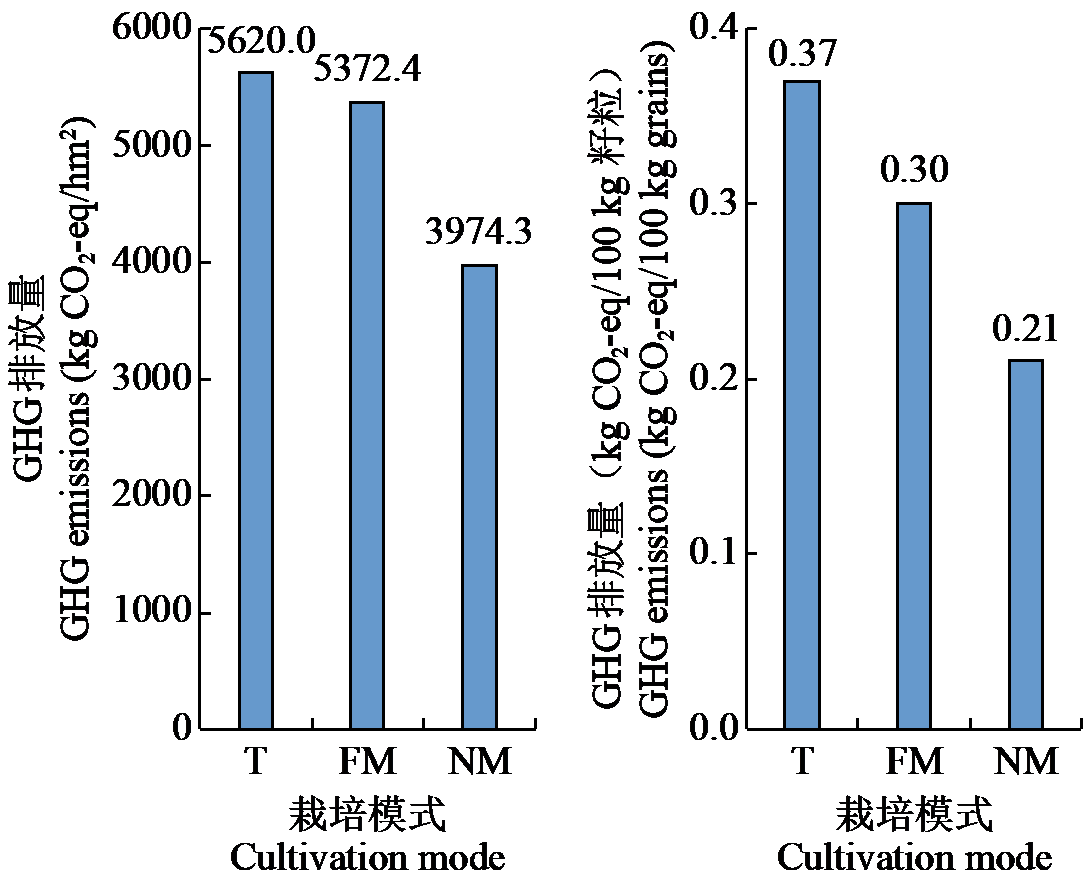
摘要: 全球农业正面临着保障粮食安全与实现绿色可持续发展的双重挑战。设置膜下滴灌(FM)、无膜浅埋滴灌(NM)和覆膜漫灌(T)3种栽培模式,以及7.5万(低密)、9.0万(中密)和10.5万株/hm2(高密)3个种植密度,探讨其对玉米干物质积累量、产量形成及经济和生态效益协同机制的影响。结果表明,FM模式显著缩短玉米生育期,出苗期和成熟期较NM模式分别提前2.5~3.0和4.0~6.5 d;但NM模式的干物质积累量与FM模式无显著差异,且收获指数(HI)持平。高密度种植下,NM模式的籽粒产量与FM模式相当,但其单位产量温室气体(GHG)排放强度降低30.0%。NM模式消除地膜生产排放,减排贡献18.7%。经济方面,NM模式净收益较T模式提高87.3%,得益于地膜成本节省及水肥利用效率提升;环境方面,其单位产量GHG排放强度低于全球玉米生产均值。综上,NM模式在实现“吨粮田”目标的同时兼顾“低碳田”建设,为河套灌区探索粮食生产与低碳发展协同路径提供了理论依据。


| [1] |
李少昆, 赵久然, 董树亭, 等. 中国玉米栽培研究进展与展望. 中国农业科学, 2017, 50(11):1941-1959.
doi: 10.3864/j.issn.0578-1752.2017.11.001 |
| [2] | 苏天增, 丁光省, 任伟, 等. 豫东平原夏直播青贮玉米高产形态生理指标及栽培技术分析. 山西农业科学, 2020, 48(3):387-391,400. |
| [3] | 李少昆, 王克如, 谢瑞芝, 等. 实施密植高产机械化生产实现玉米高产高效协同. 作物杂志, 2016(4):1-6. |
| [4] |
Assefa Y, Cater P, Hinds M, et al. Analysis of long term study indicates both agronomic optimal plant density and increase maize yield per plant contributed to yield gain. Scientific Reports, 2018, 8(1):4937.
doi: 10.1038/s41598-018-23362-x pmid: 29563534 |
| [5] | Liu T N, Gu L M, Dong S T, et al. Optimum leaf removal increases canopy apparent photosynthesis, 13C-photosynthate distribution and grain yield of maize crops grown at high density. Field Crops Research, 2015,170:32-39. |
| [6] | 程雅婷, 李荣发, 王克如, 等. 中国春玉米高产纪录的创造与思考. 玉米科学, 2021, 29(2):56-59. |
| [7] |
Luo N, Wang X Y, Hou J M, et al. Agronomic optimal plant density for yield improvement in the major maize regions of China. Crop Science, 2020, 60(3):1580-1590.
doi: 10.1002/csc2.v60.3 |
| [8] |
Zhou L M, Li F M, Jin S L, et al. How two ridges and the furrow mulched with plastic film affect soil water, soil temperature and yield of maize on the semiarid Loess Plateau of China. Field Crops Research, 2009, 113(1):41-47.
doi: 10.1016/j.fcr.2009.04.005 |
| [9] |
Wang X L, Li F M, Yu J, et al. Increasing potato yields with additional water and increased soil temperature. Agricultural Water Management, 2005, 78(3):181-194.
doi: 10.1016/j.agwat.2005.02.006 |
| [10] |
Sun D B, Li H G, Wang E L, et al. An overview of the use of plastic-film mulching in China to increase crop yield and water-use efficiency. National Science Review, 2020, 7(10):1523-1526.
doi: 10.1093/nsr/nwaa146 pmid: 34691485 |
| [11] |
Liu E K, He W Q, Yan C R. ‘White revolution’ to ‘white pollution’—agricultural plastic film mulch in China. Environmental Research Letters, 2014, 9(9):091001.
doi: 10.1088/1748-9326/9/9/091001 |
| [12] | Yu Y X, Zhang Z H, Zhang Y X, et al. Abundances of agricultural microplastics and their contribution to the soil organic carbon pool in plastic film mulching fields of Xinjiang, China. Chemosphere, 2023,316:137837. |
| [13] | 严昌荣, 梅旭荣, 何文清, 等. 农用地膜残留污染的现状与防治. 农业工程学报, 2006, 22(11):269-272. |
| [14] | 严昌荣, 何文清, 薛颖昊, 等. 生物降解地膜应用与地膜残留污染防控. 生物工程学报, 2016, 32(6):748-760. |
| [15] | 解红娥, 李永山, 杨淑巧, 等. 农田残膜对土壤环境及作物生长发育的影响研究. 农业环境科学学报, 2007,26(增):153-156. |
| [16] | 严昌荣, 刘恩科, 舒帆, 等. 我国地膜覆盖和残留污染特点与防控技术. 农业资源与环境学报, 2014, 31(2):95-102. |
| [17] | 毕继业, 王秀芬, 朱道林. 地膜覆盖对农作物产量的影响. 农业工程学报, 2008, 24(11):172-175. |
| [18] | 董合干, 王栋, 王迎涛, 等. 新疆石河子地区棉田地膜残留的时空分布特征. 干旱区资源与环境, 2013, 27(9):182-186. |
| [19] | He D F, Luo Y M, Lu S B, et al. Microplastics in soils: analytical methods, pollution characteristics and ecological risks. Trends in Analytical Chemistry, 2018,109:163-172. |
| [20] | 张婧. 河套地区枸杞栽培与管理技术. 果农之友, 2023(11):44-47. |
| [21] | 陈新海, 沈文琳, 杨文化, 等. 河套地区玉米生产现状及发展趋势. 现代农业, 2022(3):46-49. |
| [22] | 邹宇锋. 河套灌区不同覆膜灌溉方式对农田土壤水盐调控及春玉米产量的影响. 杨凌:西北农林科技大学, 2020. |
| [23] |
杜君, 杨占平, 魏义长, 等. 北方夏玉米滴灌施肥一体化技术应用效果. 核农学报, 2020, 34(3):621-628.
doi: 10.11869/j.issn.100-8551.2020.03.0621 |
| [24] | 梅园雪, 冯玉涛, 冯天骄, 等. 玉米浅埋滴灌节水种植模式产量与效益分析. 玉米科学, 2018, 26(1):98-102. |
| [25] | 杨恒山, 薛新伟, 张瑞富, 等. 灌溉方式对西辽河平原玉米产量及水分利用效率的影响. 农业工程学报, 2019, 35(21):69-77. |
| [26] | 刘旭艳. 机械自动化技术对农业机械的影响. 农家参谋, 2024(23):40-42. |
| [27] | 喻树迅. 无膜棉对中国棉花产业转型升级的意义. 农学学报, 2019, 9(3):1-5. |
| [28] | Zhang G Q, Ming B, Xie R Z, et al. Reducing plastic film mulching and optimizing agronomic management can ensure food security and reduce carbon emissions in irrigated maize areas. Science of the Total Environment, 2023,883:163507. |
| [29] | 周鑫, 杨恒山, 邰继承, 等. 浅埋滴灌不同灌溉定额对玉米田土壤盐分运移的影响. 玉米科学, 2024, 32(5):60-66. |
| [30] | He G, Wang Z H, Li S X, et al. Plastic mulch: tradeoffs between productivity and greenhouse gas emissions. Journal of Cleaner Production, 2018,172:1311-1318. |
| [31] |
Wang Y P, Li X G, Hai L, et al. Film fully-mulched ridge-furrow cropping affects soil biochemical properties and maize nutrient uptake in a rainfed semi-arid environment. Soil Science and Plant Nutrition, 2014, 60(4):486-498.
doi: 10.1080/00380768.2014.909709 |
| [32] | 马树庆, 王琪, 郭建平, 等. 东北地区玉米地膜覆盖增温增产效应的地域变化规律. 农业工程学报, 2007, 23(8):66-71. |
| [33] |
王占彪, 王猛, 陈阜. 华北平原作物生产碳足迹分析. 中国农业科学, 2015, 48(1):83-92.
doi: 10.3864/j.issn.0578-1752.2015.01.09 |
| [1] | 侯艳红, 杜梦园, 师兴凯, 刘迪, 范志业, 陈莉, 王文豪, 沈海龙, 袁刘正, 陈琦, 李世民, 黄建荣. 豫中地区亚洲玉米螟年发生世代的演变[J]. 作物杂志, 2026, (4): 263–269 |
| [2] | 王鑫琦, 车欣洋, 张海洋, 王旭, 李玉涵, 赵硕, 刘思贝, 王雪贺缘, 贺琳, 徐晶宇. 玉米二酰甘油激酶基因耐低温分析[J]. 作物杂志, 2026, (4): 27–35 |
| [3] | 展慧, 吴擎, 李丽君. 机器视觉光谱成像技术在玉米种子质量检测中的应用[J]. 作物杂志, 2026, (4): 8–16 |
| [4] | 盛奇明, 徐永盛, 荆风雪, 苏纯洁, 解光宁, 孙晓莎. 农杆菌介导的玉米叶片遗传转化体系的建立[J]. 作物杂志, 2026, (3): 141–146 |
| [5] | 孙梦琳, 符晓, 祁显涛, 刘昌林, 谢传晓, 郭晋杰, 朱金洁. 农杆菌碱基编辑技术的建立与recA基因精准编辑型菌株应用[J]. 作物杂志, 2026, (3): 147–154 |
| [6] | 吕建晔, 丁万红, 刘强, 张鹏鹏, 唐勇, 任红松, 薛军, 明博, 李少昆. 密植精准调控技术对新疆鲜食糯玉米商品品质的影响[J]. 作物杂志, 2026, (3): 64–70 |
| [7] | 颜培启, 孔令捷, 池昇隆, 于洋, 孔德庸, 孙海燕. 植物生长调节剂复配腐植酸对玉米茎秆强度、籽粒灌浆及产量的影响[J]. 作物杂志, 2026, (3): 71–79 |
| [8] | 罗亚伟, 农永前, 苏治友, 阳太亿, 杨翠芳, 刘丽敏, 陆衫羽, 苏树权, 周珊, 高轶静. 不同蔗区施肥量和种植密度对壮糖6号产量及经济效益的影响[J]. 作物杂志, 2026, (2): 194–201 |
| [9] | 甄志华, 冯茜, 郭凯丰, 董泽辰, 王健, 梁利娜. 氧化石墨烯―烟嘧磺隆复合除草剂对甜玉米幼苗糖―淀粉代谢的影响[J]. 作物杂志, 2026, (2): 209–216 |
| [10] | 王静, 王志红, 侯现军, 艾振光, 闫丽慧, 王昌亮, 张国合, 常建智. 玉米自交系气生根性状与抗倒伏性的相关性及通径分析[J]. 作物杂志, 2026, (2): 23–29 |
| [11] | 郝军, 张蔚, 白春华, 黄利春, 尤艳华, 卢勇鑫, 李喆, 连东阳, 武文涛, 陈杨, 张莉, 刘红波. 有机肥替代化肥对玉米产量及养分吸收利用的影响[J]. 作物杂志, 2026, (2): 98–108 |
| [12] | 刘陈, 王伟妮, 廖世鹏, 任涛, 郭晨, 许源源, 于道海, 刘俊梅, 张豪强, 孙霞, 鲁剑巍. 沿黄灌区不同种植模式下麦后复种油菜适宜施氮量研究[J]. 作物杂志, 2026, (1): 104–110 |
| [13] | 周文丽, 郝淼艺, 张仁和. 高密度种植下氮肥对玉米根系生长及氮代谢的影响[J]. 作物杂志, 2026, (1): 125–132 |
| [14] | 马小明, 齐翔鲲, 谭雪, 史孟豫, 王玉凤, 付健, 杨克军. 免耕秸秆覆盖对半干旱区土壤团聚体稳定性和玉米产量的影响[J]. 作物杂志, 2026, (1): 152–159 |
| [15] | 郑晓娟, 孙华, 郭宁, 刘树森, 张海剑, 马红霞, 石洁. 玉米病原菌对引起大豆根腐病的风险评估[J]. 作物杂志, 2026, (1): 266–270 |
|
||