

作物杂志,2026, 第1期: 104–110 doi: 10.16035/j.issn.1001-7283.2026.01.013
沿黄灌区不同种植模式下麦后复种油菜适宜施氮量研究
刘陈1( ), 王伟妮2, 廖世鹏1, 任涛1, 郭晨3, 许源源1, 于道海1, 刘俊梅2, 张豪强2, 孙霞2, 鲁剑巍1()
- 1华中农业大学资源与环境学院/农业农村部长江中下游耕地保育重点实验室,430070,湖北武汉
2鄂尔多斯市农牧业生态与资源保护中心,017010,内蒙古鄂尔多斯
3内蒙古自治区农牧业科学院植物保护研究所,010031,内蒙古呼和浩特
Study on Optimal Nitrogen Application Rate for Relay Cropped Rapeseed after Wheat under Different Planting Patterns in the Yellow River Irrigation Region
Liu Chen1(), Wang Weini2, Liao Shipeng1, Ren Tao1, Guo Chen3, Xu Yuanyuan1, Yu Daohai1, Liu Junmei2, Zhang Haoqiang2, Sun Xia2, Lu Jianwei1()
- 1College of Resources and Environment, Huazhong Agricultural University / Key Laboratory of Arable Land Conservation (Middle and Lower Reaches of Yangtze River), Ministry of Agriculture and Rural Affairs, Wuhan 430070, Hubei, China
2Ordos Agricultural & Animal Husbandry Ecology and Resource Protection Center, Ordos 017010, Inner Mongolia, China
3Plant Protection Institute, Inner Mongolia Academy of Agricultural and Animal Husbandry Sciences, Hohhot 010031, Inner Mongolia, China
摘要:
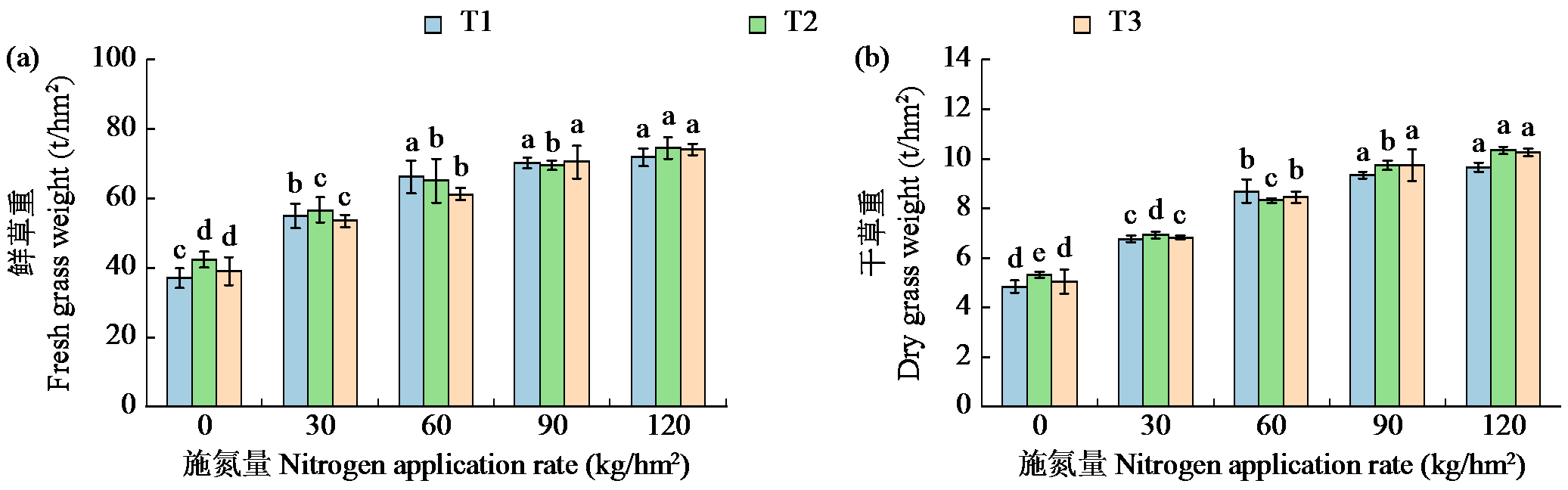
为明确麦后复种油菜的适宜种植模式和施氮量,在内蒙古达拉特旗开展田间试验,在3种种植模式秸秆移走翻耕(T1)、秸秆还田翻耕(T2)和秸秆移走免耕(T3)下设置5个施氮量梯度(0、30、60、90和120 kg/hm2),以油菜生物量、养分积累量和经济效益为依据研究适宜的氮肥用量。研究结果表明,T2处理的油菜地上部生物量、碳和钾积累量均高于T1和T3处理,T2处理下各施氮处理的鲜草重、干草重、碳积累量和钾积累量平均可以达到60.5 t/hm2、8.0 t/hm2、2981 kg/hm2和253 kg/hm2。施氮量显著影响油菜生物量和养分积累量,在本试验施氮量范围下油菜生物量和各养分积累量均随着施氮量的增加而提高,与不施氮相比,施氮量为30 kg/hm2时油菜地上部鲜草重和干草重分别增加39.8%和35.1%;施氮量60 kg/hm2时分别增加63.0%和67.9%;施氮量90 kg/hm2时分别增加78.1%和89.0%;施氮量120 kg/hm2时分别增加86.5%和98.1%,油菜绿肥各养分积累量随播种量变化的趋势与生物量基本一致。不同种植模式和施氮量下不同用途的油菜投入成本和产出不同,综合考虑不同模式下不同用途油菜的生物量和养分积累量、经济效益等因素,小麦收获后油菜可以采用麦秸移走免耕方式种植,在油菜做青贮饲料时适宜的施氮量为120 kg/hm2,做油菜绿肥时适宜施氮量为90 kg/hm2。

| [1] | 韩一军, 韩亭辉. “十四五”时期我国小麦增产潜力分析与实现路径. 农业经济问题, 2021(7):38-46. |
| [2] | 贾立国, 郝云凤, 冯君伟, 等. 河套灌区春小麦化肥减施增效技术及其生理基础研究. 土壤通报, 2020, 51(6):1416-1421. |
| [3] | 张思奇. 宁夏引黄灌区麦后复种模式的生产力、效益与价值链研究. 杨凌:西北农林科技大学, 2022. |
| [4] | 傅廷栋, 梁华东, 周广生. 油菜绿肥在现代农业中的优势及发展建议. 中国农技推广, 2012, 28(8):37-39. |
| [5] | 顾炽明, 李银水, 谢立华, 等. 浅析油菜作为绿肥的应用优势. 中国土壤与肥料, 2019(1):180-183. |
| [6] | 汪波, 周广生, 傅廷栋. 饲料油菜:极具发展前景的大田饲料作物. 中国农村科技, 2022(9):9-11. |
| [7] | 谷志勇, 刘宇航, 王海波, 等. 饲用油菜梯度替代日粮中粗饲料对湖羊生长性能和经济效益的影响. 饲料研究, 2023, 46(7):6-9. |
| [8] | 刘振华, 张霞, 夏清, 等. 磷肥与播量对麦后复种饲料油菜干物质量及土壤肥力的影响. 山西农业科学, 2022, 50(10):1446-1454. |
| [9] | Litalien A, Zeeb B. Curing the earth: a review of anthropogenic soil salinization and plant-based strategies for sustainable mitigation. Science of the Total Environment, 2020,698:134235. |
| [10] |
景宇鹏, 张建中, 李秀萍, 等. 种植绿肥作物对河套灌区盐碱土改良效果研究. 北方农业学报, 2019, 47(6):42-46.
doi: 10.3969/j.issn.2096-1197.2019.06.07 |
| [11] | 马致慧, 李惠霞, 何文寿. 不同施肥量对麦后复种饲料油菜养分吸收及产量的影响——以宁夏引黄灌区为例. 湖南农业科学, 2020(5):26-30,36. |
| [12] | 杨瑞吉, 王开柏, 袁政祥, 等. 不同施氮水平对麦茬复种饲料油菜生长性状的影响. 西北农业学报, 2007(2):46-50,79. |
| [13] | 熊元清, 崔琴. 油菜四种不同机械化种植方法的产量与效益分析. 农机科技推广, 2023(8):33-35. |
| [14] |
田贵生, 周志华, 程应德, 等. 鄂东晚收稻田油菜两种飞播种植模式的产量及效益比较. 中国农学通报, 2022, 38(18):57-61.
doi: 10.11924/j.issn.1000-6850.casb2021-0792 |
| [15] |
汪波, 文静, 张凤华, 等. 耐盐碱油菜品种选育及修复利用盐碱地研究进展. 科技导报, 2021, 39(23):59-64.
doi: 10.3981/j.issn.1000-7857.2021.23.009 |
| [16] | 鲍士旦. 土壤农化分析. 北京: 中国农业出版社, 2000. |
| [17] | 张力, 张占琴, 杨相昆. 不同施肥方式和施肥量对麦后复种饲料油菜产量及经济效益的影响. 新疆农垦科技, 2021, 44(5):44-46. |
| [18] | 刘水苗, 关小康, 刘长硕, 等. 适宜耕作模式提高黄淮海平原冬小麦产量并改善土壤水肥状况. 农业工程学报, 2023, 39 (18):82-91. |
| [19] | 侯素素, 董心怡, 戴志刚, 等. 基于田间试验的秸秆还田化肥替减潜力综合分析. 农业工程学报, 2023, 39(5):70-78. |
| [20] | 鲁悦, 鲍雪莲, 霍海南, 等. 免耕条件下不同量秸秆覆盖还田提高东北黑土区玉米光合性能和产量的效应. 植物营养与肥料学报, 2023, 29(5):840-847. |
| [21] | 杜光辉, 史鹏飞, 聂良鹏, 等. 有机肥替代氮肥对小麦产量、品质及养分积累的影响. 江苏农业科学, 2023, 51(18):83-87. |
| [22] | 葛君, 孟自力, 张志标, 等. 肥料配施对小麦根系、根际土壤微生物及秸秆养分积累的影响. 江苏农业科学, 2022, 50(11):214-219. |
| [23] |
梁鑫宇, 宋明丹, 韩梅, 等. 不同农作物秸秆腐解规律及模型预测评价. 核农学报, 2023, 37(6):1244-1252.
doi: 10.11869/j.issn.1000-8551.2023.06.1244 |
| [24] | 魏子奇. 施氮量与播种量对麦后复种饲料(绿肥)油菜产量及品质的影响. 银川:宁夏大学, 2019. |
| [25] | 朱倩倩, 刘国宏, 许咏梅, 等. 水氮对新疆南部麦后复种饲料油菜产量和品质的影响. 中国生态农业学报, 2019, 27(7):1033-1041. |
| [26] | 胡敏, 魏全全, 任涛, 等. 刈割后氮肥施用对饲料油菜地上部产量及品质的影响. 草业科学, 2017, 34(10):2124-2129. |
| [27] |
赵曼利, 戴志刚, 顾炽明, 等. 油菜用地养地的作物优势及其在冬闲田开发中的应用潜力. 中国油料作物学报, 2022, 44 (6):1139-1147.
doi: 10.19802/j.issn.1007-9084.2022221 |
| [28] | 刘康, 韦彩会, 廖祥生, 等. 广西绿肥专用型油菜品种(系)筛选试验. 现代农业科技, 2021,21:47-51. |
| [29] | 周鹏. 麦后复种油菜有机无机肥配施与翻压方式对土壤肥力及作物产量的影响. 银川:宁夏大学, 2020. |
| [30] |
毕影东, 樊超, 周广生, 等. 北方寒区饲肥兼用型油菜综合利用研究进展. 中国油料作物学报, 2023, 45(3):437-443.
doi: 10.19802/j.issn.1007-9084.2022080 |
| [31] | 陈玲英, 任涛, 周志华, 等. 鄂东稻田油菜免耕飞播技术模式的产量及效益评价. 湖北农业科学, 2022, 61(9):8-12. |
| [1] | 王云江, 王玉莹, 刘畅, 敬雪妍, 羊辰, 孙彩霞, 王春平. 施氮量对小麦籽粒主要矿质元素含量的影响和有效性分析[J]. 作物杂志, 2026, (1): 240–248 |
| [2] | 李青欣, 金秀良, 宋晓, 张珂珂, 郭腾飞, 黄绍敏, 岳克, 丁世杰, 黄明, 李友军. 有机肥部分替代氮肥对豫东冬小麦生长及土壤特性的影响[J]. 作物杂志, 2025, (6): 121–131 |
| [3] | 江莹芬, 荣松柏, 李成, 吴新杰, 费维新, 陈凤祥. 一种简化的甘蓝型油菜混播混收高效制种技术[J]. 作物杂志, 2025, (6): 263–266 |
| [4] | 赵彩霞, 白玛央珍, 杨广环, 唐琳. 不同类型油菜资源农艺性状鉴定及聚类分析[J]. 作物杂志, 2025, (5): 120–127 |
| [5] | 张金东, 王成, 卢环, 曾玲玲, 张巩亮, 孙浩月, 刘悦, 杨贺麟, 侯晓敏. 盐碱胁迫下不同基因型绿豆对外源BR的响应[J]. 作物杂志, 2025, (5): 54–60 |
| [6] | 瞿宏悦, 朱林欣, 何也君, 邵明宇, 韩昕冉, 揭雨成, 邢虎成. 苎麻浸提液对油菜种子发芽及角果期渍涝胁迫的影响[J]. 作物杂志, 2025, (4): 142–149 |
| [7] | 张承洁, 王丽, 胡浩然, 宁丽云, 吴一帆, 张巨松. 施氮量与种植密度对海岛棉铃叶系统抗氧化特性的影响[J]. 作物杂志, 2025, (4): 164–172 |
| [8] | 吴凤婕, 侯楠, 齐翔鲲, 杨克军, 付健, 王玉凤. 不同施氮量对半干旱区糯玉米主要营养品质及产量的影响[J]. 作物杂志, 2025, (4): 267–275 |
| [9] | 王志刚, 刘强, 王谨, 巩敬锦, 姚群英. 未来气象条件下旱地春小麦产量及生物量对施氮量和播期变化的响应模拟[J]. 作物杂志, 2025, (4): 276–282 |
| [10] | 金萍, 柳海东. 青海省油菜种业发展现状与对策建议[J]. 作物杂志, 2025, (3): 11–15 |
| [11] | 王丽, 张承洁, 胡浩然, 宁丽云, 吴一帆, 郭仁松, 张巨松. 施氮量和种植密度对海岛棉冠层结构和光合特性的影响[J]. 作物杂志, 2025, (3): 116–124 |
| [12] | 杨天旭, 李谨成, 黄瑞寅, 邓文君, 王军, 王维, 蔡一霞. 施氮量与基追比对烤烟烟碱合成及关键酶活性的调控效应[J]. 作物杂志, 2025, (3): 156–164 |
| [13] | 龙卫华, 李亚珍, 王亚坤, 王永峰, 黄镇, 尼玛次仁, 张幸果. 油饲兼用型油菜品系在拉萨地区的适应性分析[J]. 作物杂志, 2025, (3): 190–194 |
| [14] | 李虎, 黄秋要, 吴子帅, 刘广林, 陈传华, 罗群昌, 朱其南. 种植密度和施氮量对优质常规稻桂育12产量和米质的影响[J]. 作物杂志, 2025, (3): 195–201 |
| [15] | 兰秀, 李恒锐, 何洪良, 马仙花, 黄小娟, 李天元, 韦海球, 江清梅, 阮丽霞, 杨海霞, 刘炳继, 汤丹峰. 甘蔗/凉粉草间作对作物产量、品质及经济效益的影响[J]. 作物杂志, 2025, (3): 202–209 |
|
||