

作物杂志,2026, 第4期: 27–35 doi: 10.16035/j.issn.1001-7283.2026.04.004
玉米二酰甘油激酶基因耐低温分析
王鑫琦( ), 车欣洋, 张海洋, 王旭, 李玉涵, 赵硕, 刘思贝, 王雪贺缘, 贺琳, 徐晶宇()
黑龙江八一农垦大学农学院/黑龙江省现代农业栽培技术与作物种质改良重点实验室, 163319, 黑龙江大庆
Analysis of Low-Temperature Tolerance of Diacylglycerol Kinase Gene in Maize
Wang Xinqi(), Che Xinyang, Zhang Haiyang, Wang Xu, Li Yuhan, Zhao Shuo, Liu Sibei, Wang Xueheyuan, He Lin, Xu Jingyu()
College of Agriculture ,Heilongjiang Bayi Agricultural University / Heilongjiang Provincial Key Laboratory of Modern Agricultural Cultivation Technology and Crop Germplasm Improvement Daqing 163319, Heilongjiang, China
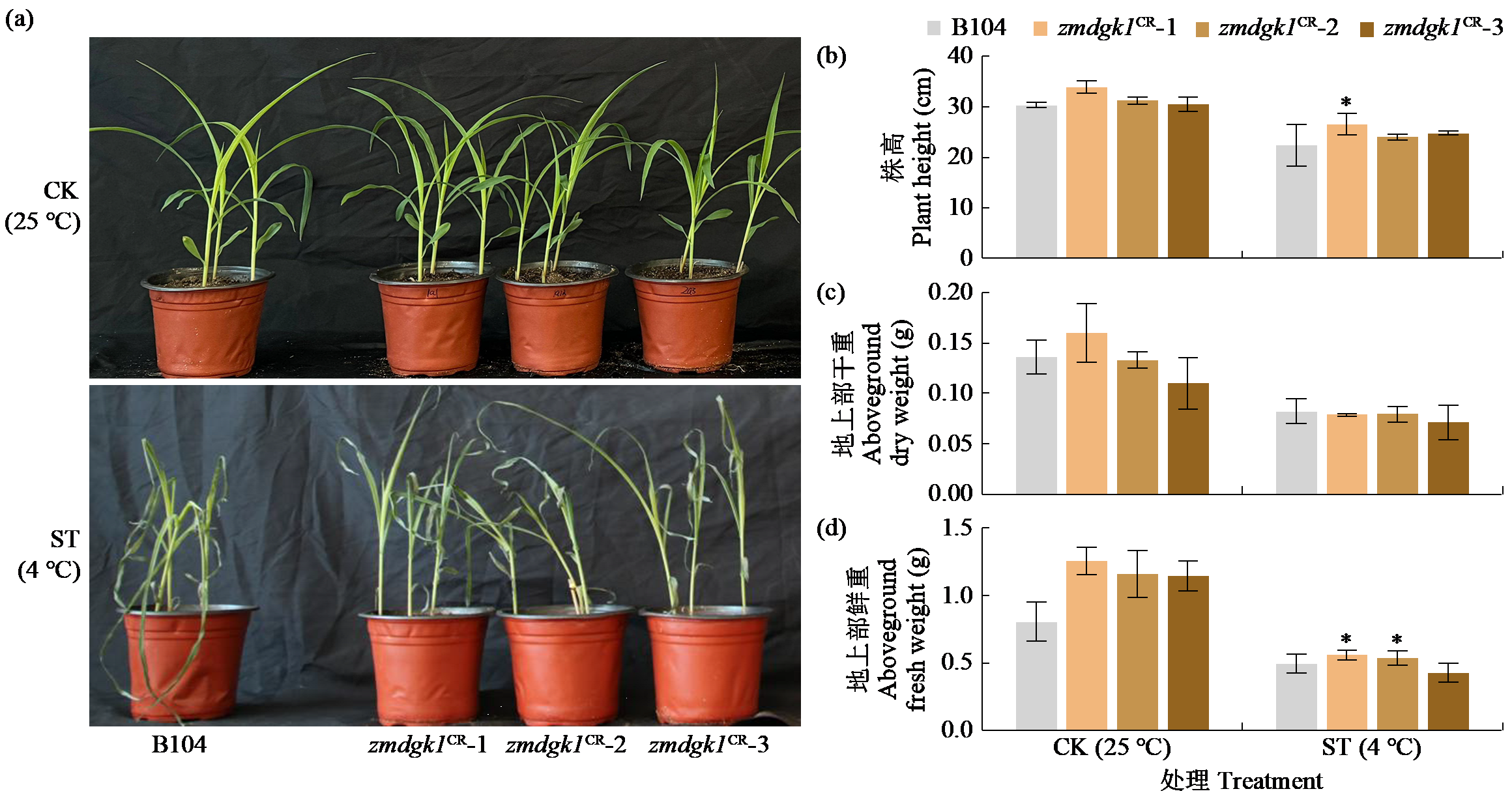
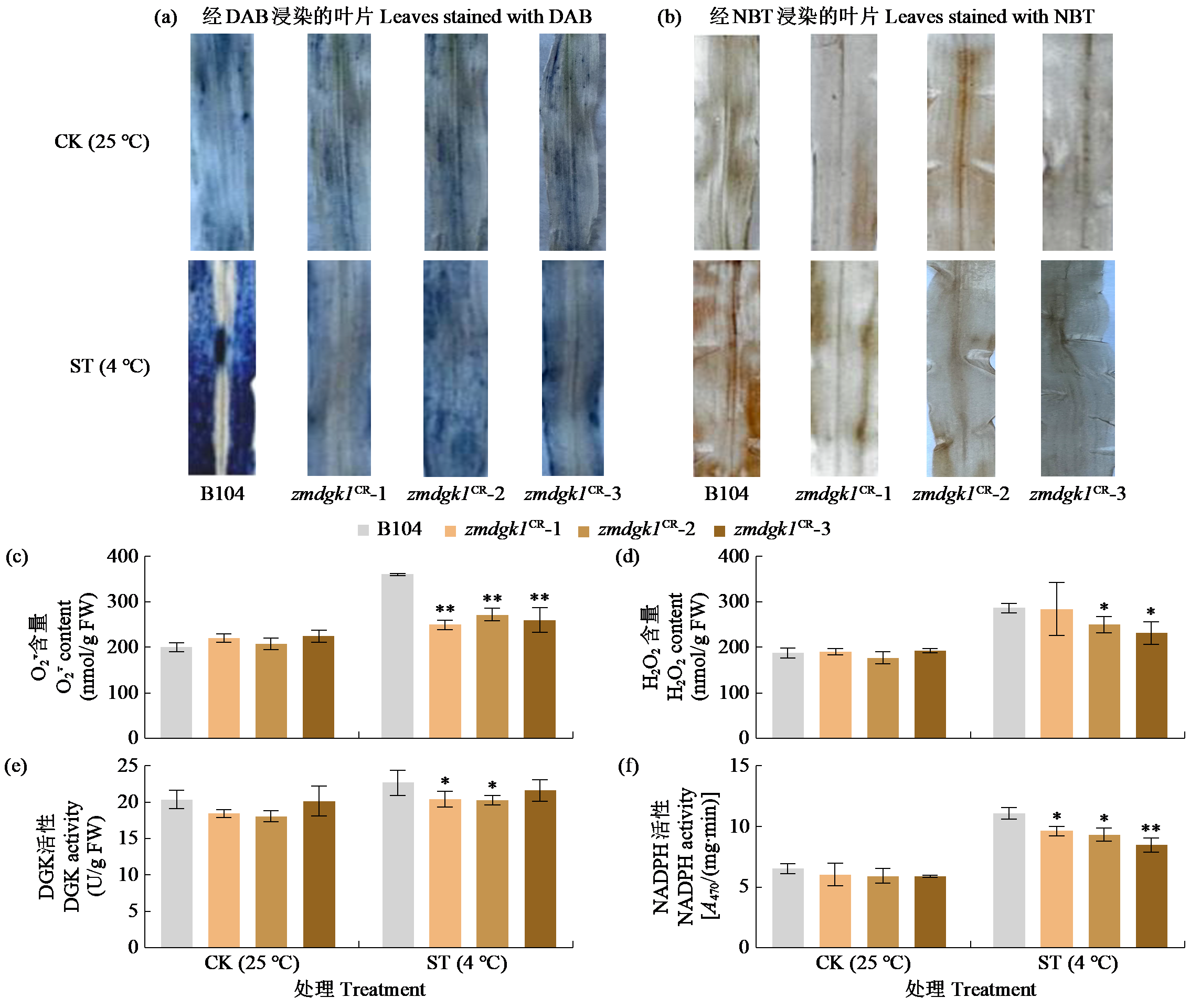
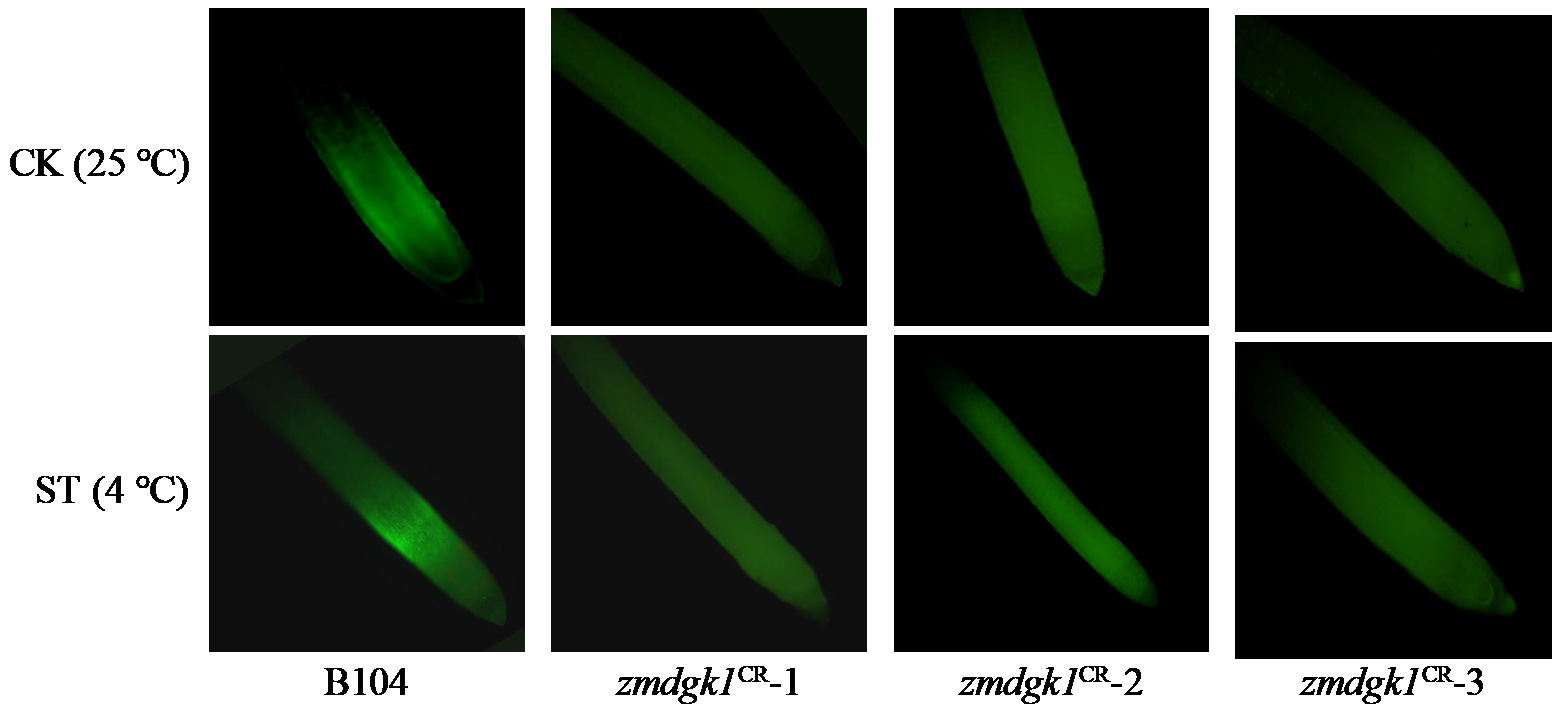
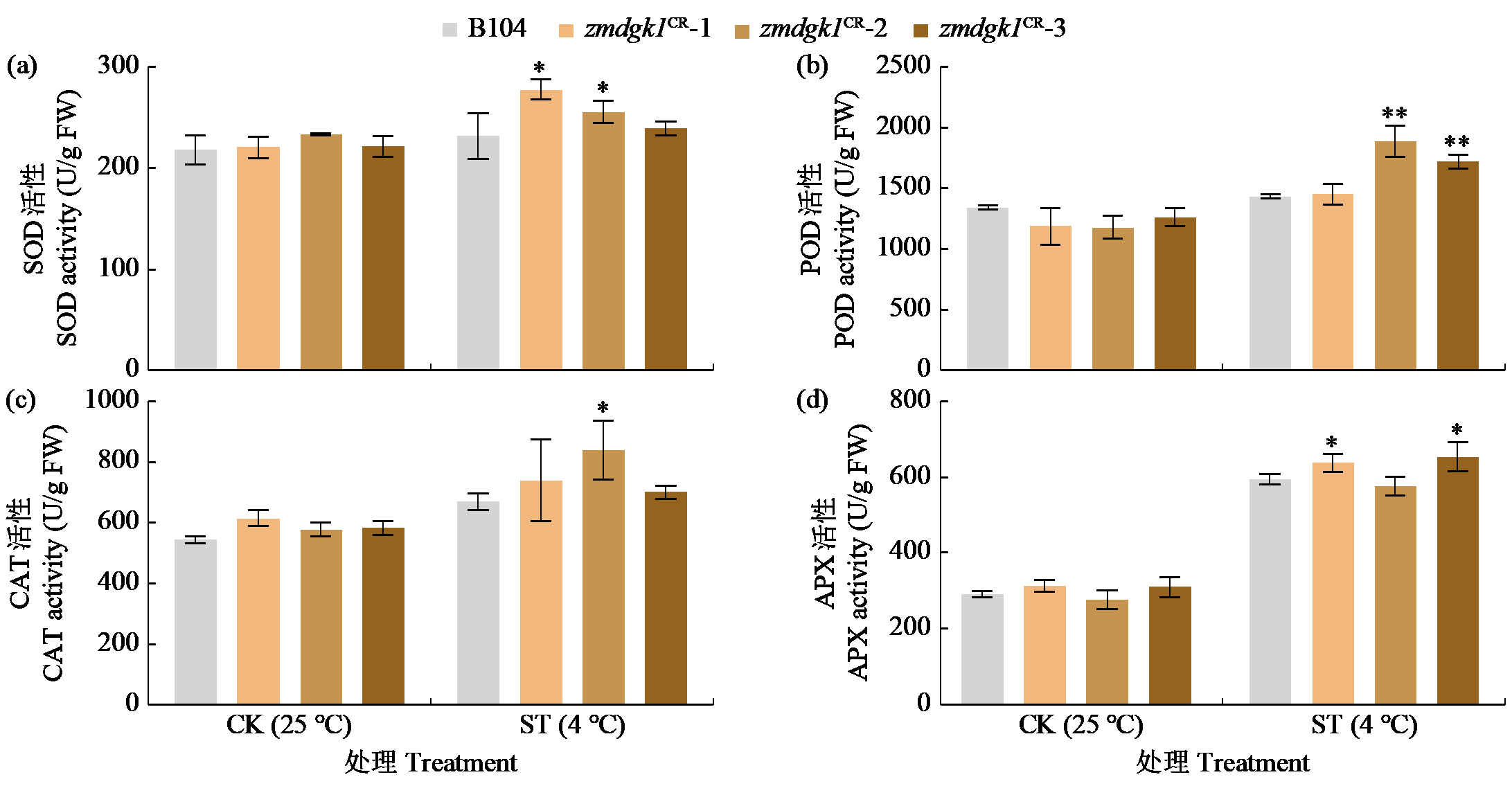
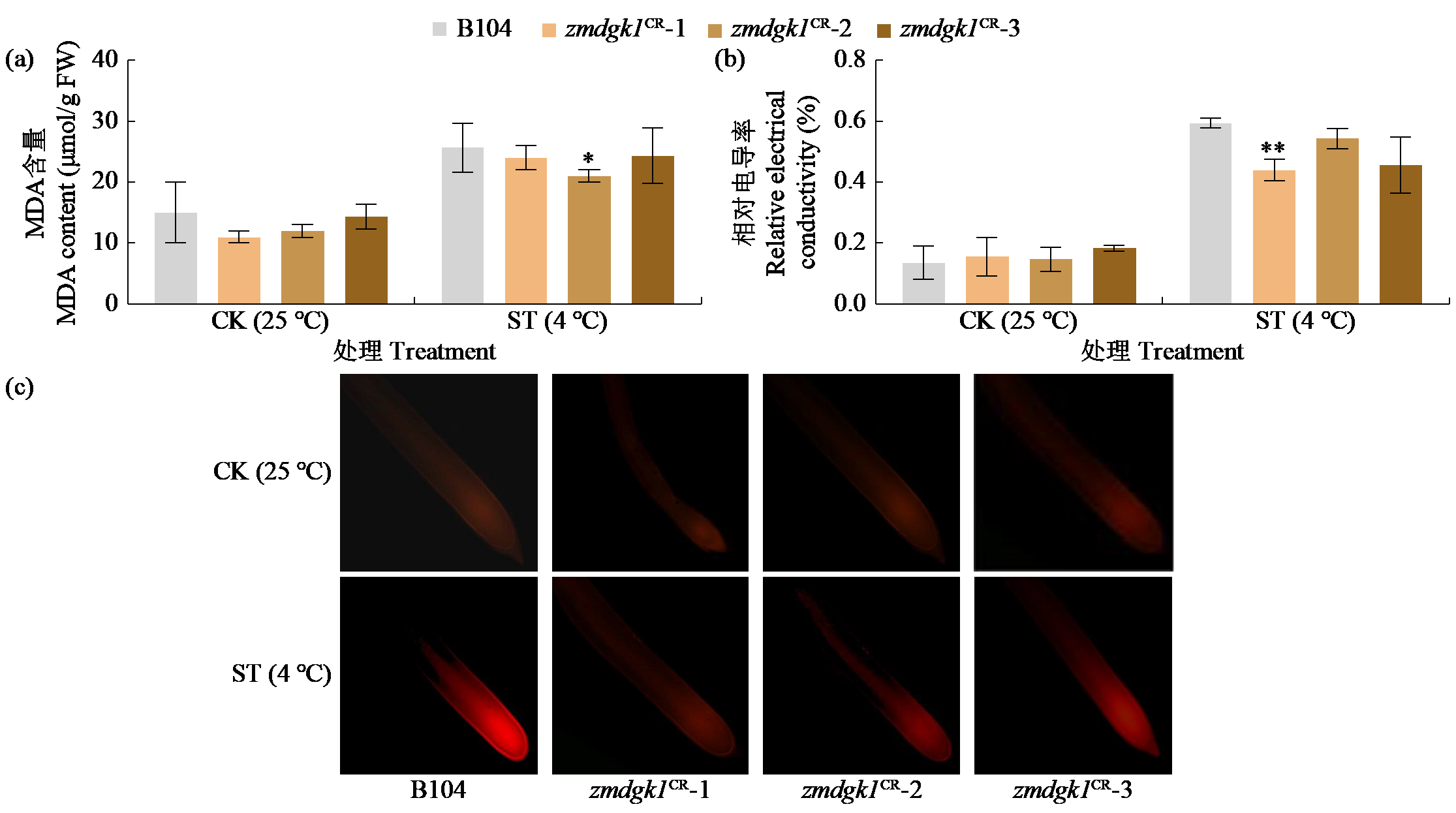
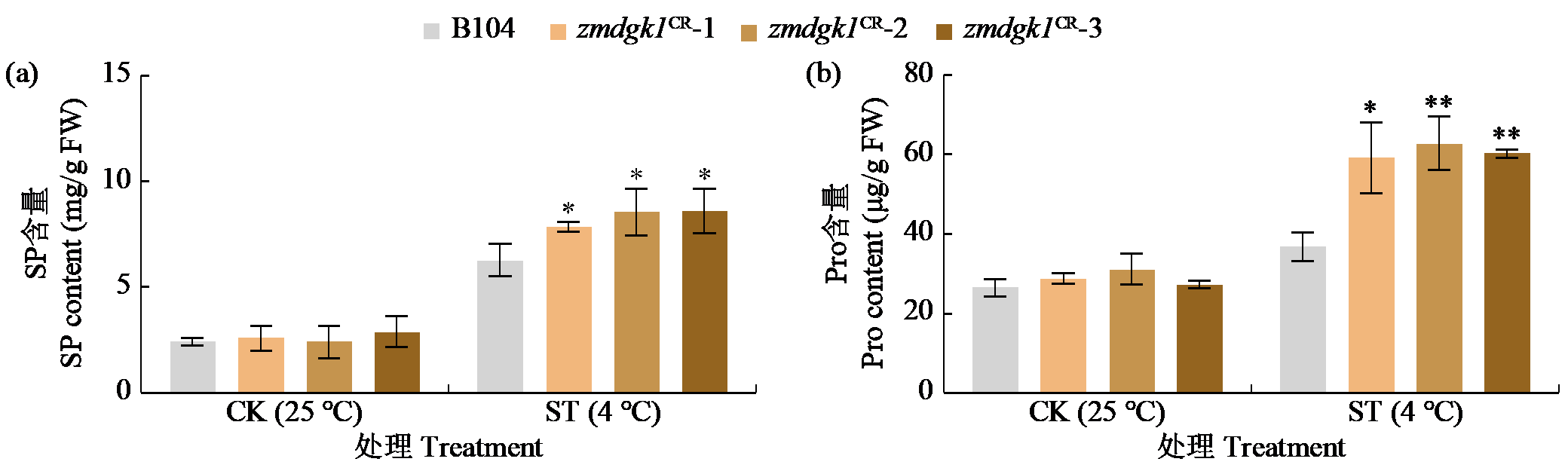
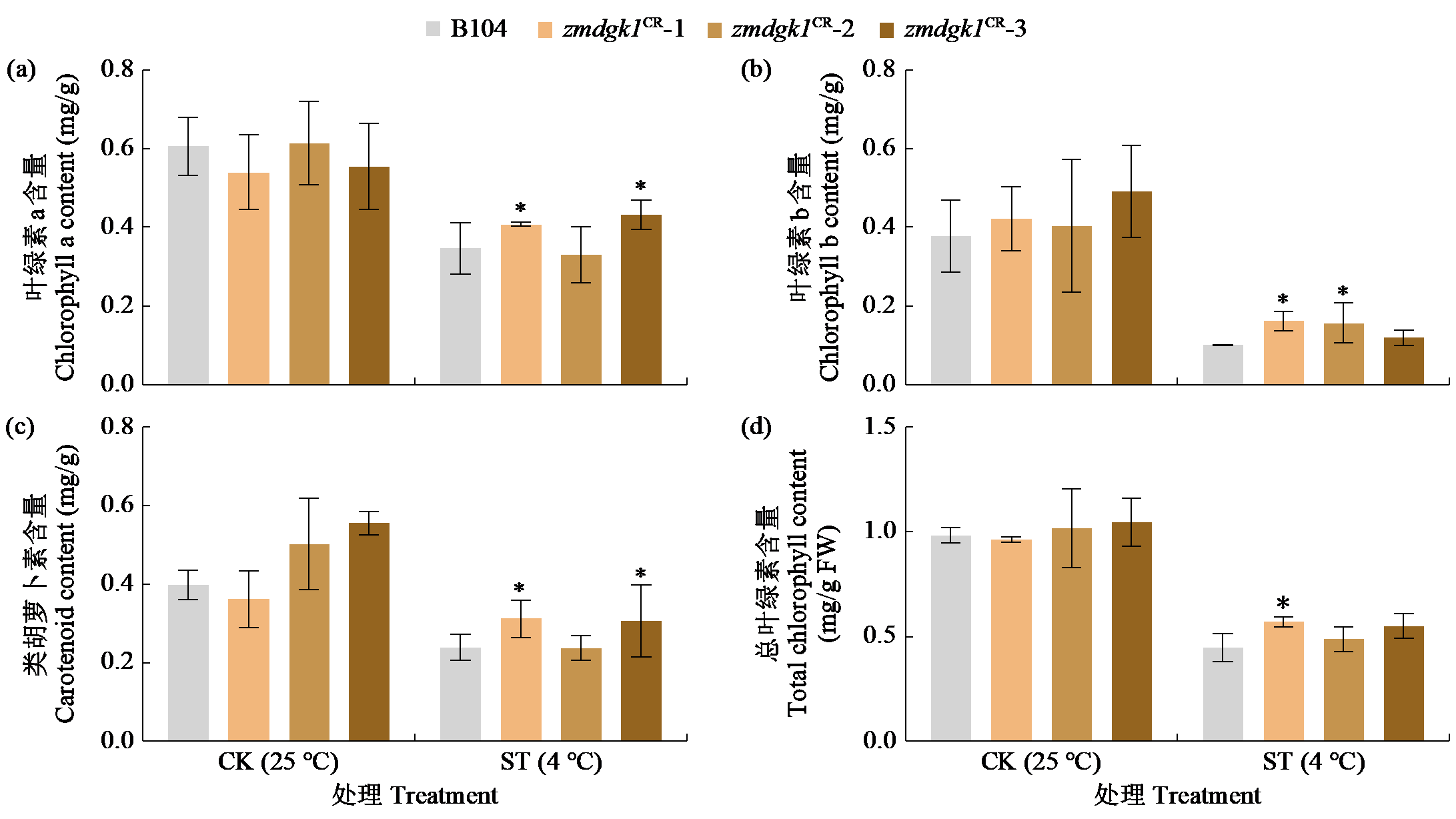
摘要: 二酰甘油激酶(DGK)可催化二酰甘油生成磷脂酸,参与植物对多种非生物胁迫的响应。采用CRISPR/ Cas9技术敲除玉米(Zea mays L.)ZmDGK1基因,获得zmdgk1CR T3代纯合株系(遗传转化受体为自交系B104),将3个zmdgk1CR株系和B104进行低温胁迫处理,测定表型和生理指标。结果表明,3个zmdgk1CR株系幼苗表现出较轻的叶片失绿、黄化和萎蔫现象;根系生长受到轻微抑制,根系总长较B104增加11.30%~16.17%。在活性氧、细胞膜损伤、抗氧化酶活性、渗透调节物质和光合色素相关指标中,zmdgk1CR株系与B104均存在显著差异。与B104相比,zmdgk1CR株系的O2-. 含量降低24.61%~30.71%,丙二醛含量降低5.19%~18.18%,超氧化物歧化酶活性提高3.31%~19.88%,总叶绿素含量增加8.78%~27.23%。此外,通过对低温处理后zmdgk1CR株系的叶片和根系进行DAB、NBT、H2DCF-DA和PI染色,证实ZmDGK1基因缺失可减少活性氧积累、降低细胞膜损伤,同时提高玉米的抗氧化能力、渗透调节能力及光合色素积累,表明ZmDGK1基因对玉米幼苗耐低温性具有负调控作用。




| [1] |
Stitzer M C, Ross-Ibarra J. Maize domestication and gene interaction. The New Phytologist, 2018, 220(2):395-408.
doi: 10.1111/nph.2018.220.issue-2 |
| [2] | 于秋鸿, 宋希云, 李军. 玉米ZmGly基因不同非生物胁迫下的表达特性与ZmGly1基因的克隆. 玉米科学, 2023, 31(6):23-29. |
| [3] |
Hernández I, Munné-Bosch S. Linking phosphorus availability with photo-oxidative stress in plants. Journal of Experimental Botany, 2015, 66(10):2889-2900.
doi: 10.1093/jxb/erv056 pmid: 25740928 |
| [4] | 张瑞敏, 王三根, 黄爱缨, 等. 施磷水平对不同基因型玉米生理特性及膜保护酶的比较研究. 西南大学学报(自然科学版), 2008, 30(6):60-63. |
| [5] |
Chinnusamy V, Zhu J H, Zhu J K. Cold stress regulation of gene expression in plants. Trends in Plant Science, 2007, 12(10):444-451.
doi: 10.1016/j.tplants.2007.07.002 pmid: 17855156 |
| [6] |
Torres M A. ROS in biotic interactions. Physiologia Plantarum, 2010, 138(4):414-429.
doi: 10.1111/ppl.2010.138.issue-4 |
| [7] | Hirayama T, Ohto C, Mizoguchi T, et al. A gene encoding a phosphatidylinositol-specific phospholipase C is induced by dehydration and salt stress in Arabidopsis thaliana. Proceedings of the National Academy of Sciences of the United States of America, 1995, 92(9):3903-3907. |
| [8] | Li W Q, Li M Y, Zhang W H, et al. The plasma membrane-bound phospholipase Dδ enhances freezing tolerance in Arabidopsis thaliana. Nature Biotechnology:The Science and Business of Biotechnology, 2004, 22(4):427-433. |
| [9] |
Lee B H, Henderson D A, Zhu J K. The Arabidopsis cold- responsive transcriptome and its regulation by ICE1. The Plant Cell, 2005, 17(11):3155-3175.
doi: 10.1105/tpc.105.035568 |
| [10] | Arisz S A, Wijk R V, Roels W, et al. Rapid phosphatidic acid accumulation in response to low temperature stress in Arabidopsis is generated through diacylglycerol kinase. Frontiers in Plant Science, 2013,4:1. |
| [11] |
Ruelland E, Cantrel C, Gawer M, et al. Activation of phospholipases C and D is an early response to a cold exposure in Arabidopsis suspension cells. Plant Physiology, 2002, 130(2):999-1007.
pmid: 12376663 |
| [12] |
Kidokoro S, Shinozaki K, Yamaguchi S K. Transcriptional regulatory network of plant cold-stress responses. Trends in Plant Science, 2022, 27(9):922-935.
doi: 10.1016/j.tplants.2022.01.008 |
| [13] |
Chen Q F, Xu L, Tan W J, et al. Disruption of the Arabidopsis defense regulator genes SAG101, EDS1, and PAD4 confers enhanced freezing tolerance. Molecular Plant, 2015, 8(10):1536-1549.
doi: 10.1016/j.molp.2015.06.009 |
| [14] |
Tan W J, Yang Y C, Zhou Y, et al. Diacylglycerol acyltransferase and diacylglycerol kinase modulate triacylglycerol and phosphatidic acid production in the plant response to freezing stress. Plant Physiology, 2018, 177(3):1303-1318.
doi: 10.1104/pp.18.00402 |
| [15] |
Rogers S O, Bendich A J. Extraction of DNA from milligram amounts of fresh, herbarium and mummified plant tissues. Plant Molecular Biology, 1985, 5(2):69-76.
doi: 10.1007/BF00020088 pmid: 24306565 |
| [16] | 邵文静, 张今杰, 盖胜男, 等. 低温胁迫下高粱幼苗叶片生理变化及相关基因表达分析. 农业生物技术学报, 2021, 29(5):857-870. |
| [17] | 李合生. 植物生理生化实验原理和技术. 北京: 高等教育出版社, 2000. |
| [18] |
Potocký M, Pejchar P, Gutkowska M, et al. NADPH oxidase activity in pollen tubes is affected by calcium ions, signaling phospholipids and Rac/Rop GTPases. Journal of Plant Physiology, 2012, 169(16):1654-1663.
doi: 10.1016/j.jplph.2012.05.014 pmid: 22762791 |
| [19] |
Shu P, Li Y J, Sheng J P, et al. Tomato SlMAPK3 modulates cold resistance by regulating the synthesis of raffinose and the expression of SlWRKY46. Journal of Agricultural and Food Chemistry, 2024, 72(10):5185-5196.
doi: 10.1021/acs.jafc.3c09066 |
| [20] |
Chen S Y, Zhang N, Zhang Q M, et al. Genome editing to integrate seed size and abiotic stress tolerance traits in Arabidopsis reveals a role for DPA4 and SOD7 in the regulation of inflorescence architecture. International Journal of Molecular Sciences, 2019, 20(11):2695.
doi: 10.3390/ijms20112695 |
| [21] |
Bouzroud S, Gasparini K, Hu G J, et al. Down regulation and loss of Auxin Response Factor 4 function using CRISPR/Cas 9 alters plant growth, stomatal function and improves tomato tolerance to salinity and osmotic stress. Genes, 2020, 11(3):272.
doi: 10.3390/genes11030272 |
| [22] |
Gómez-Merino F C, Brearley C A, Ornatowska M, et al. AtDGK2, a novel diacylglycerol kinase from Arabidopsis thaliana, phosphorylates 1-stearoyl-2-arachidonoyl-sn-glycerol and 1,2-dioleoyl-sn-glycerol and exhibits cold-inducible gene expression. The Journal of Biological Chemistry, 2004, 279(9):8230-8241.
doi: 10.1074/jbc.M312187200 |
| [23] |
Xu J Y, Carlsson A S, Francis T, et al. Triacylglycerol synthesis by PDAT1 in the absence of DGAT1 activity is dependent on re-acylation of LPC by LPCAT2. BMC Plant Biology, 2012, 12 (1):4.
doi: 10.1186/1471-2229-12-4 |
| [24] |
Li J W, Yao S B, Kim S C, et al. Lipid phosphorylation by a diacylglycerol kinase suppresses ABA biosynthesis to regulate plant stress responses. Molecular Plant, 2024, 17(2):342-358.
doi: 10.1016/j.molp.2024.01.003 pmid: 38243594 |
| [25] | Park M H, Ku K M, Do K R, et al. Carbon dioxide treatment modulates phosphatidic acid signaling and stress response to improve chilling tolerance and postharvest quality in paprika. Frontiers in Plant Science, 2023,14:1287997. |
| [1] | 张梦楠, 张国强, 薛军, 朱西雅, 谢瑞芝, 许高平, 李少昆, 王克如, 明博, 葛均筑. 河套地区无膜浅埋滴灌对玉米产量及经济效益的影响[J]. 作物杂志, 2026, (4): 171–179 |
| [2] | 侯艳红, 杜梦园, 师兴凯, 刘迪, 范志业, 陈莉, 王文豪, 沈海龙, 袁刘正, 陈琦, 李世民, 黄建荣. 豫中地区亚洲玉米螟年发生世代的演变[J]. 作物杂志, 2026, (4): 263–269 |
| [3] | 展慧, 吴擎, 李丽君. 机器视觉光谱成像技术在玉米种子质量检测中的应用[J]. 作物杂志, 2026, (4): 8–16 |
| [4] | 盛奇明, 徐永盛, 荆风雪, 苏纯洁, 解光宁, 孙晓莎. 农杆菌介导的玉米叶片遗传转化体系的建立[J]. 作物杂志, 2026, (3): 141–146 |
| [5] | 孙梦琳, 符晓, 祁显涛, 刘昌林, 谢传晓, 郭晋杰, 朱金洁. 农杆菌碱基编辑技术的建立与recA基因精准编辑型菌株应用[J]. 作物杂志, 2026, (3): 147–154 |
| [6] | 吕建晔, 丁万红, 刘强, 张鹏鹏, 唐勇, 任红松, 薛军, 明博, 李少昆. 密植精准调控技术对新疆鲜食糯玉米商品品质的影响[J]. 作物杂志, 2026, (3): 64–70 |
| [7] | 颜培启, 孔令捷, 池昇隆, 于洋, 孔德庸, 孙海燕. 植物生长调节剂复配腐植酸对玉米茎秆强度、籽粒灌浆及产量的影响[J]. 作物杂志, 2026, (3): 71–79 |
| [8] | 杨昊, 谷文文, 方淑梅, 姜海鹏, 梁喜龙, 王庆燕. 萘乙酸钠与吲哚丁酸钾对大豆苗期低温胁迫的缓解作用[J]. 作物杂志, 2026, (2): 180–187 |
| [9] | 甄志华, 冯茜, 郭凯丰, 董泽辰, 王健, 梁利娜. 氧化石墨烯―烟嘧磺隆复合除草剂对甜玉米幼苗糖―淀粉代谢的影响[J]. 作物杂志, 2026, (2): 209–216 |
| [10] | 王静, 王志红, 侯现军, 艾振光, 闫丽慧, 王昌亮, 张国合, 常建智. 玉米自交系气生根性状与抗倒伏性的相关性及通径分析[J]. 作物杂志, 2026, (2): 23–29 |
| [11] | 郝军, 张蔚, 白春华, 黄利春, 尤艳华, 卢勇鑫, 李喆, 连东阳, 武文涛, 陈杨, 张莉, 刘红波. 有机肥替代化肥对玉米产量及养分吸收利用的影响[J]. 作物杂志, 2026, (2): 98–108 |
| [12] | 吴昊, 贺金萍, 廖朝霞, 薛承康, 吴瑶瑶, 李宗芸, 刘敬然. 块根分化建成期干旱―复水对甘薯根系活性氧代谢与内源激素的影响[J]. 作物杂志, 2026, (1): 111–117 |
| [13] | 李英浩, 杨澳, 刘景辉, 田露, 米俊珍. 硅对燕麦抗秆锈病及抗氧化特性的影响[J]. 作物杂志, 2026, (1): 118–124 |
| [14] | 周文丽, 郝淼艺, 张仁和. 高密度种植下氮肥对玉米根系生长及氮代谢的影响[J]. 作物杂志, 2026, (1): 125–132 |
| [15] | 马小明, 齐翔鲲, 谭雪, 史孟豫, 王玉凤, 付健, 杨克军. 免耕秸秆覆盖对半干旱区土壤团聚体稳定性和玉米产量的影响[J]. 作物杂志, 2026, (1): 152–159 |
|
||