

作物杂志,2026, 第4期: 36–45 doi: 10.16035/j.issn.1001-7283.2026.04.005
水稻OsDOG1-like基因家族突变体种子的萌发势及其GA敏感性的研究
黄新元1( ), 张英2, 陶迎梅1, 江青山2, 魏丕伟1,3()
- 1
四川轻化工大学食品与酿酒工程学院, 644005, 四川宜宾
2宜宾市农业科学院, 644000, 四川宜宾
3长江上游地区白酒数智化管理与生态决策优化四川省重点实验室, 644005, 四川宜宾
Influence of OsDOG1-like Family Mutants on Seed Germination Potential and Gibberellin Sensitivity in Rice
Huang Xinyuan1(), Zhang Ying2, Tao Yingmei1, Jiang Qingshan2, Wei Piwei1,3()
- 1
College of Food and Brewing Engineering ,Sichuan University of Science & Engineering Yibin 644005, Sichuan, China
2Yibin Academy of Agricultural Sciences Yibin 644000, Sichuan, China
3Sichuan Provincial Key Laboratory of Digital-Intelligent Management and Ecological Decision-Making Optimization for Baijiu in the Upper Yangtze River Region Yibin 644005, Sichuan, China
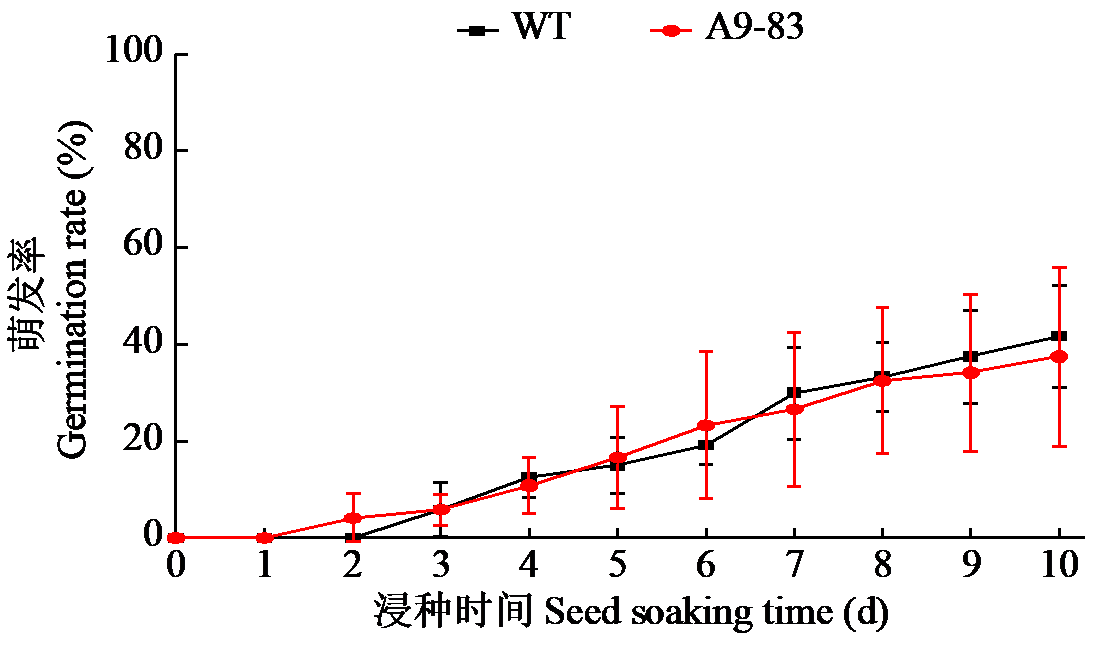
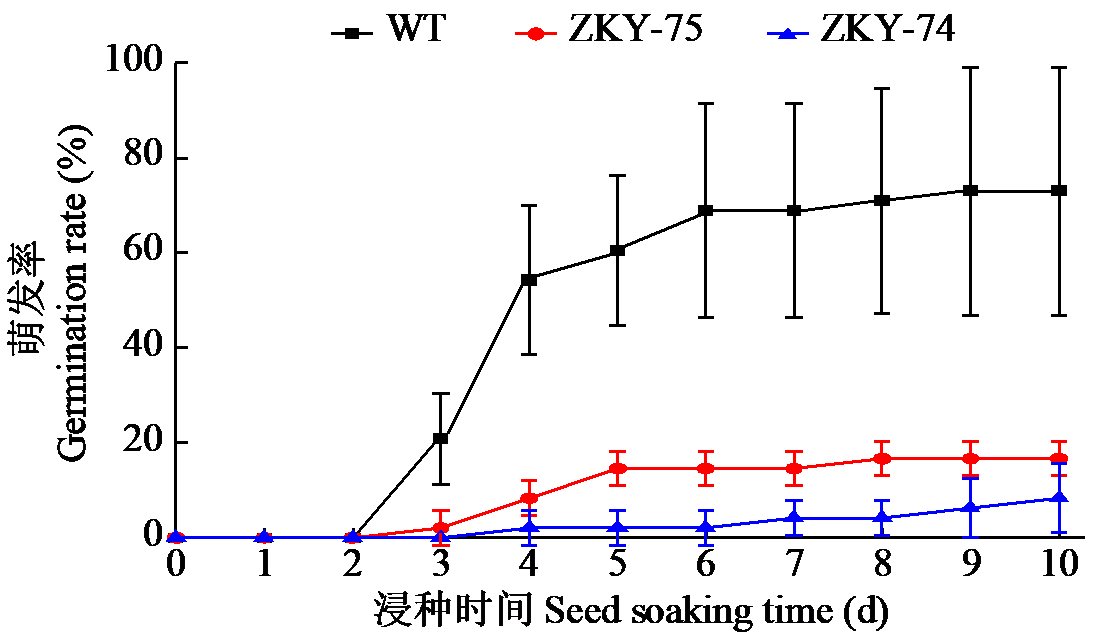
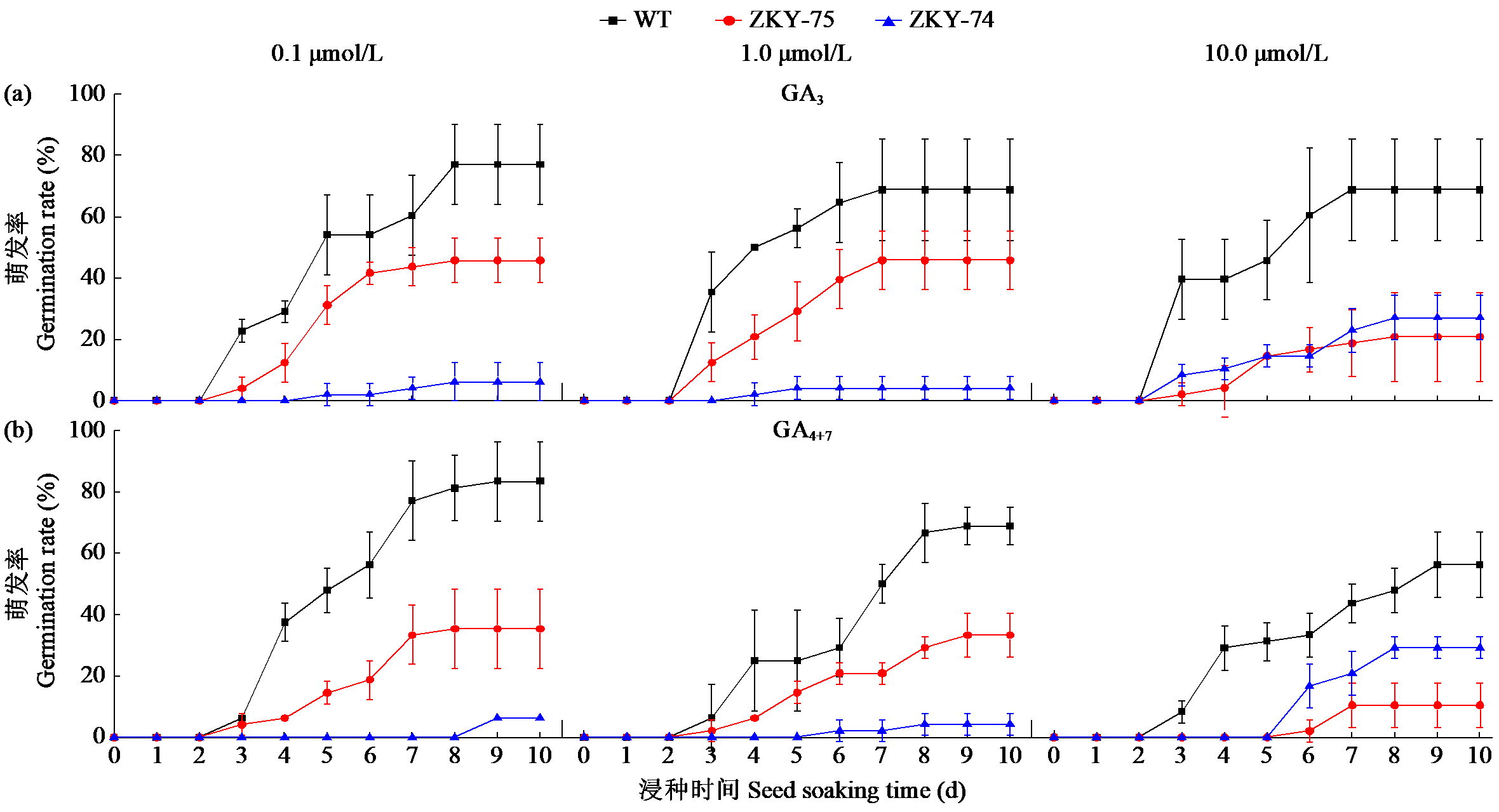
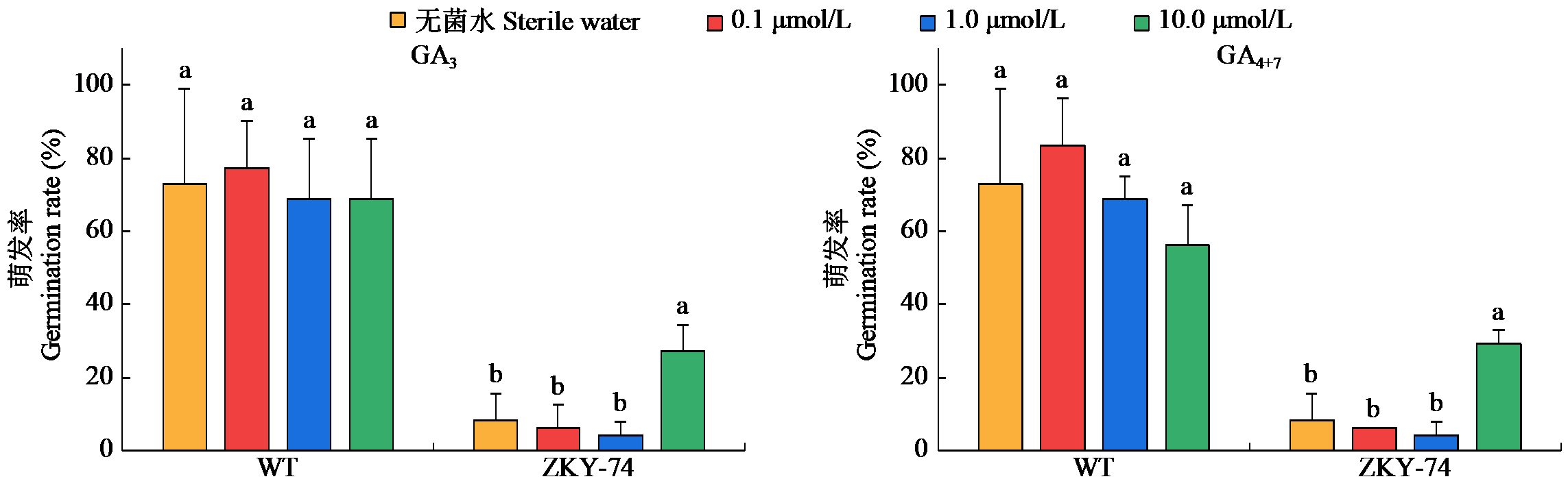
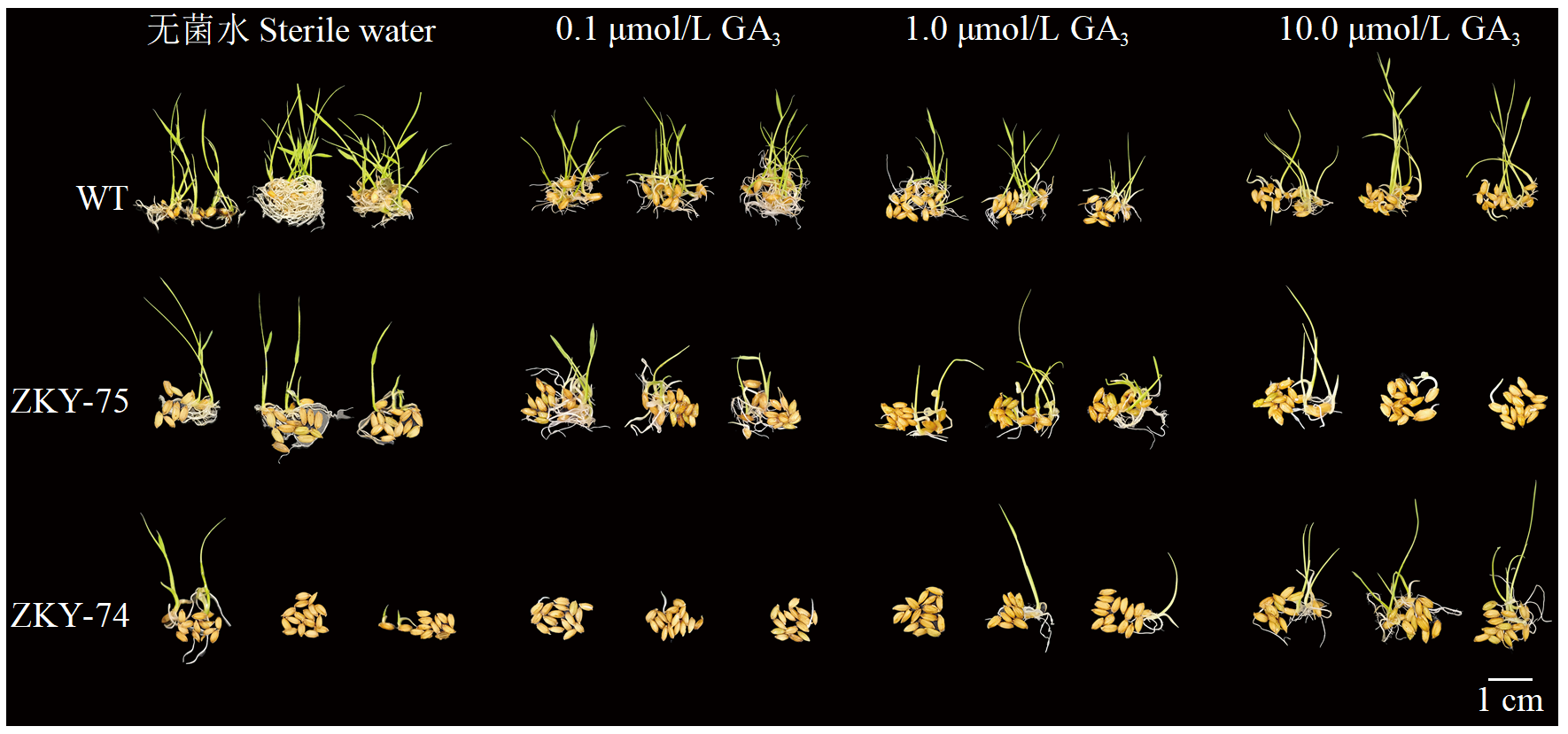
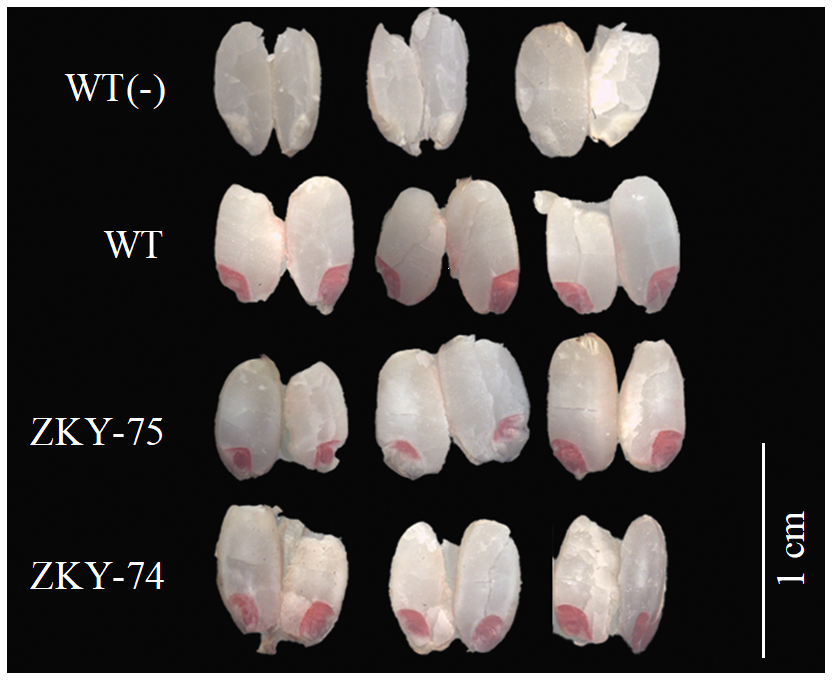
摘要: 拟南芥DOG1(DELAY OF GERMINATION 1)基因是控制种子休眠数量性状位点(QTL)的主效基因。水稻OsDOG1-like3基因可通过增强脱落酸(ABA)通路促进种子休眠,OsDOG1-like1和OsDOG1-like2基因的功能尚不明确。采用CRISPR-Cas9技术创制了osdog1l-2、osdog1l-3等单突变体,以及osdog1l-2/3双突变体和osdog1l-1/2/3三突变体。结果表明,osdog1l-2、osdog1l-3等单突变体的种子休眠表型变化很微弱。贮藏6个月后,与浸种后第10天野生型种子的萌发率(72.92%)相比,osdog1l-2/3和osdog1l-1/2/3的萌发率分别降至16.67%和8.33%。0.1和1.0 μmol/L低浓度赤霉素GA3处理使osdog1l-2/3的萌发率提高到45.83%,而对osdog1l-1/2/3的萌发率基本没有影响。osdog1l-1/2/3三突纯合子对低浓度GA3和GA4+7几乎不敏感,这说明OsDOG1-like1对水稻种子萌发在响应GA信号时至关重要,或者OsDOG1-L1、L2、L3三者存在功能上的冗余。高浓度GA3(10.0 μmol/L)处理一定程度上提高了osdog1l-1/2/3的萌发率,达27.08%,同种方法使用GA4+7处理则具有类似的规律。这些结果表明OsDOG1-like基因作用于GA信号的上游(或共同)调控水稻种子萌发。TTC染色证实了osdog1l-2/3和osdog1l-1/2/3突变体胚胎的高活力,可萌发的种子后期能正常生长。



| [1] | Awika J M, Piironen V, Bean S, et al. Advances in cereal science: implications to food processing and health promotion. Washington DC:American Chemical Society, 2011. |
| [2] |
Mahender A, Anandan A, Pradhan S K. Early seedling vigour, an imperative trait for direct-seeded rice: an overview on physio- morphological parameters and molecular markers. Planta, 2015, 241(5):1027-1050.
doi: 10.1007/s00425-015-2273-9 pmid: 25805338 |
| [3] | Miura K, Lin S, Araki H, et al. Genetical studies on germination of seed and seedling establishment for breeding of improved rice varieties suitable for direct seeding culture. Japan Agricultural Research Quarterly, 2004,38:1-5. |
| [4] | Bewley J D, Bradford K, Hilhorst H, et al. Seeds: physiology of development, germination and dormancy. New York:Springer, 2013. |
| [5] | Tuan P A, Sun M, Nguyen T, et al. 1-Molecular mechanisms of seed germination//Feng H, Nemzer B, DeVries J W. Sprouted grains: nutritional value, production, and applications. Saint Paul:AACC International Press, 2019:1-24. |
| [6] |
Shu K, Liu X D, Xie Q, et al. Two Faces of One Seed: hormonal regulation of dormancy and germination. Molecular Plant, 2016, 9(1):34-45.
doi: S1674-2052(15)00356-1 pmid: 26343970 |
| [7] | Cutler S R, Rodriguez P L, Finkelstein R R, et al. Abscisic acid: emergence of a core signaling network. Annual Review of Plant Biology, 2010,61:651-679. |
| [8] | Yamaguchi S. Gibberellin metabolism and its regulation. Annual Review of Plant Biology, 2008,59:225-251. |
| [9] | Nonogaki H. Seed dormancy and germination-emerging mechanisms and new hypotheses. Frontiers in Plant Science, 2014,5:233. |
| [10] |
Penfield S. Seed dormancy and germination. Current Biology, 2017, 27(17):874-878.
doi: S0960-9822(17)30616-4 pmid: 28898656 |
| [11] | Lee H, Choi M, Hwang W, et al. Occurrence of rice preharvest sprouting varies greatly depending on past weather conditions during grain filling. Field Crops Research, 2021,264:108087. |
| [12] | Bentsink L, Jowett J, Hanhart C J, et al. Cloning of DOG1, a quantitative trait locus controlling seed dormancy in Arabidopsis. Proceedings of the National Academy of Sciences of the United States of America, 2006, 103(45):17042-17047. |
| [13] | Ashikawa I, Abe F, Nakamura S. DOG1-like genes in cereals: investigation of their function by means of ectopic expression in Arabidopsis. Plant Science, 2013,208:1-9. |
| [14] | 张洋洋.水稻DOG1-like基因克隆、 表达分析与功能预测. 北京: 中国科学院大学, 2016. |
| [15] | Wang Q, Lin Q B, Wu T, et al. OsDOG1L-3 regulates seed dormancy through the abscisic acid pathway in rice. Plant Science, 2020,298:110570. |
| [16] |
Nakabayashi K, Bartsch M, Xiang Y, et al. The time required for dormancy release in Arabidopsis is determined by DELAY OF GERMINATION 1 protein levels in freshly harvested seeds. The Plant Cell, 2012, 24(7):2826-2838.
doi: 10.1105/tpc.112.100214 |
| [17] |
Née G, Kramer K, Nakabayashi K, et al. DELAY OF GERMINATION 1 requires PP2C phosphatases of the ABA signalling pathway to control seed dormancy. Nature Communications, 2017, 8(1):72.
doi: 10.1038/s41467-017-00113-6 |
| [18] |
Kendall S L, Hellwege A, Marriot P, et al. Induction of dormancy in Arabidopsis summer annuals requires parallel regulation of DOG1 and hormone metabolism by low temperature and CBF transcription factors. The Plant Cell, 2011, 23(7):2568-2580.
doi: 10.1105/tpc.111.087643 pmid: 21803937 |
| [19] | Graeber K, Linkies A, Steinbrecher T, et al. DELAY OF GERMINATION 1mediates a conserved coat-dormancy mechanism for the temperature and gibberellin-dependent control of seed germination. Proceedings of the National Academy of Sciences of the United States of America, 2014, 111(34):3571-3580. |
| [20] |
Footitt S, Müller K, Kermode A R, et al. Seed dormancy cycling in Arabidopsis: chromatin remodelling and regulation of DOG 1 in response to seasonal environmental signals. The Plant Journal, 2015, 81(3):413-425.
doi: 10.1111/tpj.2015.81.issue-3 |
| [21] | Footitt S, Douterelo-Soler I, Clay H, et al. Dormancy cycling in Arabidopsis seeds is controlled by seasonally distinct hormone- signaling pathways. Proceedings of the National Academy of Sciences of the United States of America, 2011, 108(50):20236-20241. |
| [22] |
Xu Y, Du J G, Hao R L, et al. Gibberellin signaling regulates pectin biosynthesis in Arabidopsis. Nature Communications, 2025, 16(1):4065.
doi: 10.1038/s41467-025-59268-2 |
| [23] | Li Q J, Chen X, Zhang S N, et al. DELAY OF GERMINATION 1, the master regulator of seed dormancy, integrates the regulatory network of phytohormones at the transcriptional level to control seed dormancy. Current Issues in Molecular Biology, 2022,44:6205-6217. |
| [24] |
Xiong M, Chu L Y, Li Z Y, et al. Brassinosteroid and gibberellin coordinate rice seed germination and embryo growth by regulating glutelin mobilization. The Crop Journal, 2021, 9(4):1039-1048.
doi: 10.1016/j.cj.2020.11.006 |
| [25] |
Nowak M A, Boerlijst M C, Cooke J, et al. Evolution of genetic redundancy. Nature, 1997, 388(6638):167-171.
doi: 10.1038/40618 |
| [26] |
Zhang J L, Liu F, Yang K, et al. The fourth exon confers antagonistic activity of OsMFT1 and OsMFT2 in rice pre-harvest sprouting. The Crop Journal, 2025, 13(1):135-144.
doi: 10.1016/j.cj.2024.12.008 |
| [27] |
Shen J, Zhang L, Wang H Y, et al. The phosphatidylethanolamine- binding proteins OsMFT1 and OsMFT 2 regulate seed dormancy in rice. The Plant Cell, 2024, 36(9):3857-3874.
doi: 10.1093/plcell/koae211 pmid: 39041489 |
| [28] |
Sall K, Dekkers B J W, Nonogaki M, et al. DELAY OF GERMINATION 1-LIKE 4 acts as an inducer of seed reserve accumulation. The Plant Journal, 2019, 100(1):7-19.
doi: 10.1111/tpj.v100.1 |
| [29] |
Nishimura N, Tsuchiya W, Moresco J J, et al. Control of seed dormancy and germination by DOG1-AHG 1 PP2C phosphatase complex via binding to heme. Nature Communications, 2018, 9(1):2132.
doi: 10.1038/s41467-018-04437-9 pmid: 29875377 |
| [30] |
Carrillo-Barral N, Rodríguez-Gacio M D, Matilla A J. Delay of Germination-1 (DOG1): a key to understanding seed dormancy. Plants, 2020, 9(4):480.
doi: 10.3390/plants9040480 |
| [31] |
Nonogaki H. Seed germination and dormancy: the classic story, new puzzles, and evolution. Journal of Integrative Plant Biology, 2019, 61(5):541-563.
doi: 10.1111/jipb.12762 |
| [32] | Li P, Ni H H, Ying S B, et al. Teaching an Old Dog a New Trick: multifaceted strategies to control primary seed germination by DELAY OF GERMINATION 1 (DOG1). Phyton-International Journal of Experimental Botany, 2020, 89(1):1-12. |
| [33] |
Dekkers B J W, He H, Hanson J, et al. The Arabidopsis 1 gene affects 5 (5) expression and genetically interacts with 3 during Arabidopsis seed development. The Plant Journal, 2016, 85(4):451-465.
doi: 10.1111/tpj.13118 pmid: 26729600 |
| [34] | Huo H, Wei S, Bradford K J. DOG1) regulates both seed dormancy and flowering time through microRNA pathways. Proceedings of the National Academy of Sciences of the United States of America, 2016, 113(15):2199-2206. |
| [35] |
Dong X L, Zhou Y, Zhang Y Q, et al. OsbZIP 01 Affects plant growth and development by regulating OsSD1 in rice. Rice Science, 2024, 31(1):77-86.
doi: 10.1016/j.rsci.2023.11.007 |
| [36] |
Aya K, Ueguchi-Tanaka M, Kondo M, et al. Gibberellin Modulates Anther Development in Rice via the Transcriptional Regulation of GAMYB. The Plant Cell, 2009, 21(5):1453-1472.
doi: 10.1105/tpc.108.062935 |
| [37] |
Jin Y, Song X Y, Chang H Z, et al. The GA-DELLA-OsMS 188 module controls male reproductive development in rice. New Phytologist, 2022, 233(6):2629-2642.
doi: 10.1111/nph.v233.6 |
| [1] | 殷佳, 张男, 孙茹梦, 汝艳, 景文疆, 张耗. 根系分泌物在水稻氮素吸收利用中的作用机制及氮肥调控研究进展[J]. 作物杂志, 2026, (4): 1–7 |
| [2] | 吴子帅, 黄秋要, 陈传华, 罗芳媚, 张世冠, 刘广林, 路一平, 罗群昌, 李虎. 施氮量和栽插密度对桂香99产量和稻米品质的影响[J]. 作物杂志, 2026, (4): 140–145 |
| [3] | 阮新民, 从夕汉, 杜弘杨, 岳伟, 施伏芝, 罗彦长, 王元垒, 罗志祥. 江淮稻作区氮肥用量对高产优质中籼稻产量、品质及氮肥利用效率的影响[J]. 作物杂志, 2026, (4): 146–154 |
| [4] | 阙涛, 吴娴, 王忠妮, 吴钱蓉, 龙武华, 王倩, 朱速松. 利用CRISPR/Cas9技术编辑GS3、GS9和GW2基因改良水稻粒型[J]. 作物杂志, 2026, (4): 17–26 |
| [5] | 李奕葶, 陈芸, 张菁, 高青云, 班立桐. 泰山灵芝与蛹虫草胞外粗多糖对小麦种子萌发的影响[J]. 作物杂志, 2026, (4): 199–206 |
| [6] | 郭威, 孙冬, 闫治霖, 丁蓓, 杜跃辰, 吴慧扬, 徐强, 窦志, 高辉. 灌浆结实期半深水灌溉对水稻产量、干物质转运及籽粒灌浆的影响[J]. 作物杂志, 2026, (3): 21–29 |
| [7] | 刘冬, 李君霞, 马梦娟, 张骐飞, 李明, 付景, 王越涛, 王付华, 尹海庆, 王亚. 淹水深度对水稻胚芽鞘伸长的影响及其生理机制[J]. 作物杂志, 2026, (3): 216–224 |
| [8] | 张清芮, 凌凤楼, 高子婷, 王玉, 苏庆旺, 韩笑. 不同叶施时期和锌肥种类对水稻产量和品质的影响[J]. 作物杂志, 2026, (3): 38–47 |
| [9] | 王金玲, 潘越, 李思宇, 沈炘垭, 刘立军. 枯草芽孢杆菌和哈茨木霉菌对水稻稻米品质的影响[J]. 作物杂志, 2026, (2): 202–208 |
| [10] | 拜伟俊, 黄杰, 魏玉明, 刘文瑜, 柴继宽, 杨发荣, 李小雨. 藜麦种子丸粒化配方的筛选及效果验证[J]. 作物杂志, 2026, (2): 253–258 |
| [11] | 孙娟, 王新栋, 郄彦敏, 牛雪婧, 王丽娜, 耿立格. 引发处理对低发芽力小麦种子萌发和生理特性的影响[J]. 作物杂志, 2026, (2): 259–264 |
| [12] | 陆楚盛, 赖嘉俊, 唐偲, 梁开明, 覃元钰, 钟旭华, 潘俊峰, 刘彦卓, 胡香玉, 胡锐, 李妹娟, 王昕钰, 尹媛红, 叶群欢, 沈宏, 傅友强. 铵、硝营养条件下不同酸碱度对水稻苗期生长和养分吸收的影响[J]. 作物杂志, 2026, (2): 90–97 |
| [13] | 孙茹梦, 张男, 殷佳, 汝艳, 景文疆, 张耗. 水稻根系分泌物对干旱胁迫的响应研究进展[J]. 作物杂志, 2026, (1): 1–8 |
| [14] | 刘晴, 孙露宏, 高世伟, 刘宇强, 常汇琳, 马成, 王婧泽, 王翠玲, 聂守军. 水稻叶片的生理性状和形态特征受铬胁迫的影响研究[J]. 作物杂志, 2026, (1): 143–151 |
| [15] | 高艳梅, 冯鹏睿, 陈薇薇, 张萌, 张永清. 抗旱性藜麦幼苗对干旱胁迫的生理响应[J]. 作物杂志, 2026, (1): 182–188 |
|
||