

作物杂志,2025, 第6期: 1–10 doi: 10.16035/j.issn.1001-7283.2025.06.001
• 专题综述 • 下一篇
基于小麦渍害过程探讨胁迫量化方案的综述
邓超众1( ), 胡佩敏2(), 熊勤学1, 许福丽1, 向前1, 李励漫1
- 1
长江大学农学院, 434025, 湖北荆州
2荆州市气象局, 434020, 湖北荆州
A Review of Quantitative Methods for Wheat Stress Assessment Based on the Waterlogging Process
Deng Chaozhong1(), Hu Peimin2(), Xiong Qinxue1, Xu Fuli1, Xiang Qian1, Li Liman1
- 1
College of Agriculture ,Yangtze University Jinzhou 434025, Hubei, China
2Jingzhou Meteorological Bureau Jinzhou 434020, Hubei, China
摘要:
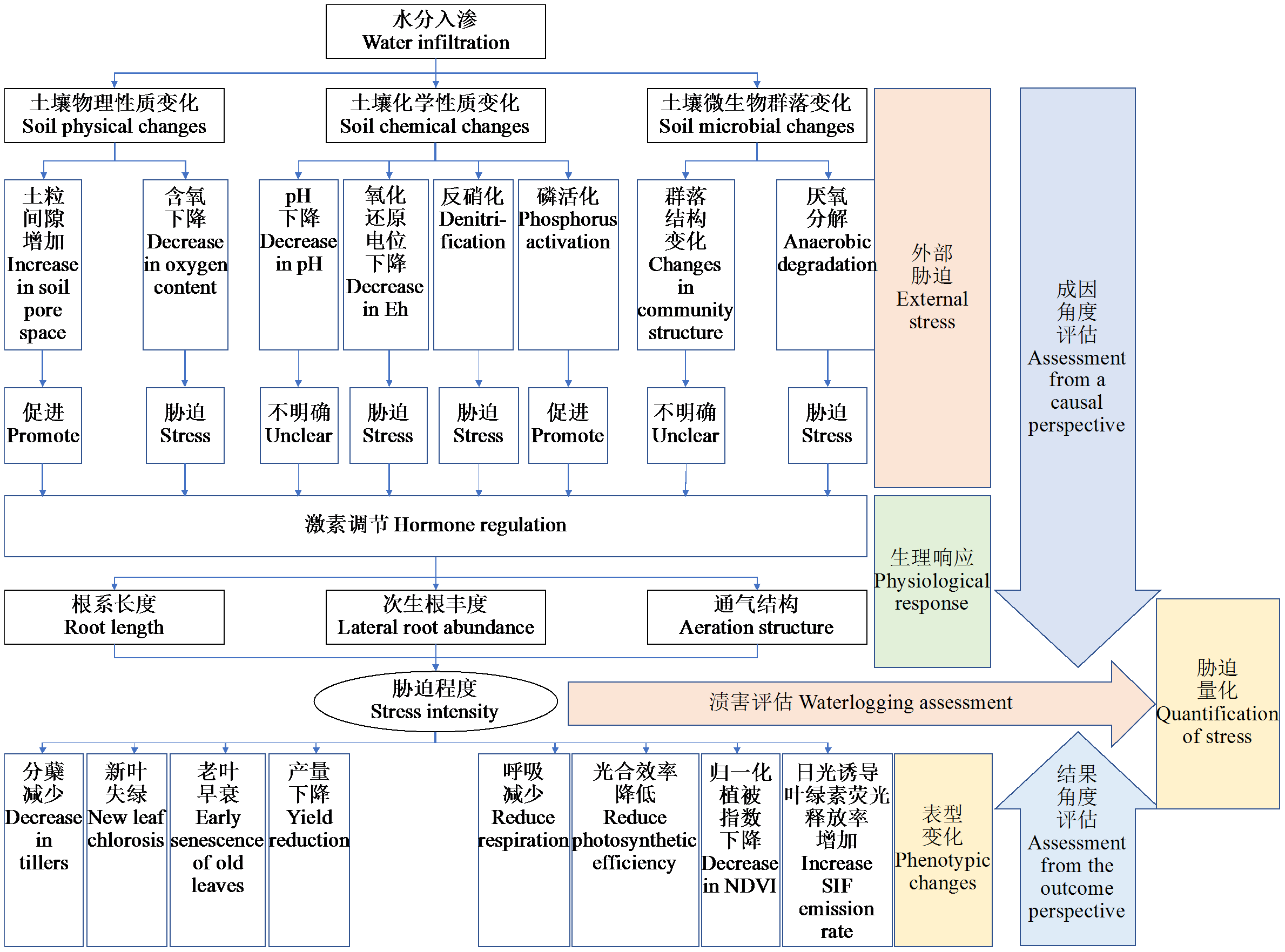
农业生产中常伴随着高温、低温、涝渍和干旱等各类胁迫,且往往多种胁迫同时发生,造成较大的经济损失。大量学者从胁迫成因或胁迫结果角度对各类胁迫开展评估技术研究,但其评估方案往往仅适用于某一种胁迫类型或某一个区域,通用性和准确度亟需提高。本文以小麦渍害为例,分析了渍害的外部胁迫、生理响应和表型指标的变化过程;探讨了当前典型的小麦渍害评估技术优缺点及适用范围;提出使用“单位胁迫”这一指标来表征作物所受胁迫状态;通过锚定非胁迫状态下最大光合效率值0.83,将作物光合效率的变化转换为归一化植被指数(NDVI)和日光诱导叶绿素荧光(SIF)值之间的关系函数,实现对胁迫程度的量化。这一方案能在不区分作物品种和胁迫类型的基础上,通过光合效率的变化情况,实时表征作物所处的胁迫状态。

| [1] |
Nguyen L T T, Osanai Y, Anderson I C, et al. Impacts of waterlogging on soil nitrification and ammonia-oxidizing communities in farming. system. Plant and Soil, 2018, 426(1/2):299-311.
doi: 10.1007/s11104-018-3584-y |
| [2] | Singh S P, Setter T L. Effect of waterlogging on element concentrations, growth and yield of wheat varieties under farmer’s sodic field conditions. Proceedings of the National Academy of Sciences of the United States of America, 2017, 87(2):513-520. |
| [3] | 马尚宇, 王艳艳, 黄正来, 等. 渍水对小麦生长的影响及耐渍栽培技术研究进展. 麦类作物学报, 2019, 39(7):835-843. |
| [4] |
Huang Y Q, Wang F, Su Y, et al. Risk assessment of waterlogging in major winter wheat-producing areas in China in the last 20 years. Sustainability, 2022, 14(21):14072.
doi: 10.3390/su142114072 |
| [5] |
Musgrave M E, Ding N. Evaluating wheat cultivars for waterlogging tolerance. Crop Science, 1998, 38(1):90-97.
doi: 10.2135/cropsci1998.0011183X003800010016x |
| [6] |
Robertson D, Zhang H, Palta J A, et al. Waterlogging affects the growth, development of tillers, and yield of wheat through a severe, but transient, N deficiency. Crop and Pasture Science, 2009, 60(6):578-586.
doi: 10.1071/CP08440 |
| [7] | 胡佩敏. 受渍指数构建及其在长江中下游小麦渍害风险评估中的应用. 农业工程学报, 2023, 39(2):100-106. |
| [8] | 宋桂成, 余桂红, 张鹏, 等. 不同小麦品种(系)拔节期耐渍性评价. 作物杂志, 2023(5):30-36. |
| [9] |
Yang C P, Qiu Z Y, Wang S X, et al. Effects of climate change and deep fertilization on the growth and yield of winter wheat in the Loess Plateau of China. Journal of the Science of Food and Agriculture, 2024, 104(15):9742-9757.
doi: 10.1002/jsfa.v104.15 |
| [10] |
Pais I P, Moreira R, Semedo J N, et al. Wheat crop under waterlogging:potential soil and plant effects. Plants, 2022, 12 (1):149.
doi: 10.3390/plants12010149 |
| [11] |
Ghobadi M E, Ghobadi M, Zebarjadi A. Effect of waterlogging at different growth stages on some morphological traits of wheat varieties. International Journal of Biometeorology, 2017, 61(4):635-645.
doi: 10.1007/s00484-016-1240-x pmid: 27596165 |
| [12] |
Zheng Q, Hu Y T, Zhang S S, et al. Soil multifunctionality is affected by the soil environment and by microbial community composition and diversity. Soil Biology and Biochemistry, 2019, 136:107521.
doi: 10.1016/j.soilbio.2019.107521 |
| [13] | Kleber M, Eusterhues K, Keiluweit M, et al. Mineral-organic associations: formation, properties, and relevance in soil environments. Advances in Agronomy, 2015, 130:1-140. |
| [14] |
Malik A I, Colmer T D, Lambers H, et al. Short‐term waterlogging has long‐term effects on the growth and physiology of wheat. New Phytologist, 2002, 153(2):225-236.
doi: 10.1046/j.0028-646X.2001.00318.x |
| [15] |
Kreuzwieser J, Rennenberg H. Molecular and physiological responses of trees to waterlogging stress. Plant,Cell & Environment, 2014, 37(10):2245-2259.
doi: 10.1111/pce.2014.37.issue-10 |
| [16] | Bramley H, Turner D W, Tyerman S D, et al. Water flow in the roots of crop species: the influence of root structure, aquaporin activity, and waterlogging. Advances in Agronomy, 2007, 96:133-196. |
| [17] |
Wong M H, Bradshaw A D. A comparison of the toxicity of heavy metals, using root elongation of rye grass, Lolium perenne. New Phytologist, 1982, 91(2):255-261.
doi: 10.1111/nph.1982.91.issue-2 |
| [18] |
Nocito F F, Lancilli C, Crema B, et al. Heavy metal stress and sulfate uptake in maize roots. Plant Physiology, 2006, 141(3):1138-1148.
doi: 10.1104/pp.105.076240 pmid: 16698905 |
| [19] |
Addiscott T M, Thomas D. Tillage, mineralization and leaching: phosphate. Soil and Tillage Research, 2000, 53(3/4):255-273.
doi: 10.1016/S0167-1987(99)00110-5 |
| [20] |
Tang Y J, Su X X, Wen T, et al. Soil properties shape the heterogeneity of denitrification and N2O emissions across large‐scale flooded paddy soils. Global Change Biology, 2024, 30(2):e17176.
doi: 10.1111/gcb.v30.2 |
| [21] |
Šimek M, Jı́šová L, Hopkins D W. What is the so-called optimum pH for denitrification in soil?. Soil Biology and Biochemistry, 2002, 34(9):1227-1234.
doi: 10.1016/S0038-0717(02)00059-7 |
| [22] |
Drew M C, Lynch J M. Soil anaerobiosis, microorganisms, and root function. Annual Review of Phytopathology, 1980, 18(1):37-66.
doi: 10.1146/phyto.1980.18.issue-1 |
| [23] |
Li T, Wang M H, Cui R F, et al. Waterlogging stress alters the structure of sugar beet rhizosphere microbial community structure and recruiting potentially beneficial bacterial. Ecotoxicology and Environmental Safety, 2023, 262:115172.
doi: 10.1016/j.ecoenv.2023.115172 |
| [24] |
Nguyen L T T, Osanai Y, Lai K T, et al. Responses of the soil microbial community to nitrogen fertilizer regimes and historical exposure to extreme weather events: flooding or prolonged- drought. Soil Biology and Biochemistry, 2018, 118:227-236.
doi: 10.1016/j.soilbio.2017.12.016 |
| [25] | Carbó E, Juan P, Añó C, et al. Modeling influence of soil properties in different gradients of soil moisture: the case of the valencia anchor station validation site, Spain. Remote Sensing, 2021, 13(24):5155. |
| [26] | 黄敬, 李欣阳, 文沙, 等. 不同母质发育土壤Cd环境行为对水分管理模式的响应差异. 环境科学, 2020, 41(7):3418-3425. |
| [27] |
Pan J W, Sharif R, Xu X W, et al. Mechanisms of waterlogging tolerance in plants: research progress and prospects. Frontiers in Plant Science, 2021, 11:627331.
doi: 10.3389/fpls.2020.627331 |
| [28] |
Hartman S, Liu Z G, Van Veen H, et al. Ethylene-mediated nitric oxide depletion pre-adapts plants to hypoxia stress. Nature Communications, 2019, 10(1):4020.
doi: 10.1038/s41467-019-12045-4 pmid: 31488841 |
| [29] |
Shimamura S, Yoshioka T, Yamamoto R, et al. Role of abscisic acid in flood-induced secondary aerenchyma formation in soybean (Glycine max) hypocotyls. Plant Production Science, 2014, 17(2):131-137.
doi: 10.1626/pps.17.131 |
| [30] |
Qi X H, Li Q Q, Ma X T, et al. Waterlogging‐induced adventitious root formation in cucumber is regulated by ethylene and auxin through reactive oxygen species signalling. Plant,Cell & Environment, 2019, 42(5):1458-1470.
doi: 10.1111/pce.v42.5 |
| [31] | 黄辉, 刘登望, 李林, 等. 渍涝胁迫后喷施植物生长调节剂对花生生长及产量品质的影响. 湖南农业大学学报(自然科学版), 2018, 44(2):124-129. |
| [32] | 王桂林, 范伟国, 彭福田. 桃树淹水及不同时间喷布水杨酸的生理响应. 果树学报, 2015, 32(5):872-878. |
| [33] |
Wang J, Song L, Gong X, et al. Functions of jasmonic acid in plant regulation and response to abiotic stress. International Journal of Molecular Sciences, 2020, 21(4):1446.
doi: 10.3390/ijms21041446 |
| [34] |
Nazir F, Fariduddin Q, Hussain A, et al. Brassinosteroid and hydrogen peroxide improve photosynthetic machinery, stomatal movement, root morphology and cell viability and reduce Cu-triggered oxidative burst in tomato. Ecotoxicology and Environmental Safety, 2021, 207:111081.
doi: 10.1016/j.ecoenv.2020.111081 |
| [35] |
Huang L P, Zhang L, Zeng R E, et al. Brassinosteroid priming improves peanut drought tolerance via eliminating inhibition on genes in photosynthesis and hormone signaling. Genes, 2020, 11(8):919.
doi: 10.3390/genes11080919 |
| [36] |
Sharif R, Xie C, Zhang H Q, et al. Melatonin and its effects on plant systems. Molecules, 2018, 23(9):2352.
doi: 10.3390/molecules23092352 |
| [37] |
Goggin D E, Colmer T D. Intermittent anoxia induces oxidative stress in wheat seminal roots: assessment of the antioxidant defence system, lipid peroxidation and tissue solutes. Functional Plant Biology, 2005, 32(6):495-506.
doi: 10.1071/FP04194 pmid: 32689150 |
| [38] |
Goggin D E, Colmer T D. Wheat genotypes show contrasting abilities to recover from anoxia in spite of similar anoxic carbohydrate metabolism. Journal of Plant Physiology, 2007, 164(12):1605-1611.
pmid: 17349715 |
| [39] |
Waters I, Kuiper P J C, Watkin E, et al. Effects of anoxia on wheat seedlings: I. Interaction between anoxia and other environmental factors. Journal of Experimental Botany, 1991, 42(11):1427-1435.
doi: 10.1093/jxb/42.11.1427 |
| [40] |
Waters I, Morrell S, Greenway H, et al. Effects of anoxia on wheat seedlings: II. Influence of O2 supply prior to anoxia on tolerance to anoxia, alcoholic fermentation, and sugar levels. Journal of Experimental Botany, 1991, 42(11):1437-1447.
doi: 10.1093/jxb/42.11.1437 |
| [41] |
Ward J M, Mäser P, Schroeder J I. Plant ion channels: gene families, physiology, and functional genomics analyses. Annual Review of Physiology, 2009, 71:59-82.
doi: 10.1146/annurev.physiol.010908.163204 pmid: 18842100 |
| [42] |
Greenway H, Gibbs J. Review: mechanisms of anoxia tolerance in plants. II. energy requirements for maintenance and energy distribution to essential processes. Functional Plant Biology, 2003, 30(10):999-1036.
doi: 10.1071/PP98096 pmid: 32689085 |
| [43] |
Pang J Y, Cuin T, Shabala L, et al. Effect of secondary metabolites associated with anaerobic soil conditions on ion fluxes and electrophysiology in barley roots. Plant Physiology, 2007, 145(1):266-276.
doi: 10.1104/pp.107.102624 pmid: 17660351 |
| [44] |
Steffens B, Rasmussen A. The physiology of adventitious roots. Plant Physiology, 2016, 170(2):603-617.
doi: 10.1104/pp.15.01360 pmid: 26697895 |
| [45] | Xu X W, Ji J, Ma X T, et al. Comparative proteomic analysis provides insight into the key proteins involved in cucumber (Cucumis sativus L.) adventitious root emergence under waterlogging stress. Frontiers in Plant Science, 2016, 7:225242. |
| [46] |
Eysholdt‐Derzsó E, Sauter M. Hypoxia and the group VII ethylene response transcription factor HRE2 promote adventitious root elongation in Arabidopsis. Plant Biology, 2018, 21(S1):103-108.
doi: 10.1111/plb.2019.21.issue-S1 |
| [47] |
McDonald M P, Galwey N W, Colmer T D. Waterlogging tolerance in the tribe Triticeae: the adventitious roots of Critesion marinum have a relatively high porosity and a barrier to radial oxygen loss. Plant,Cell & Environment, 2001, 24(6):585-596.
doi: 10.1046/j.0016-8025.2001.00707.x |
| [48] |
Huang B, Johnson J W, Nesmith S, et al. Growth, physiological and anatomical responses of two wheat genotypes to waterlogging and nutrient supply. Journal of Experimental Botany, 1994, 45 (2):193-202.
doi: 10.1093/jxb/45.2.193 |
| [49] | Dongen J T, Licausi F. Low-oxygen Stress in Plants: Oxygen Sensing and Adaptive Responses to Hypoxia. Vienna: Springer, 2014. |
| [50] |
Yamauchi T, Colmer T D, Pedersen O, et al. Regulation of root traits for internal aeration and tolerance to soil waterlogging- flooding stress. Plant Physiology, 2018, 176(2):1118-1130.
doi: 10.1104/pp.17.01157 pmid: 29118247 |
| [51] |
Pedersen O, Sauter M, Colmer T D, et al. Regulation of root adaptive anatomical and morphological traits during low soil oxygen. New Phytologist, 2021, 229(1):42-49.
doi: 10.1111/nph.v229.1 |
| [52] |
Armstrong W, Webb T. A critical oxygen pressure for root extension in rice. Journal of Experimental Botany, 1985, 36(10):1573-1582.
doi: 10.1093/jxb/36.10.1573 |
| [53] |
Thomson C J, Colmer T D, Watkin E L J, et al. Tolerance of wheat (Triticum aestivum cvs. Gamenya and Kite) and triticale (Triticosecale cv. Muir) to waterlogging. New Phytologist, 1992, 120(3):335-344.
doi: 10.1111/nph.1992.120.issue-3 |
| [54] |
Xu Q T, Yang L, Zhou Z Q, et al. Process of aerenchyma formation and reactive oxygen species induced by waterlogging in wheat seminal roots. Planta, 2013, 238(5):969-982.
doi: 10.1007/s00425-013-1947-4 pmid: 23975011 |
| [55] |
Ploschuk R A, Miralles D J, Colmer T D, et al. Waterlogging differentially affects yield and its components in wheat, barley, rapeseed and field pea depending on the timing of occurrence. Journal of Agronomy and Crop Science, 2020, 206(3):363-375.
doi: 10.1111/jac.12396 |
| [56] |
Bramley H, Turner N C, Turner D W, et al. The contrasting influence of short-term hypoxia on the hydraulic properties of cells and roots of wheat and lupin. Functional Plant Biology, 2010, 37(3):183-193.
doi: 10.1071/FP09172 |
| [57] | 佟汉文, 刘易科, 朱展望, 等. 小麦耐渍的根部形态及其生理适应. 作物杂志, 2013(5):13-17. |
| [58] |
Plaut Z, Mayoral M L, Reinhold L. Effect of altered sink:source ratio on photosynthetic metabolism of source leaves. Plant Physiology, 1987, 85(3):786-791.
doi: 10.1104/pp.85.3.786 pmid: 16665777 |
| [59] |
Limpinuntana V, Greenway H. Sugar accumulation in barley and rice grown in solutions with low concentrations of oxygen. Annals of Botany, 1979, 43(3):373-381.
doi: 10.1093/oxfordjournals.aob.a085645 |
| [60] |
Paul M J, Foyer C H. Sink regulation of photosynthesis. Journal of Experimental Botany, 2001, 52(360):1383-1400.
doi: 10.1093/jexbot/52.360.1383 pmid: 11457898 |
| [61] |
Erdmann B, Wiedenroth E M. Changes in the root system of wheat seedlings following root anaerobiosis II. morphology and anatomy of evolution forms. Annals of Botany, 1986, 58(5):607-616.
doi: 10.1093/oxfordjournals.aob.a087223 |
| [62] | Tian L X, Zhang Y C, Chen P L, et al. How does the waterlogging regime affect crop yield? A global meta-analysis. Frontiers in Plant Science, 2021, 12:634898. |
| [63] |
Gao J W, Su Y, Yu M, et al. Potassium alleviates post-anthesis photosynthetic reductions in winter wheat caused by waterlogging at the stem elongation stage. Frontiers in Plant Science, 2021, 11:607475.
doi: 10.3389/fpls.2020.607475 |
| [64] |
Cannell R Q, Belford R K, Gales K, et al. Effects of waterlogging at different stages of development on the growth and yield of winter wheat. Journal of the Science of Food and Agriculture, 1980, 31(2):117-132.
doi: 10.1002/jsfa.v31:2 |
| [65] | Olgun M, Kumlay A M, Adiguzel M C, et al. The effect of waterlogging in wheat (T.aestivum L.). Acta Agriculturae Scandinavica, Section B-Soil and Plant Science, 2008, 58(3):193-198. |
| [66] |
Ashraf M. Stress-induced changes in wheat grain composition and quality. Critical Reviews in Food Science and Nutrition, 2014, 54(12):1576-1583.
doi: 10.1080/10408398.2011.644354 pmid: 24580559 |
| [67] |
De San Celedonio R P, Abeledo G L, Miralles D J. Identifying the critical period for waterlogging on yield and its components in wheat and barley. Plant and Soil, 2014, 378(1/2):265-277.
doi: 10.1007/s11104-014-2028-6 |
| [68] |
Dickin E, Wright D. The effects of winter waterlogging and summer drought on the growth and yield of winter wheat (Triticum aestivum L.). European Journal of Agronomy, 2007, 28(3):234-244.
doi: 10.1016/j.eja.2007.07.010 |
| [69] | Malik A I, Colmer T D, Lambers H, et al. Changes in physiological and morphological traits of roots and shoots of wheat in response to different depths of waterlogging. Functional Plant Biology, 2001, 28(11):1121-1131. |
| [70] |
Deng C Z, Xiong Q X, Harrison M T, et al. Declining frequency yet increasing intensity of crop waterlogging events under future climates. Journal of Hydrology, 2025, 663:134178.
doi: 10.1016/j.jhydrol.2025.134178 |
| [71] |
Keating B A, Carberry P S, Hammer G L, et al. An overview of APSIM, a model designed for farming systems simulation. European Journal of Agronomy, 2003, 18(3):267-288.
doi: 10.1016/S1161-0301(02)00108-9 |
| [72] |
Shaw R E, Meyer W S. Improved empirical representation of plant responses to waterlogging for simulating crop yield. Agronomy Journal, 2015, 107(5):1711-1724.
doi: 10.2134/agronj14.0625 |
| [73] | 吴洪颜, 高苹, 徐为根, 等. 江苏省冬小麦湿渍害的风险区划. 生态学报, 2012, 32(6):1871-1879. |
| [74] | 吴洪颜, 曹璐, 李娟, 等. 长江中下游冬小麦春季湿渍害灾损风险评估. 长江流域资源与环境, 2016, 25(8):1279-1285. |
| [75] | 熊勤学, 王晓玲, 王有宁. 小麦渍害光谱特征分析. 光谱学与光谱分析, 2016, 36(8):2558-2561. |
| [76] | 刘莉, 戴黎, 雷廷海, 等. 持续受渍对油菜叶片光谱特性的影响. 江苏农业科学, 2017, 45(5):57-60. |
| [77] |
Ebele J E, Blackburn G A, Theobald J C. Discrimination of plant stress caused by oil pollution and waterlogging using hyper- spectral and thermal remote sensing. Journal of Applied Remote Sensing, 2013, 7(1):073476.
doi: 10.1117/1.JRS.7.073476 |
| [78] |
Gregory A C. Responses of leaf spectral reflectance to plant stress. American Journal of Botany, 1993, 80(3):239-243.
doi: 10.1002/ajb2.1993.80.issue-3 |
| [79] | 喻光明. 江汉平原渍害田生态特征的研究. 生态学报, 1993, 13(3):252-260. |
| [80] |
Tilling A K, O’Leary G J, Ferwerda J G, et al. Remote sensing of nitrogen and water stress in wheat. Field Crops Research, 2007, 104(1/2/3):77-85.
doi: 10.1016/j.fcr.2007.03.023 |
| [81] |
Yang F F, Liu S P, Wang Q Y, et al. Assessing waterlogging stress level of winter wheat from hyperspectral imagery based on harmonic analysis. Remote Sensing, 2021, 14(1):122.
doi: 10.3390/rs14010122 |
| [82] |
Magnusson G. Diurnal measurements of Fv/Fm used to improve productivity estimates in macroalgae. Marine Biology, 1997, 130:203-208.
doi: 10.1007/s002270050239 |
| [83] |
Balaguer L, Pugnaire F I, Martínez-Ferri E, et al. Eco- physiological significance of chlorophyll loss and reduced photochemical efficiency under extreme aridity in Stipa tenacissima L. Plant and Soil, 2002, 240(2):343-352.
doi: 10.1023/A:1015745118689 |
| [84] |
Oh S, Koh S C. Photosystem II photochemical efficiency and photosynthetic capacity in leaves of tea plant (Camellia sinensis L.) under winter stress in the field. Horticulture,Environment,and Biotechnology, 2014, 55(5):363-371.
doi: 10.1007/s13580-014-0055-0 |
| [85] |
Königer M, Winter K. Carotenoid composition and photon-use efficiency of photosynthesis in Gossypium hirsutum L. grown under conditions of slightly suboptimum leaf temperatures and high levels of irradiance. Oecologia, 1991, 87(3):349-356.
doi: 10.1007/BF00634590 |
| [86] | Rouse J W, Haas R H, Schell J A, et al. Monitoring vegetation systems in the Great Plains with ERTS. Washington,D. C.: NASA, 1974. |
| [87] |
Yang H L, Yang X, Mary H, et al. Seasonal variations of leaf and canopy properties tracked by ground-based NDVI imagery in a temperate forest. Scientific Reports, 2017, 7:1267.
doi: 10.1038/s41598-017-01260-y pmid: 28455492 |
| [88] |
Gitelson A A, Merzlyak M N. Remote sensing of chlorophyll concentration in higher plant leaves. Advances in Space Research, 1998, 22(5):689-692.
doi: 10.1016/S0273-1177(97)01133-2 |
| [89] |
Wang S H, Zhang L F, Huang C P, et al. An NDVI-based vegetation phenology is improved to be more consistent with photosynthesis dynamics through applying a light use efficiency model over boreal high-latitude forests. Remote Sensing, 2017, 9(7):695.
doi: 10.3390/rs9070695 |
| [90] |
Cristiano P M, Madanes N, Campanello P I, et al. High NDVI and potential canopy photosynthesis of South American subtropical forests despite seasonal changes in leaf area index and air temperature. Forests, 2014, 5(2):287-308.
doi: 10.3390/f5020287 |
| [91] | Krause G H, Weis E. Chlorophyll fluorescence and photosynthesis: the basics. Annual Review of Plant Biology, 1991, 42(1):313-349. |
| [92] |
Maxwell K, Johnson G N. Chlorophyll fluorescence—a practical guide. Journal of Experimental Botany, 2000, 51(345):659-668.
doi: 10.1093/jxb/51.345.659 pmid: 10938857 |
| [93] | Genty B, Briantais J M, Baker N R. The relationship between the quantum yield of photosynthetic electron transport and quenching of chlorophyll fluorescence. Biochimica et Biophysica Acta, 1989, 990(1):87-92. |
| [94] | Zulfugarov I S, Pashayeva A, Okhlopkova Z M, et al. Practical guide to measure chlorophyll fluorescence in plants and calculate main chlorophyll fluorescence parameters. Вестник CBΦY, 2018, 64(2):35-44. |
| [95] | Guanter L, Zhang Y G, Jung M, et al. Global and time-resolved monitoring of crop photosynthesis with chlorophyll fluorescence. Proceedings of the National Academy of Sciences, 2014, 111 (14):1327-1333. |
| [96] |
Porcar-Castell A, Tyystjärvi E, Atherton J, et al. Linking chlorophyll a fluorescence to photosynthesis for remote sensing applications: mechanisms and challenges. Journal of Experimental Botany, 2014, 65(15):4065-4095.
doi: 10.1093/jxb/eru191 pmid: 24868038 |
| [97] |
Damm A, Elbers J, Erler A, et al. Remote sensing of sun‐induced fluorescence to improve modeling of diurnal courses of gross primary production (GPP). Global Change Biology, 2010, 16(1):171-186.
doi: 10.1111/gcb.2010.16.issue-1 |
| [98] |
Chen R N, Liu L Y, Liu X J. Leaf chlorophyll contents dominates the seasonal dynamics of SIF/GPP ratio: evidence from continuous measurements in a maize field. Agricultural and Forest Meteorology, 2022, 323:109070.
doi: 10.1016/j.agrformet.2022.109070 |
| [99] |
Wu G H, Jiang C Y, Kimm H S, et al. Difference in seasonal peak timing of soybean far-red SIF and GPP explained by canopy structure and chlorophyll content. Remote Sensing of Environment, 2022, 279:113104.
doi: 10.1016/j.rse.2022.113104 |
| [100] |
Wang X P, Chen J M, Ju W M. Photochemical reflectance index (PRI) can be used to improve the relationship between gross primary productivity (GPP) and sun-induced chlorophyll fluorescence (SIF). Remote Sensing of Environment, 2020, 246:111888.
doi: 10.1016/j.rse.2020.111888 |
| [101] |
Xu S, Jon A, Anu R, et al. Structural and photosynthetic dynamics mediate the response of SIF to water stress in a potato crop. Remote Sensing of Environment, 2021, 263:112555.
doi: 10.1016/j.rse.2021.112555 |
| [102] |
Chen J D, Liu X J, Du S S, et al. Effects of drought on the relationship between photosynthesis and chlorophyll fluorescence for maize. IEEE Journal of Selected Topics in Applied Earth Observations and Remote Sensing, 2021, 14:11148-11161.
doi: 10.1109/JSTARS.2021.3123111 |
| [103] |
Gamon J A, Serrano L, Surfus J S. The photochemical reflectance index: an optical indicator of photosynthetic radiation use efficiency across species, functional types, and nutrient levels. Oecologia, 1997, 112:492-501.
doi: 10.1007/s004420050337 pmid: 28307626 |
| [1] | 毛彦芝, 孙贺光, 李庆全, 郭梅, 王文重, 魏琪, 董学志, 闵凡祥, 孙晶, 宋晓宇. 我国马铃薯晚疫病监测预警研究进展[J]. 作物杂志, 2025, (1): 10–14 |
| [2] | 王晓蕾, 张云鹤, 牟金猛, 高大鹏, 耿艳秋, 曹译文, 卢芬, 关政闻, 邵玺文, 郭丽颖. 苏打盐碱胁迫对水稻光合特性及产量的影响[J]. 作物杂志, 2024, (1): 193–203 |
| [3] | 陈锦平, 潘丽萍, 邢颖, 廖青, 刘永贤, 车江旅. 外源茉莉酸对小白菜耐硒性及硒积累的作用研究[J]. 作物杂志, 2023, (6): 160–166 |
| [4] | 梁永检, 吴文志, 施泽升, 唐利球, 宋修鹏, 颜梅新, 郭强, 秦昌鲜, 何洪良, 张小秋. 基于无人机RGB遥感的甘蔗株高估测[J]. 作物杂志, 2023, (1): 226–232 |
| [5] | 董扬. 糜子对不同除草剂的生理响应机制研究[J]. 作物杂志, 2022, (5): 255–260 |
| [6] | 马珂, 冯雷, 赵夏童, 张丽光, 原向阳, 董淑琦, 郭平毅, 宋喜娥. 播距和播量对张杂谷10号生长特性及产量的影响[J]. 作物杂志, 2022, (4): 172–178 |
| [7] | 杨程, 杜思梦, 张德奇, 时艳华, 李向东, 邵运辉, 方保停, 王汉芳. 基于叶绿素荧光的小麦越冬期冻害评价[J]. 作物杂志, 2022, (1): 154–160 |
| [8] | 王奇, 李妹娟, 章家恩, 汤嘉欣, 曾文静, 周磊, 杨清心, 江明敏, 伍嘉源, 罗明珠. 稻鱼共作对水稻叶绿素荧光特征及产量的影响[J]. 作物杂志, 2021, (6): 145–151 |
| [9] | 杨磊, 金延迪, 刘侯俊. 铁、镉及其互作对水稻光合原初反应的影响[J]. 作物杂志, 2021, (4): 144–151 |
| [10] | 高鹏, 郭美俊, 杨雪芳, 董淑琦, 温银元, 郭平毅, 原向阳. 谷子和玉米叶片光合荧光参数对烟嘧磺隆胁迫的响应差异[J]. 作物杂志, 2021, (3): 70–77 |
| [11] | 纪景纯, 刘建立, 牛玉洁, 宣可凡, 蒋一飞, 邓皓东, 李晓鹏. 基于全波段高光谱的冬小麦生长参数估算方法比较[J]. 作物杂志, 2020, (6): 180–188 |
| [12] | 田婷, 张青, 张海东. 无人机遥感在作物监测中的应用研究进展[J]. 作物杂志, 2020, (5): 1–8 |
| [13] | 吴琼, 丁凯鑫, 余明龙, 黄文婷, 左官强, 冯乃杰, 郑殿峰. 新型植物生长调节剂B2对玉米光合荧光特性及产量的影响[J]. 作物杂志, 2020, (5): 174–181 |
| [14] | 荆培培,任红茹,杨洪建,戴其根. 盐胁迫对2个不同盐敏感性水稻品种(系)叶片光合特性与产量的影响[J]. 作物杂志, 2020, (1): 67–75 |
| [15] | 时丽冉,郝洪波,崔海英,李明哲. 遮光对谷子光合性能及快速叶绿素荧光动力学特征的影响[J]. 作物杂志, 2019, (5): 125–128 |
|
||