

作物杂志,2026, 第3期: 225–232 doi: 10.16035/j.issn.1001-7283.2026.03.029
夏播短季栽培模式下棉花产量及纤维品质对脱叶催熟剂喷施时间的响应
谢章书1( ), 荣志凌1(), 覃业玲1, 李侃2, 周仲华1, 屠小菊1, 汪启明3(), 刘爱玉1()
- 1
湖南农业大学农学院/作物生理与分子生物学教育部重点实验室, 410128, 湖南长沙
2湖南省宜章县农业农村局, 424299, 湖南郴州
3湖南农业大学生物科学技术学院, 410128, 湖南长沙
Response of Cotton Yield and Fiber Quality to the Timing of Defoliant Spraying under Summer-Sown Short-Season Cultivation Pattern
Xie Zhangshu1(), Rong Zhiling1(), Qin Yeling1, Li Kan2, Zhou Zhonghua1, Tu Xiaoju1, Wang Qiming3(), Liu Aiyu1()
- 1
College of Agronomy ,Hunan Agricultural University / Key Laboratory of Crop Physiology and Molecular Biology, Ministry of Education Changsha 410128, Hunan, China
2Yizhang County Bureau of Agriculture and Rural Affairs Chenzhou 424299, Hunan, China
3College of Biological Science and Technology ,Hunan Agricultural University Changsha 410128, Hunan, China
摘要:
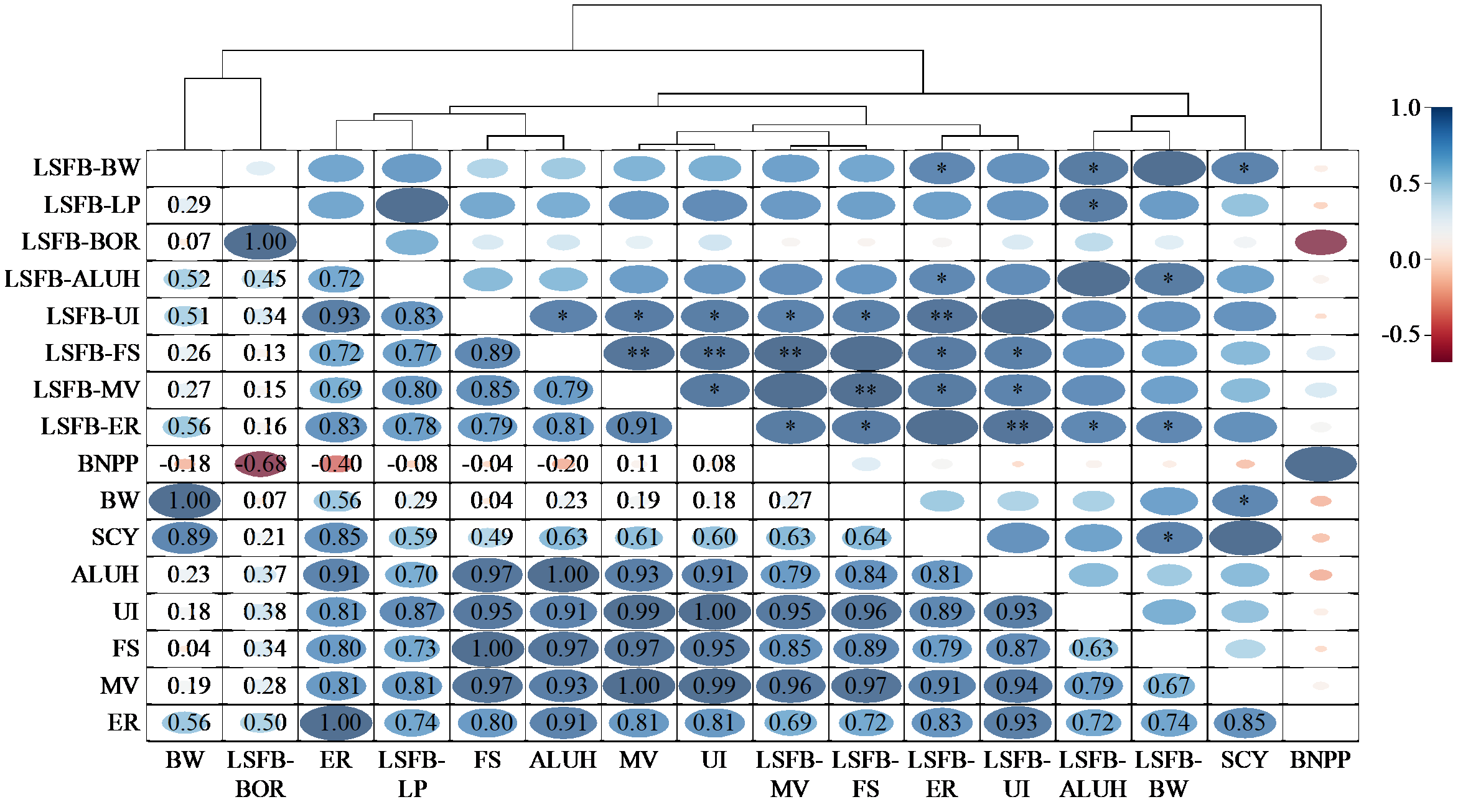
为研究不同脱叶剂喷施时间对夏播短季栽培模式下棉花产量和纤维品质的影响,探索适宜长江流域棉花栽培的脱叶催熟技术,以早熟棉品种“湘农早1号”为材料,设置5个脱叶剂喷施时间(10月3日、6日、9日、12日、15日),测定纤维品质(上半部平均长度、整齐度、断裂比强度等)、产量性状(单株铃数、单铃重、籽棉产量)及后期(8月30日)开花棉铃的吐絮率与品质指标,结合主成分分析与相关性分析综合评价筛选最优施药窗口。结果表明,10月12日喷施脱叶剂显著提高籽棉产量(6573.28 kg/hm2),较其他处理增产5.8%~11.6%;单铃重(5.30 g)与衣分(37.63%)亦为最优。纤维品质方面,10月15日喷施的上半部平均长度(31.10 mm)、马克隆值(5.16)和断裂比强度(34.83 cN/tex)表现最佳。后期开花棉铃中在花后43 d(10月12日)喷施时吐絮率最高(96.30%),断裂比强度达29.67 cN/tex。相关性分析表明,脱叶剂喷施时间主要通过单铃重而非单株成铃数影响棉花产量和纤维品质。结合最优产量表现和主成分分析得出,10月12日(花后43 d)为棉花产量和纤维品质的最佳平衡点。因此,10月12日为长江流域夏播短季棉脱叶剂最佳喷施时间,可促进后期棉铃成熟,并兼顾机械化采收需求与经济效益。

| [1] | 谢章书, 廖良秀, 李侃, 等. 种子球化处理、播种密度和播期对直播棉生理特性及生长发育的影响. 江苏农业学报, 2023, 39(6):1312-1322. |
| [2] |
刘爱玉, 陈金湘, 李瑞莲. 论长江流域棉花短季栽培. 中国棉花, 2014, 41(2):7-10.
doi: 10.11963/issn.1000-632X.20140203 |
| [3] | 刘爱玉, 屠小菊, 周仲华, 等. 棉花夏播短季轻简化栽培技术. 湖南农业科学, 2022(2):28-31. |
| [4] | 谢章书, 谢学方, 李侃, 等. 不同脱叶剂对长江流域夏播短季栽培棉花脱叶催熟效果及产量和品质的影响. 南方农业学报, 2024, 55(9):2602-2612. |
| [5] |
Chu C, Henneberry T J, Reynoso R Y. Effect of cotton defoliants on leaf abscission, immature bolls, and lint yields in a short‐season production system. Journal of Production Agriculture, 1992, 5(2):268-272.
doi: 10.2134/jpa1992.0268 |
| [6] |
Neupane J, Maja J M, Miller G, et al. Effect of controlled defoliant application on cotton fiber quality. Applied Sciences, 2023, 13(9):5694.
doi: 10.3390/app13095694 |
| [7] | Çopur O, Demirel U, Polat R, et al. Effect of different defoliants and application times on the yield and quality components of cotton in semi-arid conditions. African Journal of Biotechnology, 2010, 9(14):2095-2100. |
| [8] | 谢傲, 罗伯良, 邓剑波, 等. 湖南2022/2023年夏秋冬季持续极端干旱事件特征及成因分析. 干旱气象, 2023, 41(6):910-922. |
| [9] | 韩迎春, 李亚兵, 王国平, 等. 不同时期使用催熟剂对连作棉花产量、品质的影响// 中国棉花学会. 中国棉花学会2010年年会论文汇编. 中国农业科学院棉花研究所/农业部棉花遗传改良重点实验室, 2010:4. |
| [10] | Chandrasekaran P, Ravichandran V, Senthil A, et al. Impact of chemical defoliants on chlorophyll fluorescence, biochemical parameters, yield and fiber quality of high density cotton. Indian Journal of Agricultural Research, 2023, 57(6):748-754. |
| [11] | Larson J A, Gwathmey C O, Hayes R M. Cotton defoliation and harvest timing effects on yields, quality, and net revenues. Journal of Cotton Science, 2002, 6:13-27. |
| [12] | 梁发瑞, 龙遗磊, 杜霄, 等. 棉花脱叶催熟剂及其应用技术研究进展. 中国棉花, 2024, 51(9):1-7. |
| [13] |
胡晓丽, 姜艳丽, 宋建中, 等. 脱叶剂对夏播棉产量、品质及种子活力的影响. 中国棉花, 2015, 42(12):10-14.
doi: 10.11963/issn.1000-632X.201512004 |
| [14] | 湖南省技术质量监督局. 棉花栽培技术规范:DB43/T 286-2006. 北京: 中国标准出版社, 2006. |
| [15] | 国家质量监督检验检疫总局. HVI棉纤维物理性能试验方法:GB/T 20392-2023. 北京: 中国标准出版社, 2023. |
| [16] |
田景山, 张煦怡, 王文敏, 等. 棉花脱叶催熟剂对纤维品质的影响及应用时间的确定. 作物学报, 2020, 46(9):1388-1397.
doi: 10.3724/SP.J.1006.2020.94196 |
| [17] |
朱继杰, 赵红霞, 王士杰, 等. 脱叶催熟剂喷施时间对不同部位棉铃发育和纤维品质的影响. 棉花学报, 2023, 35(2):117-127.
doi: 10.11963/cs20230001 |
| [18] | 秦宁, 李洪戈, 何良荣, 等. 陆地棉脱叶剂敏感种质的筛选. 分子植物育种. (2023-12-06)[2025-02-09]. http://kns.cnki.net/kcms/detail/46.1068.S.20230216.1203.012.html. |
| [19] |
张大伟, 魏鑫, 徐海江, 等. 不同棉花品种对脱叶剂的响应. 新疆农业科学, 2019, 56(1):146-153.
doi: 10.6048/j.issn.1001-4330.2019.01.018 |
| [20] |
周婷婷, 肖庆刚, 杜睿, 等. 我国棉花脱叶催熟技术研究进展. 棉花学报, 2020, 32(2):170-184.
doi: 10.11963/1002-7807.ztthxq.20200303 |
| [21] |
Gwathmey C O, Bange M P, Brodrick R. Cotton crop maturity: a compendium of measures and predictors. Field Crops Research, 2016, 191:41-53.
doi: 10.1016/j.fcr.2016.01.002 |
| [22] | 刘勇, 白书军, 张玲, 等. 北疆机采棉喷施脱叶剂适期与气象适宜指标研究. 棉花科学, 2018, 40(6):35-38. |
| [23] |
Korolev N, Pérez-Artés E, Mercado-Blanco J, et al. Vegetative compatibility of cotton-defoliating Verticillium dahliae in Israel and its pathogenicity to various crop plants. European Journal of Plant Pathology, 2008, 122:603-617.
doi: 10.1007/s10658-008-9330-1 |
| [1] | 赵永满, 李瑞奇, 王红光. 拔节前补灌追氮对小麦叶片干物质积累量和产量的影响[J]. 作物杂志, 2026, (4): 101–109 |
| [2] | 许芸菲, 贾浩杨, 李叶彤, 曹瑞, 高梓淇, 赵喆, 陈立强, 梁潇. 氮肥用量及运筹对优良食味粳稻越光产量形成及根系形态的影响[J]. 作物杂志, 2026, (4): 117–128 |
| [3] | 杨京京, 王明娟, 宁克伟, 俞浩楠, 张爱华, 蔡俊玲, 周泰龙, 刘爱萍, 谢晓东. 不同亏缺灌溉对石河子垦区棉花主栽品种生长发育及产量形成的影响[J]. 作物杂志, 2026, (4): 129–139 |
| [4] | 吴子帅, 黄秋要, 陈传华, 罗芳媚, 张世冠, 刘广林, 路一平, 罗群昌, 李虎. 施氮量和栽插密度对桂香99产量和稻米品质的影响[J]. 作物杂志, 2026, (4): 140–145 |
| [5] | 阮新民, 从夕汉, 杜弘杨, 岳伟, 施伏芝, 罗彦长, 王元垒, 罗志祥. 江淮稻作区氮肥用量对高产优质中籼稻产量、品质及氮肥利用效率的影响[J]. 作物杂志, 2026, (4): 146–154 |
| [6] | 李行, 陈广周, 王运韬, 连世昊, 李家豪, 田文强, 张金汕, 石书兵. 宽幅匀播对新疆春小麦光合特性及产量的影响[J]. 作物杂志, 2026, (4): 164–170 |
| [7] | 陈京都, 洪叶, 唐建鹏, 邓沁宇, 刘绍贵, 张彦, 冯烨. 土壤修复剂与不同肥料运筹模式对稻茬小麦产量及品质的影响[J]. 作物杂志, 2026, (4): 180–187 |
| [8] | 侯晓敏, 闫锋, 董扬, 赵富阳, 李清泉, 卢环, 张金东, 张巩亮. 调环酸钙对糜子茎秆特征及抗倒伏能力的影响[J]. 作物杂志, 2026, (4): 207–213 |
| [9] | 张卓, 聂江力, 邱晓坤, 宿珈嘉, 任俊涵, 刘广慧, 刘艳军, 裴毅. 蚯蚓粪肥部分替代化肥对兰州百合光合特性、品质和产量的影响[J]. 作物杂志, 2026, (4): 221–227 |
| [10] | 李君保, 吴银环, 冉文秀, 李华明, 冉元龙, 丁梦琦, 张颖韬. 播种方式及肥料运筹对苦荞产量、品质及肥料利用率的影响[J]. 作物杂志, 2026, (4): 228–237 |
| [11] | 樊海潮, 张志恒, 赵中亭, 张桂花. 种植密度与整枝方式对蒜后直播棉产量和品质的影响[J]. 作物杂志, 2026, (4): 238–245 |
| [12] | 吴淼淼, 王素华, 田静, 袁星星, 陈新, 王丽侠. 2022-2024年国家食用豆产业技术体系普通豇豆新品种(系)联合鉴定分析[J]. 作物杂志, 2026, (3): 102–109 |
| [13] | 谢福平, 毛涛. 化肥减量配施生物有机肥对设施番茄产量、品质及土壤肥力的影响[J]. 作物杂志, 2026, (3): 197–203 |
| [14] | 史婵, 韩丽, 李秋卓, 张芳魁, 曾秀丽, 李玉蓉, 张兴端. 不同氮、磷、钾配比对紫甘薯花青素积累及产量的影响[J]. 作物杂志, 2026, (3): 204–209 |
| [15] | 郭威, 孙冬, 闫治霖, 丁蓓, 杜跃辰, 吴慧扬, 徐强, 窦志, 高辉. 灌浆结实期半深水灌溉对水稻产量、干物质转运及籽粒灌浆的影响[J]. 作物杂志, 2026, (3): 21–29 |
|
||