

作物杂志,2026, 第2期: 51–58 doi: 10.16035/j.issn.1001-7283.2026.02.006
蒙古黄芪新品系选育及其农艺性状和活性药物成分比较分析
张金文1( ), 包兴涛1(), 任续伟1(), 毛正云1(), 夏建红1(), 姚彦斌1, 李光文1, 田彦龙1, 刘文静1, 王杰2, 董妙音3
1陇西县农业技术推广中心, 748100, 甘肃定西 2中国农业科学院烟草研究所, 266001, 山东青岛 3甘肃农业大学生命科学技术学院, 730070, 甘肃兰州
Breeding of New Astragalus membranaceus Strains and Analysis of Agronomic Traits and Active Pharmaceutical Ingredients
Zhang Jinwen1(), Bao Xingtao1(), Ren Xuwei1(), Mao Zhengyun1(), Xia Jianhong1(), Yao Yanbin1, Li Guangwen1, Tian Yanlong1, Liu Wenjing1, Wang Jie2, Dong Miaoyin3
1Agro-Tech Extension Center ,Agricultural and Rural Affairs Bureau of Longxi County Dingxi 748100, Gansu, China 2Tobacco Research Institute of Chinese Academy of Agricultural Sciences Qingdao 266001, Shandong, China 3College of Life Science and Technology ,Gansu Agricultural University Lanzhou 730070, Gansu, China
摘要:
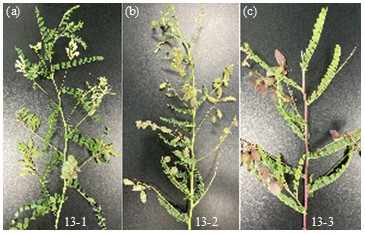
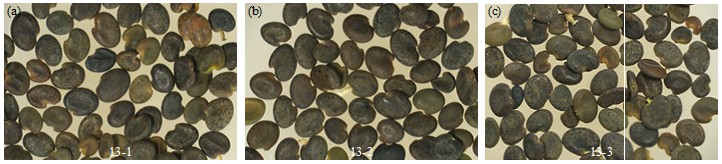
黄芪作为我国常用的大宗中药材,需求量逐年增加,但其良种选育和繁育工作相对薄弱,目前栽培的黄芪品种良莠不齐,种质退化严重。因此,开展蒙古黄芪优良品种(系)选育对推动黄芪产业高质量可持续发展至关重要。以大田栽培蒙古黄芪为材料,2013-2023年间,根据黄芪茎秆颜色、果荚特性、种子特性和小叶数等农艺性状,采用系统育种程序的“混合选择法”选育出3个黄芪新品系,并对其农艺性状和活性药物成分进行比较分析。结果表明,品系13-1、13-2茎秆和果荚均为绿色,13-3茎秆为花青苷紫色,果荚为浅红色;13-2小叶数(27.9)和种子数(4.5)最多;品系13-2在渭河延川和北山生态区域的产量均高于13-1和13-3;品系13-3在南部二阴山产量高于13-2和13-1;品系13-2在3个生态区域的病株率均低于其他2个品系。13-2浸出物和黄芪甲苷含量最高,其中毛蕊异黄酮葡萄糖苷含量是《中华人民共和国药典》规定含量的2.6倍。综合分析,品系13-2在农艺性状、活性药物成分含量、产量及其抗病性等方面表现更优,具有潜在的应用推广价值,同时为黄芪优良新品种选育奠定了种质材料基础。

| [1] | 国家药典委员会. 中华人民共和国药典1部. 北京: 中国医药科技出版社, 2020. |
| [2] | 崔悦, 高兴, 韩丽琴, 等. UFLC-MS/MS法同时测定黄芪中黄芪甲苷和毛蕊异黄酮葡萄糖苷的含量. 中药新药与临床药理, 2021, 32(12):1855-1858. |
| [3] | 蒋微, 蒋式骊, 刘平. 黄芪甲苷的药理作用研究进展. 中华中医药学刊, 2019, 37(9):2121-2124. |
| [4] | 国家卫生健康委. 关于对党参等9种物质开展按照传统既是食品又是中药材的物质管理试点工作的通知. (2020-01-13). https://www.nhc.gov.cn/sps/c100088/202001/6fd1c3554a10477cb5381023236b51b8.shtml. |
| [5] | 彭露茜, 郭彦龙. 中国黄芪地理分布和未来适生区预测. 四川农业大学学报, 2017, 35(1):60-68. |
| [6] | 陈燕, 董妙音, 曹占凤, 等. 根及根茎类药材品种选育研究进展. 中国中药杂志, 2025, 50(2):363-383. |
| [7] | 郭兰萍, 黄璐琦, 蒋有绪, 等. 药用植物栽培种植中的土壤环境恶化及防治策略. 中国中药杂志, 2006, 31(9):714-717. |
| [8] | 吴红淼, 林文雄. 药用植物连作障碍研究评述和发展透视. 中国生态农业学报, 2020, 28(6):775-793. |
| [9] | 萧凤回, 郭巧生. 药用植物育种学. 北京: 中国林业出版社, 2008. |
| [10] | 王泽, 晋小军, 毛耀杰. 4个蒙古黄芪品种光合特性及其产量质量比较研究. 中国野生植物资源, 2024, 43(3):60-66. |
| [11] | 徐敬珲, 刘效瑞, 宋振华, 等. 黄芪新品种陇芪3号选育及规范化种植技术研究. 中药材, 2013, 36(9):1392-1394. |
| [12] | 黄耀龙, 武永陶, 曹占凤, 等. 黄芪新品种西芪1号种苗高效繁育技术. 甘肃农业科技, 2021, 52(4):92-94. |
| [13] | 赵一之. 黄芪植物来源及其产地分布研究. 中草药, 2004, 35 (10):115-116. |
| [14] | 常晖, 程秋香, 李吟平, 等. 黄芪种子种皮颜色和大小与种子活力相关性研究. 种子, 2015, 34(8):95-97. |
| [15] | 方中达. 植病研究方法. 北京: 中国农业出版社, 1998. |
| [16] | 辛中尧, 徐红霞, 陈秀蓉. 枯草芽孢杆菌(Bacillus subtilis)B1、B2菌株对当归、黄芪的防病促进生长效果. 植物保护, 2008, 34(6):142-144. |
| [17] |
Yagi T, Kikuzawa K. Patterns in size-related variations in current-year shoot structure in eight deciduous tree species. Journal of Plant Research, 1999, 112:343-352.
doi: 10.1007/PL00013862 |
| [18] |
王鹤琪, 宋彦涛, 李强, 等. 呼伦贝尔草原植物叶片大小与数量的权衡关系及其内在机制. 应用生态学报, 2021, 32(2):425-432.
doi: 10.13287/j.1001-9332.202102.004 |
| [19] |
Smith C, Fretwell S. The Optimal balance between size and number of offspring. The American Naturalist, 1974, 108(962):499-506.
doi: 10.1086/282929 |
| [20] |
王晨阳, 张春辉, 刘文, 等. 青藏高原东缘唇形科植物种子大小对萌发的影响研究. 草地学报, 2011, 19(4):601-606.
doi: 10.11733/j.issn.1007-0435.2011.04.011 |
| [21] | 段立军, 孙博航. 黄芪甲苷的研究进展. 沈阳药科大学学报, 2011, 28(5):410-416. |
| [22] |
Hao Y, Fu J, Zhang J Z, et al. Identification and functional characterization of UDP-glycosyltransferases involved in isoflavone biosynthesis in Astragalus membranaceus. Journal of Agricultural and Food Chemistry, 2023, 71(34):12775-12784.
doi: 10.1021/acs.jafc.3c03563 |
| [1] | 马愿强, 刘丽君, 马骊, 徐新宇, 张亚宏, 王娟, 蒲媛媛, 王旺田, 杨刚, 武军艳. 强冬性冬油菜抗裂角性鉴定筛选及其与相关农艺性状的相关性状分析[J]. 作物杂志, 2026, (2): 12–22 |
| [2] | 和桂青, 李兆光, 袁文珏, 和琼姬, 杨文高, 李燕, 王蕊, 叶磊, 侯志江. 藜麦生长发育特性及养分吸收分配动态变化规律研究[J]. 作物杂志, 2026, (2): 172–179 |
| [3] | 胡亮亮, 曹榕, 陈天晓, 宋倩楠, 王素华, 程须珍, 王丽侠, 陈红霖. 小豆新品种(系)多点联合鉴定及产量与生态适应性评价[J]. 作物杂志, 2026, (2): 74–81 |
| [4] | 朱柃羽, 杨乔惠, 刘亦迅, 袁健, 王名花, 向达兵, 邹亮, 王俊珍, 范昱. 野生和栽培燕麦灌浆过程的光合特性与农艺性状研究[J]. 作物杂志, 2026, (1): 167–174 |
| [5] | 杨文高, 袁文珏, 李兆光, 和桂青, 和琼姬, 王蕊, 李燕, 叶磊, 侯志江. 播期对滇西北冬播藜麦农艺性状和产量的影响[J]. 作物杂志, 2026, (1): 257–265 |
| [6] | 刘晓涵, 唐玉劼, 刘新宇, 乔钲岩, 石贵山, 于淼, 李扬, 王鼐, 祁宏英, 陈冰嬬. 春播早熟区高粱骨干亲本主要性状配合力及杂种优势分析[J]. 作物杂志, 2026, (1): 47–53 |
| [7] | 高凤云, 伊六喜, 周宇, 斯钦巴特尔, 何瑞超, 贾霄云. 亚麻种质资源遗传多样性分析[J]. 作物杂志, 2026, (1): 60–71 |
| [8] | 李文俊, 郭延平, 杨生华, 邵扬. 513份蚕豆种质资源主要农艺性状遗传多样性分析[J]. 作物杂志, 2026, (1): 85–93 |
| [9] | 俞华先, 安汝东, 桃联安, 郎荣斌, 边芯, 张钰, 刘新龙, 刘家勇, 赵丽萍, 刘洪博, 张革民, 张保青. 基于农艺性状对57NG208与南涧果蔗正反交后代的综合评价[J]. 作物杂志, 2026, (1): 94–103 |
| [10] | 陈志豪, 王婷, 常旭虹, 王艳杰, 刘希伟, 杨玉双, 王玉娇, 王德梅, 赵广才. 黄淮冬麦区北片冬小麦产量和品质性状的综合分析[J]. 作物杂志, 2025, (6): 148–155 |
| [11] | 秦娜娜, 黄淋华, 陈莹, 王胜谋, 谢勇, 缪凯, 李万明, 戚兰. 叶面喷施丙酰芸苔素内酯对夏大豆光合作用、农艺性状和产量的影响[J]. 作物杂志, 2025, (6): 164–171 |
| [12] | 颜小文, 梁俊超, 曾攀, 周红英, 王郅琪, 乐美旺, 孙建. 迟播对秋芝麻主要农艺性状及产量的影响[J]. 作物杂志, 2025, (6): 189–194 |
| [13] | 杨珊, 张智, 郭玥岐, 罗瑞, 邓江龙, 郭晓艺, 周丽洪. 丢糟型微生物菌剂对酿酒高粱产量及土壤理化性状的影响[J]. 作物杂志, 2025, (6): 210–215 |
| [14] | 陈国立, 徐超峰, 魏常敏, 王茹茵, 张艳芳, 李豪远, 张军. 河南青贮玉米新品种基因型与环境互作效应分析[J]. 作物杂志, 2025, (6): 91–99 |
| [15] | 赵彩霞, 白玛央珍, 杨广环, 唐琳. 不同类型油菜资源农艺性状鉴定及聚类分析[J]. 作物杂志, 2025, (5): 120–127 |
|
||