

作物杂志,2026, 第1期: 217–224 doi: 10.16035/j.issn.1001-7283.2026.01.027
不同降水年型下春小麦产量对降水、施氮及秸秆覆盖的响应模拟
叶晓娟1( ), 刘强2()
- 1甘肃农业大学理学院,730070,甘肃兰州
2甘肃农业大学信息科学技术学院,730070,甘肃兰州
Simulation of Spring Wheat Yield Response to Precipitation, Nitrogen Application, and Straw Mulching under Different Precipitation Year Types
Ye Xiaojuan1(), Liu Qiang2()
- 1College of Science, Gansu Agricultural University, Lanzhou 730070, Gansu, China
2College of Information Science and Technology, Gansu Agricultural University, Lanzhou 730070, Gansu, China
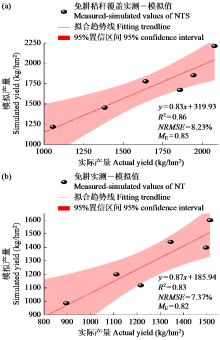
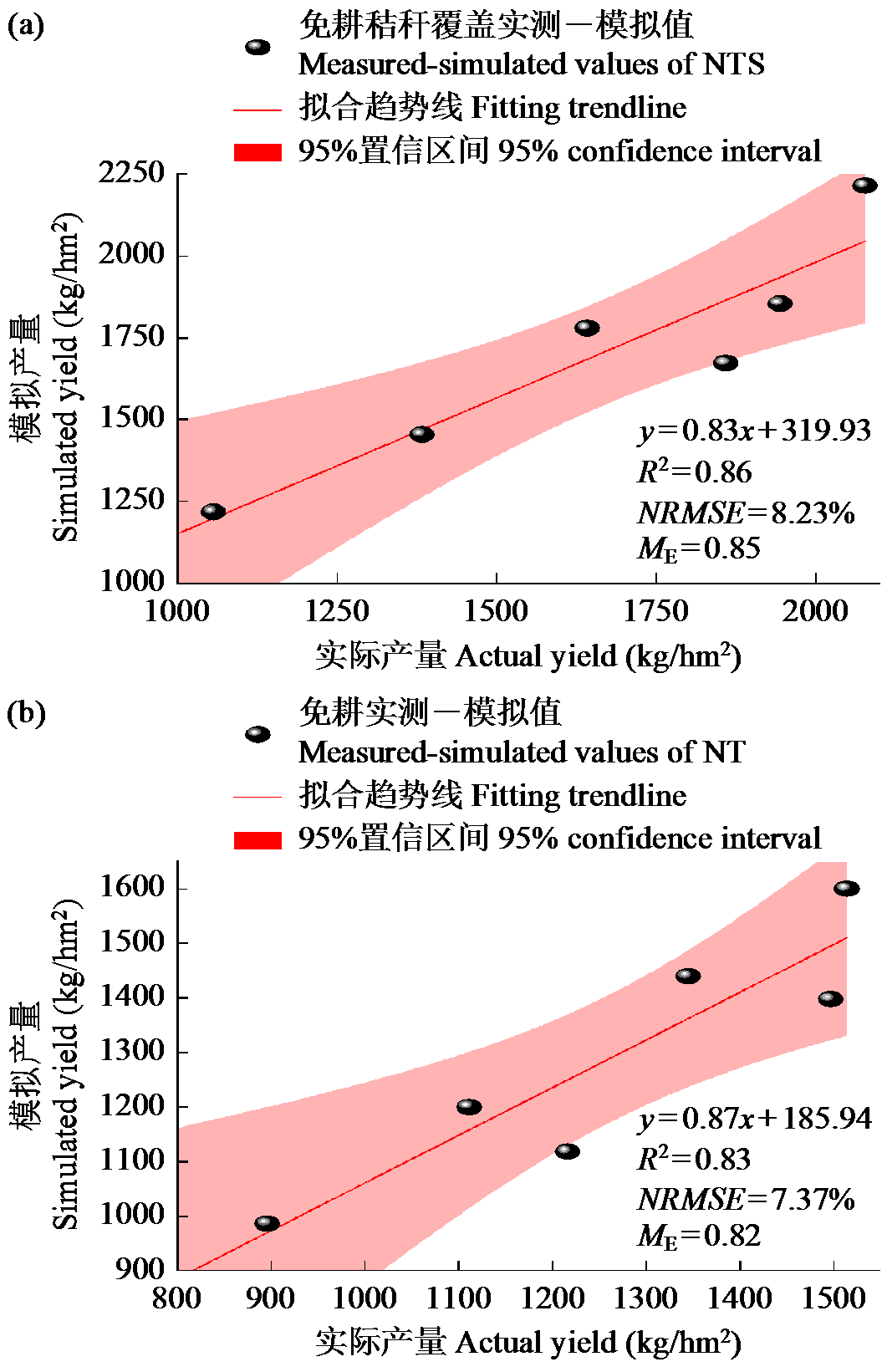
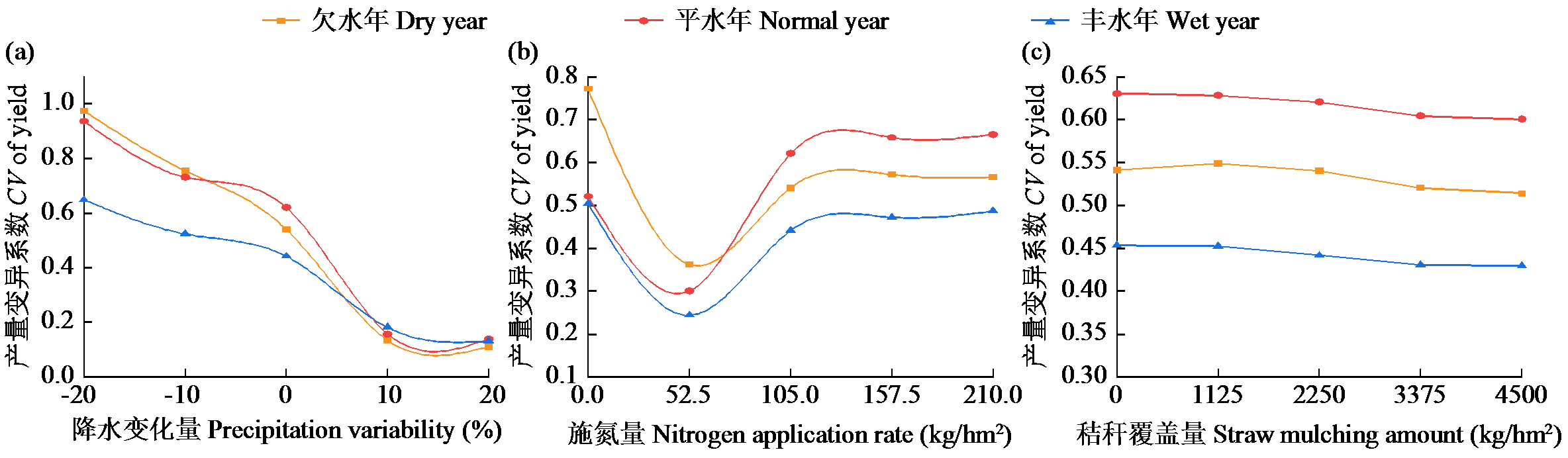
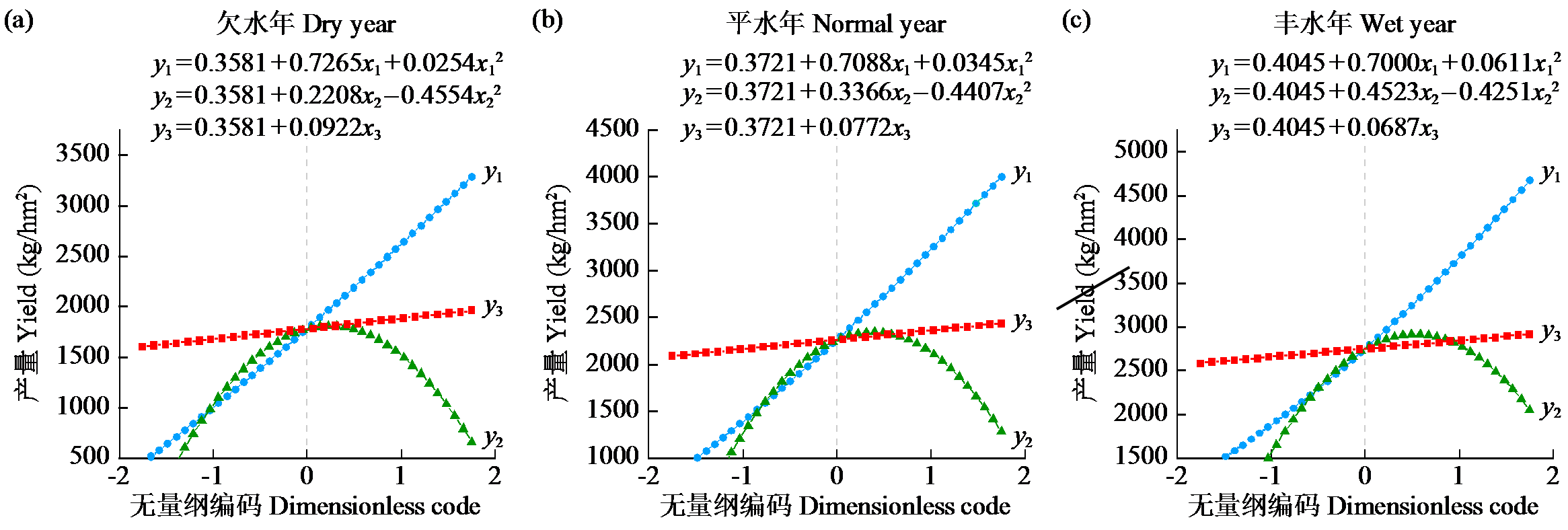
摘要: 为探究不同降水年型下降水量、氮肥与秸秆覆盖耦合变化对旱地春小麦产量的影响机制,利用2013-2018年免耕及免耕秸秆覆盖下的春小麦产量、土壤及气象数据校验APSIM模型。结合1970-2022年历史数据驱动校验后的模型,模拟5×5×5组降水变化量(±20%、±10%、0%)、施氮量(0.0、52.5、105.0、157.5和210.0 kg/hm2)和秸秆覆盖量(0、1125、2250、3375和4500 kg/hm2)组合下的产量,分析不同单因素下各年型产量变异系数,并采用二次正交多项式逐步回归、单因素分析和交互效应研究各因素对产量的影响。结果表明,APSIM模型模拟效果良好,2种耕作方式下实测与模拟产量R2均大于0.8,NRMSE均小于10%,ME均大于0.8。欠水年、平水年和丰水年下,三因素单独及交互作用均正向影响产量,效应强度为降水变化量>施氮量>秸秆覆盖量。在当年自然降水基础上,各年型最优产量及耕作措施为:欠水年实现最优产量2203.65 kg/hm2,需增加20%降水量、施用153.13 kg/hm2氮肥、覆盖4500 kg/hm2秸秆;平水年实现最优产量2838.77 kg/hm2,需增加20%降水量、施用170.76 kg/hm2氮肥、覆盖4500 kg/hm2秸秆;丰水年实现最优产量3447.11 kg/hm2,需增加20%降水量、施用188.58 kg/hm2氮肥、覆盖4500 kg/hm2秸秆。综上,在模拟试验设置范围内,免耕覆盖下增加降水量、施氮量和秸秆覆盖量均可提升春小麦模拟产量,但影响程度因降水年型而异,当地春小麦宜按年型制定水肥覆盖方案以实现高产与稳产。



| [1] | 姜大膀, 王娜. IPCC AR6报告解读:水循环变化. 气候变化研究进展, 2021, 17(6):699-704. |
| [2] | 姜大膀, 王晓欣. 对IPCC第六次评估报告中有关干旱变化的解读. 大气科学学报, 2021, 44(5):650-653. |
| [3] | 周天军, 陈梓明, 陈晓龙, 等. IPCC AR6报告解读:未来的全球气候——基于情景的预估和近期信息气候变化研究进展, 2021, 17(6):652-663. |
| [4] |
Seth P, Sebastian J. Plants and global warming: challenges and strategies for a warming world. Plant Cell Reports, 2024, 43(1):27.
doi: 10.1007/s00299-023-03083-w pmid: 38163826 |
| [5] | 刘玉洁, 陈巧敏, 葛全胜, 等. 气候变化背景下1981-2010中国小麦物候变化时空分异. 中国科学:地球科学, 2018, 48(7):888-898. |
| [6] | 周景博, 刘亮. 未来气候变化对中国小麦产量影响的差异性研究——基于Meta回归分析的定量综述. 中国农业气象, 2018, 39(3):141-151. |
| [7] | 周丽涛, 孙爽, 郭尔静, 等. 干旱条件下APSIM模型修正及华北冬小麦产量模拟效果. 农业工程学报, 2023, 39(6):92-102. |
| [8] | 张婷婷, 范子晗, 常乐乐, 等. 西北地区小麦生产环境风险时空特征. 干旱地区农业研究, 2023, 41(2):248-256. |
| [9] |
刘淑军, 李冬初, 黄晶, 等. 近30年来我国小麦和玉米秸秆资源时空变化特征及还田减肥潜力. 中国农业科学, 2023, 56 (16):3140-3155.
doi: 10.3864/j.issn.0578-1752.2023.16.008 |
| [10] |
Shao Y H, Xie Y X, Wang C Y, et al. Effects of different soil conservation tillage approaches on soil nutrients, water use and wheat-maize yield in rainfed dry-land regions of North China. European Journal of Agronomy, 2016, 81(10):37-45.
doi: 10.1016/j.eja.2016.08.014 |
| [11] |
张统帅, 闫丽娟, 李广, 等. 免耕和秸秆覆盖对旱作区土壤氮素、水分和春小麦产量的影响. 浙江农业学报, 2020, 32(8):1329-1341.
doi: 10.3969/j.issn.1004-1524.2020.08.01 |
| [12] | 王佳, 冯晓淼, 芈书贞, 等. 模拟降雨量变化与CO2浓度升高对小麦光合特性和碳氮特征的影响. 水土保持研究, 2020, 27(1):328-334,339. |
| [13] | 李枫, 周杨, 尹鹏, 等. 长江中游不同品质类型小麦产量形成及氮素吸收利用对氮肥的响应. 麦类作物学报, 2024, 44(3):370-377 |
| [14] |
茹晓雅, 李广, 陈国鹏, 等. 不同降水年型下水氮调控对小麦产量及生物量的影响. 作物学报, 2019, 45(11):1725-1734.
doi: 10.3724/SP.J.1006.2019.91008 |
| [15] |
崔振坤, 于振文, 石玉, 等. 水氮运筹对小麦光合物质生产和产量的影响. 应用生态学报, 2024, 35(6):1564-1572.
doi: 10.13287/j.1001-9332.202406.017 |
| [16] |
王永亮, 胥子航, 李申, 等. 不同覆盖措施对土壤水热状况及春玉米产量和水分利用效率的影响. 作物学报, 2024, 50(5):1312-1324.
doi: 10.3724/SP.J.1006.2024.33025 |
| [17] | 王文杰, 马建涛, 柴雨葳, 等. 不同覆盖方式对旱地春小麦土壤水热及生长的影响. 麦类作物学报, 2023, 43(9):1206-1214. |
| [18] |
Yin H J, Zhao W Q, Li T, et al. Balancing straw returning and chemical fertilizers in China: role of straw nutrient resources. Renewable and Sustainable Energy Reviews, 2018, 81(1):2695-2702.
doi: 10.1016/j.rser.2017.06.076 |
| [19] | 薛志伟, 杨春玲. 秸秆还田条件下氮肥用量对冬小麦生长发育及产量的影响. 作物研究, 2021, 35(3):200-204. |
| [20] | 张静, 马嵩科, 张冬霞, 等. 秸秆还田配施氮肥对旱地小麦生理生化特性及产量的影响. 江苏农业科学, 2023, 51(23):61-69. |
| [21] | 王伟伟, 聂志刚. 降水和温度变化下秸秆覆盖对旱地春小麦产量及其构成因素的影响. 作物研究, 2023, 37(4):335-342. |
| [22] | 李广, 黄高宝, William B, 等. APSIM模型在黄土丘陵沟壑区不同耕作措施中的适用性. 生态学报, 2009, 29(5):2655-2663. |
| [23] | 杨蕊, 王小燕, 刘科. 湖北省小麦潜在产量时空异质性特征及驱动因子分析. 中国生态农业学报, 2024, 32(4):616-626. |
| [24] |
Zeleke K. Simulating agronomic adaptation strategies to mitigate the impacts of climate change on wheat yield in south-eastern Australia. Agronomy, 2021, 11(2):337.
doi: 10.3390/agronomy11020337 |
| [25] | 李晓州, 郝明德, 赵晶, 等. 不同降水年型下长期施肥的小麦产量效应. 应用生态学报, 2018, 29(10):3237-3244. |
| [26] | 刘强, 高雪慧, 王钧. 不同降水年型下大气CO2浓度和温度对旱地春小麦产量的响应模拟. 干旱地区农业研究, 2023, 41 (2):230-237,265. |
| [27] | 尹嘉德, 侯慧芝, 张绪成, 等. 基于APSIM模型分析不同降水年型下施氮深度对旱地小麦的产量效应. 水土保持学报, 2022, 36(1):247-254. |
| [28] | 任新庄, 闫丽娟, 李广, 等. 陇中旱地春小麦产量对降水与温度变化的响应模拟. 干旱地区农业研究, 2018, 36(3):125-129,155. |
| [29] | 冯仰强, 聂志刚, 王钧, 等. 基于APSIM模型研究不同降水年型下降水变化对旱地小麦产量的影响. 作物研究, 2021, 35(2):108-111,140. |
| [30] | 董志强, 张丽华, 吕丽华, 等. 不同灌溉方式对冬小麦光合速率及产量的影响. 干旱地区农业研究, 2015, 33(6):1-7. |
| [31] |
高艳梅, 孙敏, 高志强, 等. 不同降水年型旱地小麦覆盖对产量及水分利用效率的影响. 中国农业科学, 2015, 48(18):3589-3599.
doi: 10.3864/j.issn.0578-1752.2015.18.003 |
| [32] |
García-López J, Lorite I J, García-Ruiz R, et al. Yield response of sunflower to irrigation and fertilization under semi-arid conditions. Agricultural Water Management, 2016, 176(14):151-162.
doi: 10.1016/j.agwat.2016.05.020 |
| [33] | 周冬冬, 张军, 李福建, 等. 稻秸还田与耕作方式对小麦产量形成及籽粒品质的影响. 麦类作物学报, 2022, 42(10):1273-1282. |
| [34] |
马晓明, 李丹, 雷佳, 等. 不同降水年型下耕作方式结合覆盖对旱地土壤物理性质和马铃薯产量的影响. 应用生态学报, 2024, 35(2):447-456.
doi: 10.13287/j.1001-9332.202402.012 |
| [35] | 王培如, 钟融, 孙敏, 等. 不同降水年型施氮量对冬小麦水氮资源利用效率的调控. 植物营养与肥料学报, 2022, 28(8):1430-1443. |
| [36] | 张森昱, 冯雨露, 马建涛, 等. 不同降水年型下秸秆带状覆盖对西北旱地马铃薯品质和产量的影响. 干旱地区农业研究, 2023, 41(5):207-216. |
| [37] | 常磊, 韩凡香, 柴雨葳, 等. 秸秆带状覆盖对半干旱雨养区冬小麦耗水特征和产量的影响. 应用生态学报, 2019, 30(12):4150-4158. |
| [38] |
王新媛, 赵思达, 郑险峰, 等. 秸秆还田和氮肥用量对冬小麦产量和氮素利用的影响. 中国农业科学, 2021, 54(23):5043-5053.
doi: 10.3864/j.issn.0578-1752.2021.23.010 |
| [39] | 陈松鹤, 向晓玲, 雷芳, 等. 秸秆覆盖配施氮肥根际土真菌群落及其与小麦产量的关系. 生态学报, 2022, 42(21):8751-8761. |
| [40] | 杨慧敏, 王涛, 窦瑛霞, 等. 不同降水年型地膜覆盖及秸秆覆盖提高小麦产量和氮素利用的效应. 植物营养与肥料学报, 2021, 27(11):1905-1914. |
| [1] | 周文丽, 郝淼艺, 张仁和. 高密度种植下氮肥对玉米根系生长及氮代谢的影响[J]. 作物杂志, 2026, (1): 125–132 |
| [2] | 马小明, 齐翔鲲, 谭雪, 史孟豫, 王玉凤, 付健, 杨克军. 免耕秸秆覆盖对半干旱区土壤团聚体稳定性和玉米产量的影响[J]. 作物杂志, 2026, (1): 152–159 |
| [3] | 谢富欣, 江晓林, 李成焕, 张文菁, 王飞雪, 胡卫丽, 梅鸿献, 何革命, 刘焱. 芝麻叶菜采摘时期对主要经济产量性状的影响及综合效益分析[J]. 作物杂志, 2026, (1): 160–166 |
| [4] | 施锘, 朱宏强, 杨梦璇, 周艳宾, 代惠娟, 吕鹏辉, 刘波, 王圣丰, 穆文坡, 杜宇. 不同微生物菌肥对烤烟生长发育、产量及品质的影响[J]. 作物杂志, 2026, (1): 189–196 |
| [5] | 张乐, 韩云飞, 杜二小, 李保成, 伞薪潼, 刘新雨, 王艳莉, 赵沛义, 任永峰. 有机培肥措施对马铃薯光合特性、养分含量及产量的影响[J]. 作物杂志, 2026, (1): 197–207 |
| [6] | 徐浩, 魏全全, 谭洪伟, 芶久兰, 冉雪松, 张萌, 宋南伶, 柳玲玲, 顾小凤, 吕锡斌. 酒糟有机无机复混肥对酒用高粱产量、品质、养分吸收及利用的影响[J]. 作物杂志, 2026, (1): 208–216 |
| [7] | 桑瑞娟, 董春阳, 张红妹, 何云, 孙浩, 刘伯帅, 朱晓艳, 马森, 李德锋. 不同生育期刈割对豫北小黑麦草产量、品质和青贮发酵质量的影响[J]. 作物杂志, 2026, (1): 225–230 |
| [8] | 杨文高, 袁文珏, 李兆光, 和桂青, 和琼姬, 王蕊, 李燕, 叶磊, 侯志江. 播期对滇西北冬播藜麦农艺性状和产量的影响[J]. 作物杂志, 2026, (1): 257–265 |
| [9] | 李青欣, 金秀良, 宋晓, 张珂珂, 郭腾飞, 黄绍敏, 岳克, 丁世杰, 黄明, 李友军. 有机肥部分替代氮肥对豫东冬小麦生长及土壤特性的影响[J]. 作物杂志, 2025, (6): 121–131 |
| [10] | 高文瑞, 孙艳军, 韩冰, 张晓青, 王显生, 郑子松. 外源有机硒对设施樱桃番茄产量及果实品质的影响[J]. 作物杂志, 2025, (6): 140–147 |
| [11] | 兰秀, 梁振华, 杨海霞, 李恒锐, 阮丽霞, 韦婉羚, 陈会鲜, 何洪良, 黄若兰, 赵春慧, 汤丹峰. 甘蔗―凉粉草间作对土壤理化性质及作物产量的影响[J]. 作物杂志, 2025, (6): 156–163 |
| [12] | 秦娜娜, 黄淋华, 陈莹, 王胜谋, 谢勇, 缪凯, 李万明, 戚兰. 叶面喷施丙酰芸苔素内酯对夏大豆光合作用、农艺性状和产量的影响[J]. 作物杂志, 2025, (6): 164–171 |
| [13] | 王舒琦, 李建波, 刘志萍, 马宇, 渠佳慧, 巴图, 徐寿军. 不同栽培模式下大麦产量与蛋白质形成的生理机制研究[J]. 作物杂志, 2025, (6): 172–180 |
| [14] | 颜小文, 梁俊超, 曾攀, 周红英, 王郅琪, 乐美旺, 孙建. 迟播对秋芝麻主要农艺性状及产量的影响[J]. 作物杂志, 2025, (6): 189–194 |
| [15] | 张艾英, 赵媛, 刘敏, 薛红桃, 王国梁, 王瑞, 郭二虎. 不同收获时间和收获方式下谷子产量与品质的响应[J]. 作物杂志, 2025, (6): 195–202 |
|
||