

作物杂志,2026, 第4期: 17–26 doi: 10.16035/j.issn.1001-7283.2026.04.003
利用CRISPR/Cas9技术编辑GS3、GS9和GW2基因改良水稻粒型
阙涛1( ), 吴娴2, 王忠妮2, 吴钱蓉3, 龙武华2,4, 王倩2,4, 朱速松5()
- 1
贵州师范大学生命科学学院, 550025, 贵州贵阳
2贵州省农业科学院水稻研究所, 550006, 贵州贵阳
3贵州大学生命科学学院, 550000, 贵州贵阳
4农业农村部喀斯特山区作物基因资源与种质创新重点实验室, 550006, 贵州贵阳
5贵州省农业科学院农作物品种资源研究所, 550006, 贵州贵阳
Improvement of Rice Grain Shape by Editing of GS3, GS9 and GW2 Genes Using CRISPR/Cas9 Technology
Que Tao1(), Wu Xian2, Wang Zhongni2, Wu Qianrong3, Long Wuhua2,4, Wang Qian2,4, Zhu Susong5()
- 1
School of Life Sciences ,Guizhou Normal University Guiyang 550025, Guizhou, China
2Rice Research Institute ,Guizhou Academy of Agricultural Sciences Guiyang 550006, Guizhou, China
3College of Life Sciences ,Guizhou University Guiyang 550000, Guizhou, China
4Key Laboratory of Crop Genetic Resources and Germplasm Innovation in Karst Mountainous Areas ,Ministry of Agriculture and Rural Affairs Guiyang 550006, Guizhou, China
5Institute of Crop Variety Resources ,Guizhou Academy of Agricultural Sciences Guiyang 550006, Guizhou, China
摘要:
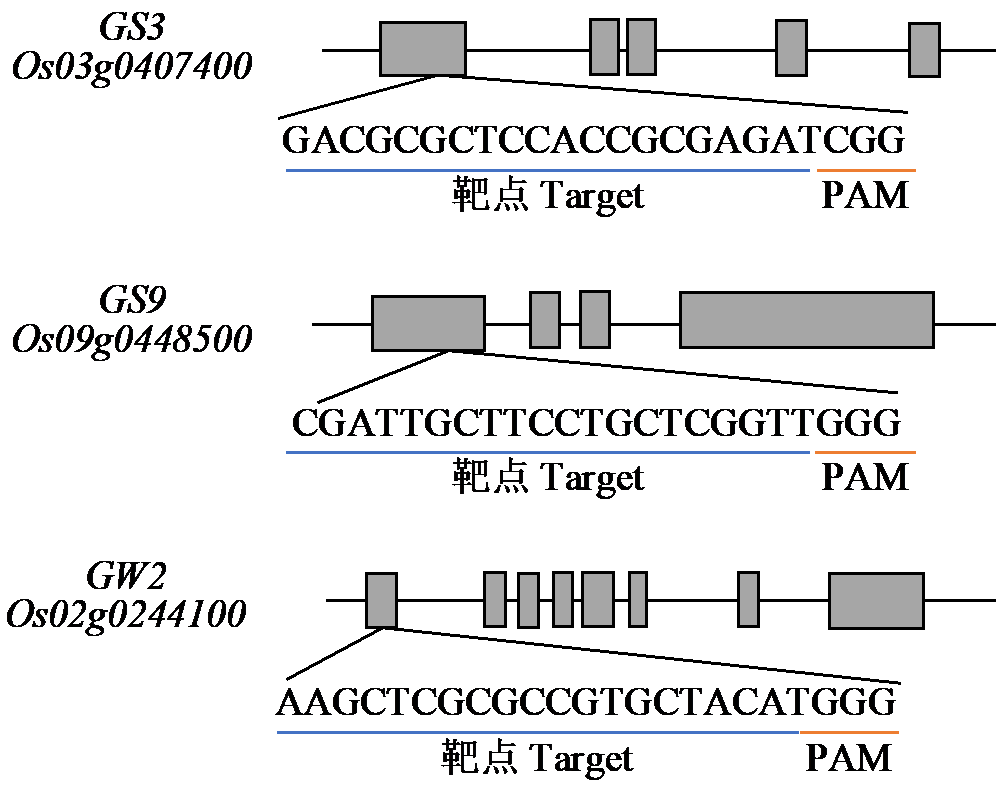
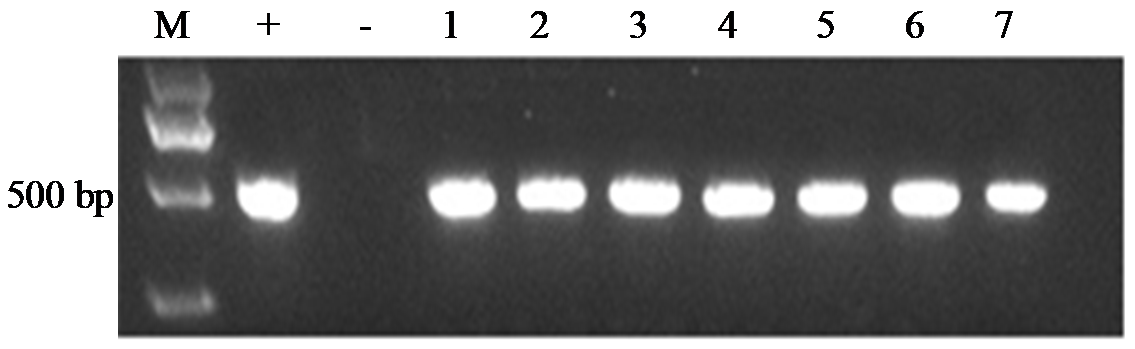
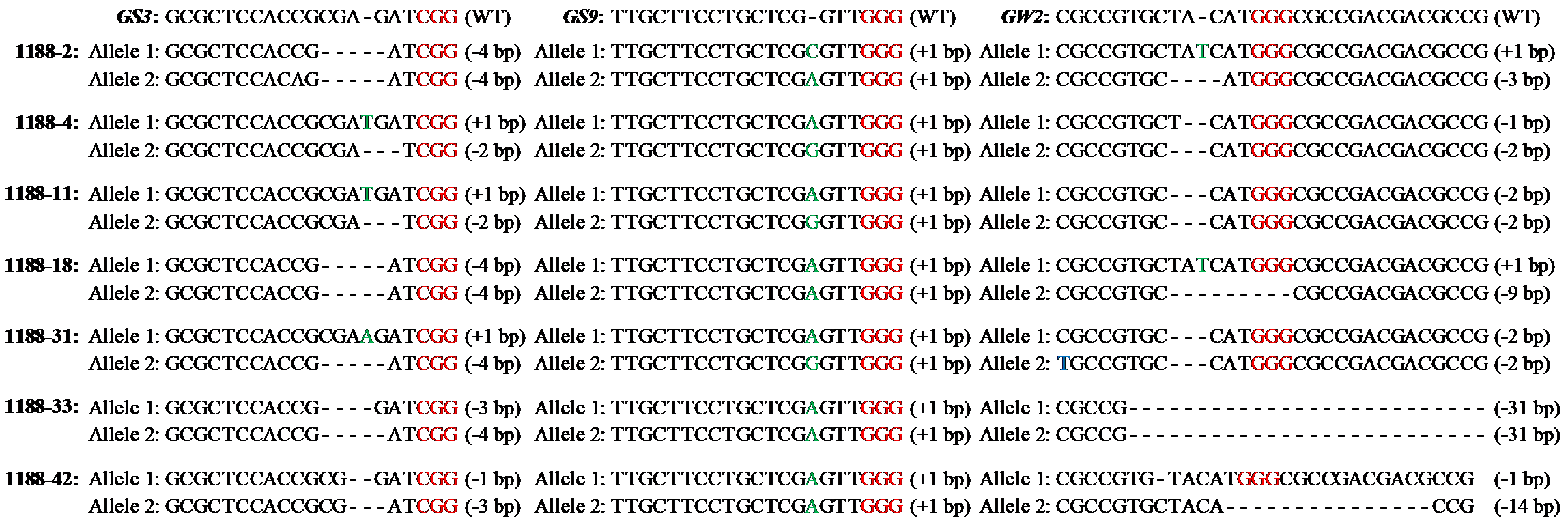
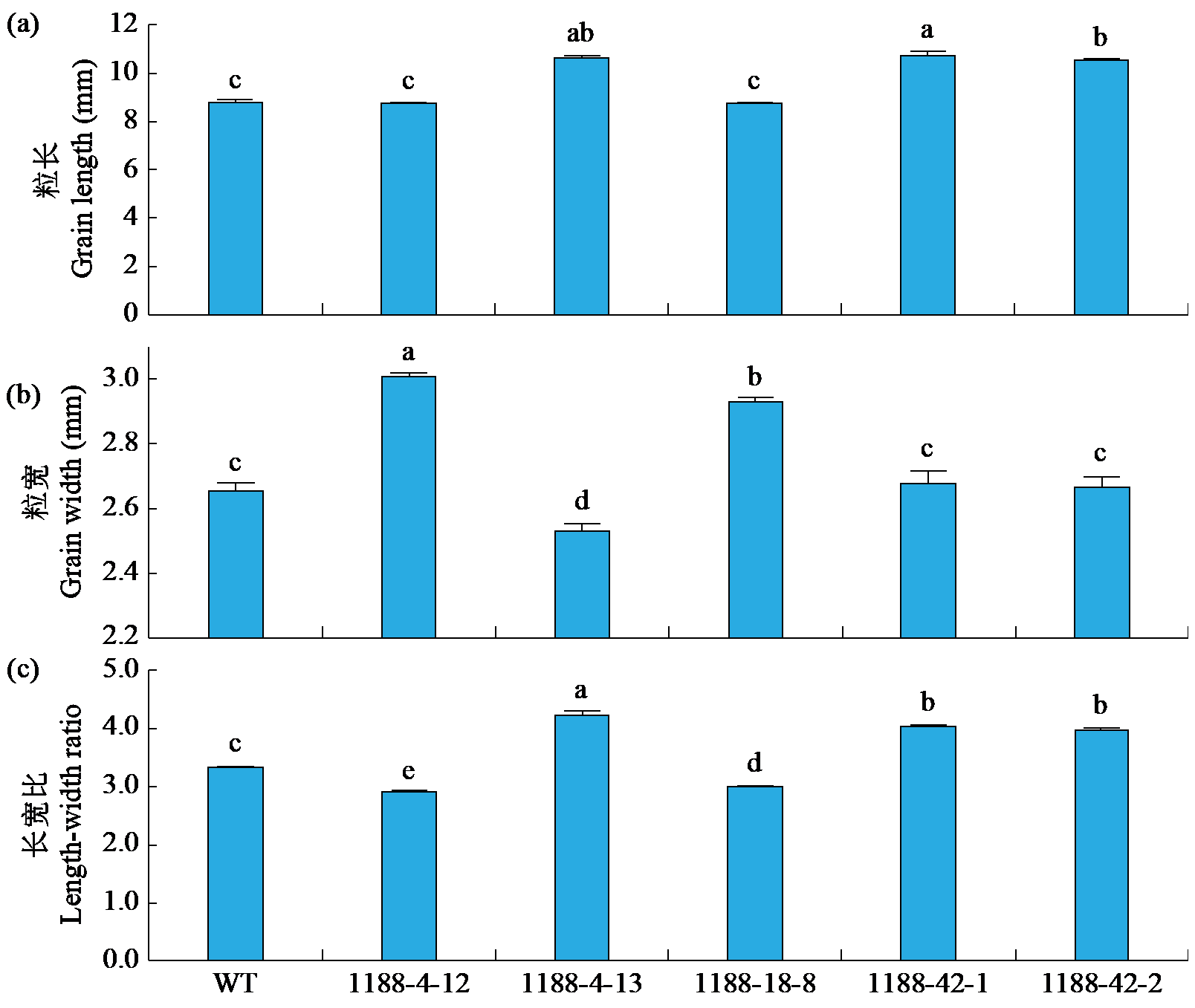
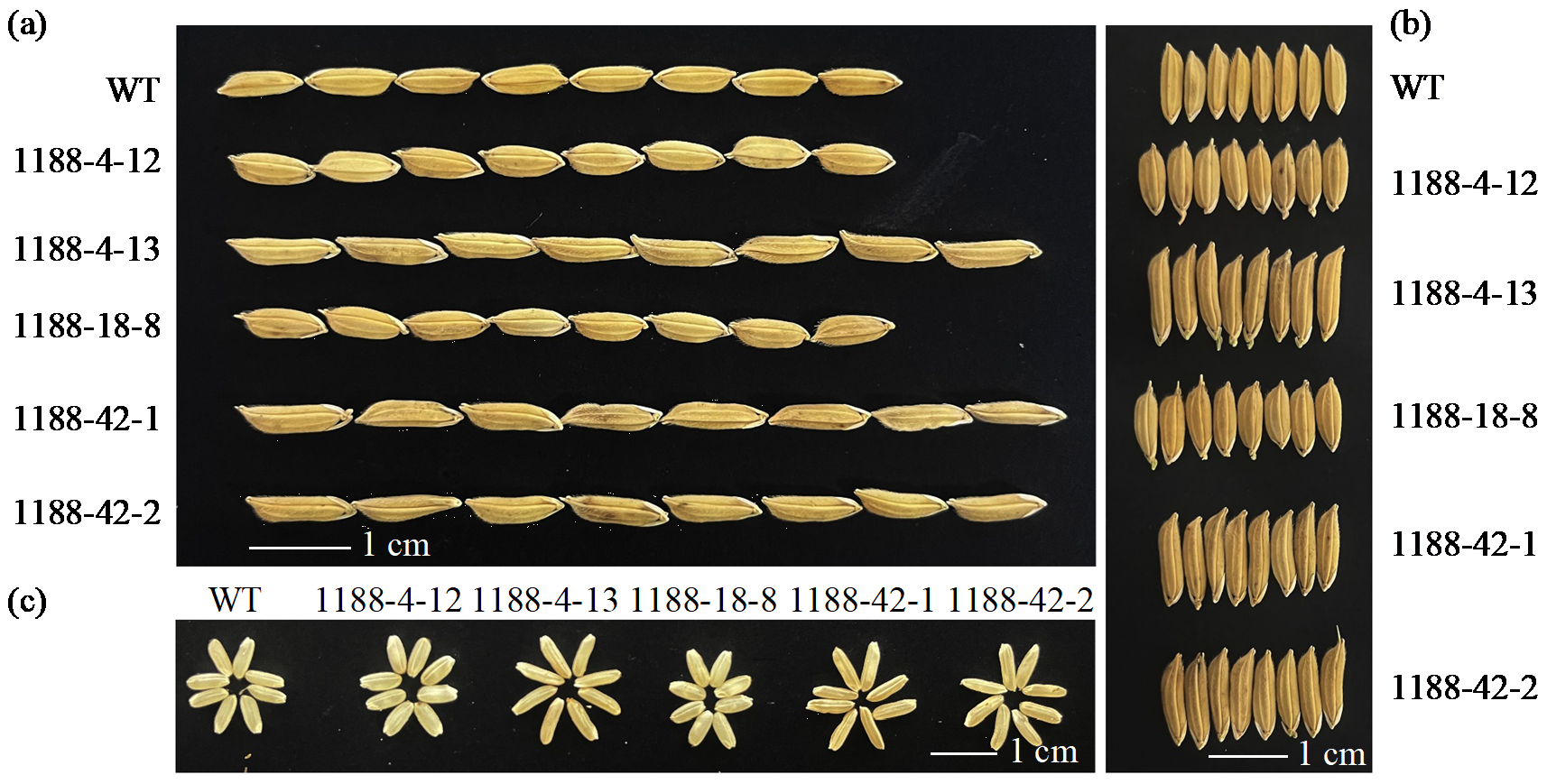
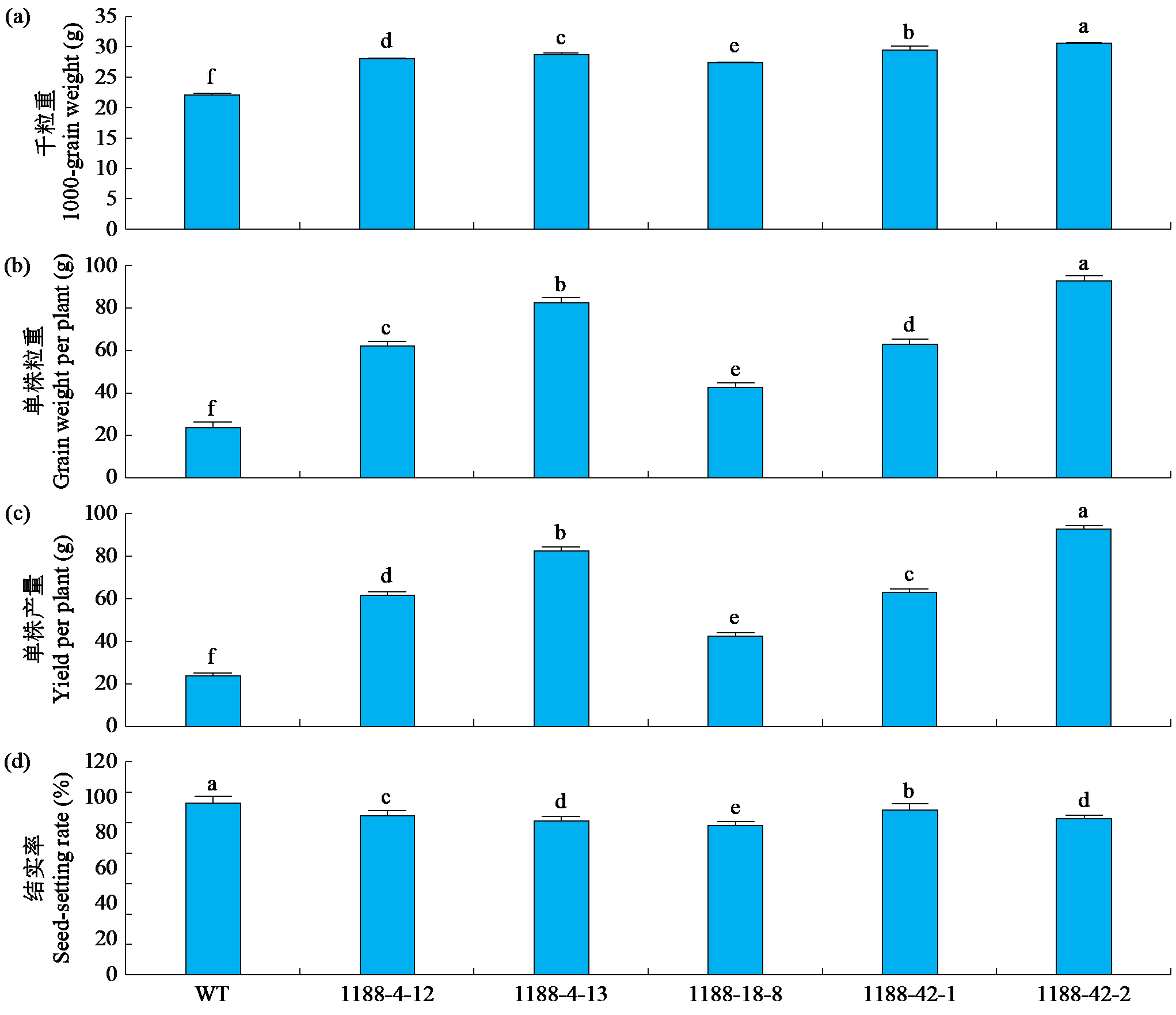
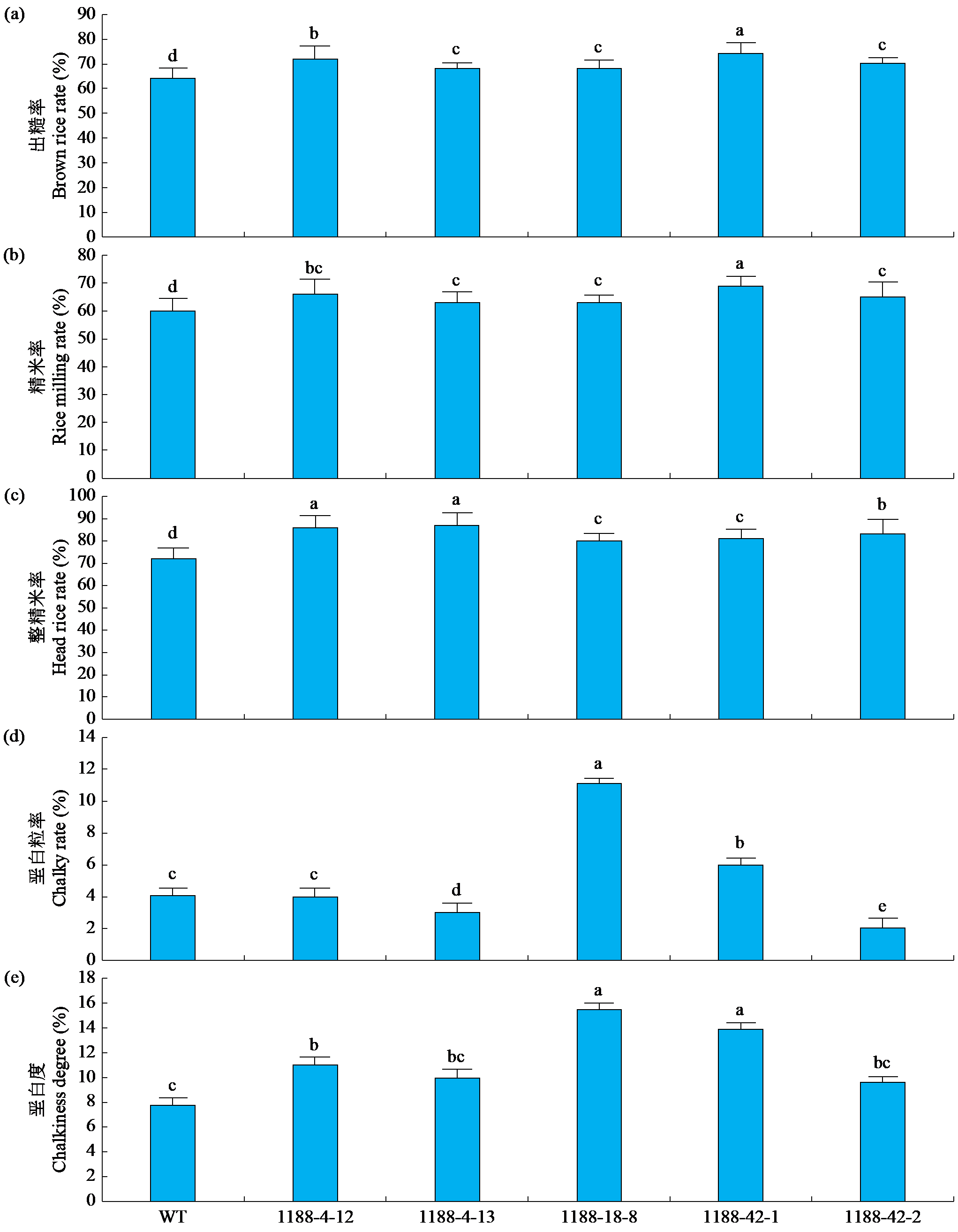
利用CRISPR/Cas9基因编辑技术同时对水稻品种锡贡6号的粒型相关基因GS3、GS9和GW2进行编辑,通过多基因编辑策略改良水稻粒型,分别在这3个基因的第一外显子设计敲除靶点,并构建CRISPR/Cas9表达载体,通过农杆菌介导的遗传转化获得T0代转基因植株。结果表明,T0代植株中出现了多种基因编辑类型,包括双等位基因纯合突变和双杂合突变。通过自交获得T1代植株,并筛选出不含外源转基因成分且GS3、GS9和GW2基因均发生与T0代一致突变的突变体材料。对T1代突变体的农艺性状分析表明,突变体1188-42-1的粒长最高增加了21.62%,1188-4-12的粒宽最高增加了13.16%,1188-4-13的籽粒长宽比最高增加了26.65%。同时,各突变体的千粒重、单株粒重、单株产量、出糙率、精米率、整精米率和垩白度均显著提高,但各突变体的结实率均有轻微降低,降幅为4.12%~13.40%。另外,1188-18-8的垩白粒率最高,增加了175.00%,而1188-42-2的垩白粒率最低,降低了50.50%。







| [15] |
Barrangou R, Fremaux C, Horvath P, et al. CRISPR provides acquired resistance against viruses in prokaryotes. Science, 2007, 315(5819):1709-1712.
doi: 10.1126/science.1138140 pmid: 17379808 |
| [16] | 梁楚炎, 巫明明, 黄凤明, 等. 基因编辑及全基因组选择技术在水稻育种中的应用展望. 中国水稻科学, 2024, 38(1):1-12. |
| [17] | 李海燕. 玉米基因编辑技术在抗性育种中的应用. 种子科技, 2025, 43(5):111-113. |
| [18] | 黎华, 李冬秀, 林秀芳, 等. 在籼稻中突变GS9同时影响粒型和株型. 分子植物育种. (2024-09-14) [2025-09-17]. https://link.cnki.net/urlid/46.1068.S.20240914.1422.002. |
| [19] |
Hua K, Zhang J, Zhu J K, et al. Perspectives on the application of genome-editing technologies in crop breeding. Molecular Plant, 2019, 12(8):1047-1059.
doi: S1674-2052(19)30230-8 pmid: 31260812 |
| [20] | Huang Y, Bai X F, Cheng N N, et al. Wide Grain 7 increases grain width by enhancing H3K4me3 enrichment in the OsMADS1 promoter in rice (Oryza sativa L.). The Plant Journal, 2020,102:517-528. |
| [21] |
Tan W C, Miao J, Xu B, et al. Rapid production of novel beneficial alleles for improving rice appearance quality by targeting a regulatory element of SLG7. Plant Biotechnology Journal, 2023, 21(7):1305-1307.
doi: 10.1111/pbi.v21.7 |
| [22] |
Zhu X Y, Gou Y J, Heng Y Q, et al. Targeted manipulation of grain shape genes effectively improves outcrossing rate and hybrid seed production in rice. Plant Biotechnology Journal, 2023, 21(2):381-39.
doi: 10.1111/pbi.v21.2 |
| [23] |
Tu B, Tao Z, Wang S G, et al. Loss of Gn1a/OsCKX2 confers heavy-panicle rice with excellent lodging resistance. Journal of Integrative Plant Biology, 2022, 64(1):23-38.
doi: 10.1111/jipb.v64.1 |
| [24] | Rong C Y, Liu Y X, Chang Z Y, et al. Cytokinin oxidase/ dehydrogenase family genes exhibit functional divergence and overlap in rice growth and development, especially in control of tillering. Journal of Experimental Botany, 2022,73:3552-3568. |
| [25] |
Wang C G, Wang G K, Gao Y, et al. A cytokinin-activation enzyme-like gene improves grain yield under various field conditions in rice. Plant Molecular Biology, 2020, 102(4/5):373-388.
doi: 10.1007/s11103-019-00952-5 |
| [1] | FAO. Cereal supply and demand brief database. Rome: Food and Agriculture Organization of the United Nations. (2025-03-06) [2025-04-17]. https://www.fao.org/worldfoodsituation/csdb/en/. |
| [2] | 康云海, 方玉, 李潜龙, 等. 水稻粒型基因研究进展及其育种应用. 杂交水稻, 2022, 37(3):7-10. |
| [26] |
Huang J, Gao L J, Luo S M, et al. The genetic editing of GS3 via CRISPR/Cas 9 accelerates the breeding of three-line hybrid rice with superior yield and grain quality. Molecular Breeding, 2022, 42(4):22.
doi: 10.1007/s11032-022-01290-z |
| [27] |
沈兰, 李健, 付亚萍, 等. 利用CRISPR/Cas9系统定向改良水稻粒长和穗粒数性状. 中国水稻科学, 2017, 31(3):223-231.
doi: 10.16819/j.1001-7216.2017.7029 223 |
| [3] |
Fan C C, Xing Y Z, Mao H L, et al. GS3, a major QTL for grain length and weight and minor QTL for grain width and thickness in rice,encodes a putative transmembrane protein. Theoretical and Applied Genetics, 2006, 112(6):1164-1171.
doi: 10.1007/s00122-006-0218-1 |
| [4] | Qi P, Lin Y S, Lin H X, et al. The novel quantitative trait locus GL3.1 controls rice grain size and yield by regulating Cyclin-T1; 3. Cell Research, 2012, 22(12):1666-1680. |
| [28] | 吴才军. 特色优质稻锡贡6号品种特征特性及高产栽培技术. 农技服务, 2011, 28(8):1107,1109. |
| [29] | 国家水稻数据中心. 水稻品种信息. [2025-04-17]. https://www.ricedata.cn/variety/varis/606804.htm. |
| [5] |
Wu W G, Liu X Y, Wang M H, et al. A single-nucleotide polymorphism causes smaller grain size and loss of seed shattering during African rice domestication. Nature Plants, 2017, 3(6):17064.
doi: 10.1038/nplants.2017.64 |
| [6] |
Ishimaru K, Hirotsu N, Katoh E, et al. Loss of function of the IAA-glucose hydrolase gene TGW6 enhances rice grain weight and increases yield. Nature Genetics, 2013, 45(6):707-711.
doi: 10.1038/ng.2612 pmid: 23583977 |
| [7] |
Song X J, Huang W, Lin H X, et al. A QTL for rice grain width and weight encodes a previously unknown RING-type E3 ubiquitin ligase. Nature Genetics, 2007, 39(5):623-630.
doi: 10.1038/ng2014 |
| [8] | Ruan B P, Shang L G, Zhang B, et al. Natural variation in the promoter of TGW2 determines grain width and weight in rice. New Phytologist, 2020,227:629-640. |
| [9] |
Gao Q S, Li G, Sun H, et al. Targeted mutagenesis of the rice FW 2.2-like gene family using the CRISPR/Cas 9 system reveals OsFWL4 as a regulator of tiller number and plant yield in rice. International Journal of Molecular Sciences, 2020, 21(3):809.
doi: 10.3390/ijms21030809 |
| [10] |
Liu J F, Chen J, Zheng X M, et al. GW5 acts in the brassinosteroid signalling pathway to regulate grain width and weight in rice. Nature Plants, 2017, 3(5):17043.
doi: 10.1038/nplants.2017.43 |
| [11] |
Wang S K, Li S, Liu Q, et al. The OsSPL16-GW7 regulatory module determines grain shape and simultaneously improves rice yield and grain quality. Nature Genetics, 2015, 47(8):949-954.
doi: 10.1038/ng.3352 |
| [12] |
Zhao D S, Li Q F, Liu Q Q, et al. GS9 acts as a transcriptional activator to regulate rice grain shape and appearance quality. Nature Communications, 2018, 9(1):1240.
doi: 10.1038/s41467-018-03616-y |
| [13] | Jinek M, Chylinski K, Fonfara I, et al. A programmable dual-RNA-guided DNA endonuclease in adaptive bacterial immunity. Science, 2012,337:816-821. |
| [14] | Gasiunas G, Barrangou R, Horvath P, et al. Cas9-crRNA ribonucleoprotein complex mediates specific DNA cleavage for adaptive immunity in bacteria. Proceedings of the National Academy of Sciences of the United States of America, 2012,109:2579-2586. |
| [30] |
Ma X, Zhang Q, Liu Y G, et al. A robust CRISPR/Cas 9 system for convenient, high-efficiency multiplex genome editing in monocot and dicot plants. Molecular Plant, 2015, 8(8):1274-1284.
doi: 10.1016/j.molp.2015.04.007 |
| [31] | 陈盈盈. 水稻RECQ4、FANCM、ZEP1和FIGNL1基因突变材料的创建及鉴定. 扬州:扬州大学, 2024. |
| [32] | 王学良, 王忠妮, 李祖军, 等. 香稻苟当3号香味成分与土壤养分相关性分析. 江苏农业科学, 2023, 51(7):168-173. |
| [33] |
Liu W Z, Xie X R, Liu Y G, et al. Dsdecode:A web-based tool for decoding of sequencing chromatograms for genotyping of targeted mutations. Molecular Plant, 2015, 8(9):1431-1433.
doi: 10.1016/j.molp.2015.05.009 |
| [34] |
Zeng D C, Liu T L, Ma X L, et al. Quantitative regulation of waxy expression by CRISPR/Cas9-based promoter and 5’UTR- intron editing improves grain quality in rice. Plant Biotechnology Journal, 2020, 18(12):2385-2387.
doi: 10.1111/pbi.v18.12 |
| [35] |
Hao J Q, Wang D K, Wu Y B, et al. The GW2-WG1-OsbZIP47 pathway controls grain size and weight in rice. Molecular Plant, 2021, 14(8):1266-1280.
doi: 10.1016/j.molp.2021.04.011 |
| [36] | Mao H L, Sun S Y, Yao J L, et al. Linking differential domain functions of the GS3 protein to natural variation of grain size in rice. Proceedings of the National Academy of Sciences of the United States of America, 2010, 107(45):19579-19584. |
| [37] |
韩政宏, 段宇轩, 徐善斌, 等. 利用CRISPR/Cas9技术敲除GS3和GS9基因改良水稻粒型性状. 华北农学报, 2022, 37 (2):9-17.
doi: 10.7668/hbnxb.20192762 |
| [38] | 孟帅, 徐鹏, 张迎信, 等. 利用CRISPR/Cas9技术编辑粒长基因GS3改善粳稻花时. 中国水稻科学, 2018, 32(2):119-127. |
| [39] | 赵春芳, 梁文化, 赫磊, 等. CRISPR/Cas9编辑GS3和qGL3基因创制大粒水稻新种质. 植物遗传资源学报, 2022, 23(6):1709-1717. |
| [40] | 颜静宛, 陈子强, 周淑芬, 等. 利用CRISPR/Cas9系统创制水稻品种GW2基因的突变体. 江苏农业科学, 2024, 52(3):73-78. |
| [41] |
徐善斌, 郑洪亮, 刘利锋, 等. 利用CRISPR/Cas9技术高效创制长粒香型水稻. 中国水稻科学, 2020, 34(5):406-412.
doi: 10.16819/j.1001-7216.2020.0104 |
| [1] | 殷佳, 张男, 孙茹梦, 汝艳, 景文疆, 张耗. 根系分泌物在水稻氮素吸收利用中的作用机制及氮肥调控研究进展[J]. 作物杂志, 2026, (4): 1–7 |
| [2] | 吴子帅, 黄秋要, 陈传华, 罗芳媚, 张世冠, 刘广林, 路一平, 罗群昌, 李虎. 施氮量和栽插密度对桂香99产量和稻米品质的影响[J]. 作物杂志, 2026, (4): 140–145 |
| [3] | 阮新民, 从夕汉, 杜弘杨, 岳伟, 施伏芝, 罗彦长, 王元垒, 罗志祥. 江淮稻作区氮肥用量对高产优质中籼稻产量、品质及氮肥利用效率的影响[J]. 作物杂志, 2026, (4): 146–154 |
| [4] | 王鑫琦, 车欣洋, 张海洋, 王旭, 李玉涵, 赵硕, 刘思贝, 王雪贺缘, 贺琳, 徐晶宇. 玉米二酰甘油激酶基因耐低温分析[J]. 作物杂志, 2026, (4): 27–35 |
| [5] | 黄新元, 张英, 陶迎梅, 江青山, 魏丕伟. 水稻OsDOG1-like基因家族突变体种子的萌发势及其GA敏感性的研究[J]. 作物杂志, 2026, (4): 36–45 |
| [6] | 吴钱蓉, 吴娴, 姜雪, 王倩, 宫彦龙, 王忠妮, 朱速松, 宋莉. 利用CRISPR/Cas9技术编辑Badh2基因改良水稻优质恢复系QR79的香味[J]. 作物杂志, 2026, (4): 57–66 |
| [7] | 郭威, 孙冬, 闫治霖, 丁蓓, 杜跃辰, 吴慧扬, 徐强, 窦志, 高辉. 灌浆结实期半深水灌溉对水稻产量、干物质转运及籽粒灌浆的影响[J]. 作物杂志, 2026, (3): 21–29 |
| [8] | 刘冬, 李君霞, 马梦娟, 张骐飞, 李明, 付景, 王越涛, 王付华, 尹海庆, 王亚. 淹水深度对水稻胚芽鞘伸长的影响及其生理机制[J]. 作物杂志, 2026, (3): 216–224 |
| [9] | 张清芮, 凌凤楼, 高子婷, 王玉, 苏庆旺, 韩笑. 不同叶施时期和锌肥种类对水稻产量和品质的影响[J]. 作物杂志, 2026, (3): 38–47 |
| [10] | 潘群肖, 龙超, 卓乐, 殷超, 肖敏, 周文新, 易镇邪. 施氮量与氮磷钾配比对小粒型杂交稻源库特性的影响[J]. 作物杂志, 2026, (2): 160–171 |
| [11] | 王金玲, 潘越, 李思宇, 沈炘垭, 刘立军. 枯草芽孢杆菌和哈茨木霉菌对水稻稻米品质的影响[J]. 作物杂志, 2026, (2): 202–208 |
| [12] | 陆楚盛, 赖嘉俊, 唐偲, 梁开明, 覃元钰, 钟旭华, 潘俊峰, 刘彦卓, 胡香玉, 胡锐, 李妹娟, 王昕钰, 尹媛红, 叶群欢, 沈宏, 傅友强. 铵、硝营养条件下不同酸碱度对水稻苗期生长和养分吸收的影响[J]. 作物杂志, 2026, (2): 90–97 |
| [13] | 孙茹梦, 张男, 殷佳, 汝艳, 景文疆, 张耗. 水稻根系分泌物对干旱胁迫的响应研究进展[J]. 作物杂志, 2026, (1): 1–8 |
| [14] | 刘晴, 孙露宏, 高世伟, 刘宇强, 常汇琳, 马成, 王婧泽, 王翠玲, 聂守军. 水稻叶片的生理性状和形态特征受铬胁迫的影响研究[J]. 作物杂志, 2026, (1): 143–151 |
| [15] | 闸雯俊, 李行润, 周发松, 冯芳, 吴边, 陈俊孝, 石少阶, 周雷, 王静, 游艾青. 水稻光温敏不育系19XS的选育及其特性分析[J]. 作物杂志, 2026, (1): 9–14 |
|
||