

作物杂志,2026, 第2期: 253–258 doi: 10.16035/j.issn.1001-7283.2026.02.032
藜麦种子丸粒化配方的筛选及效果验证
拜伟俊1( ), 黄杰2, 魏玉明2, 刘文瑜2, 柴继宽1, 杨发荣1,2(), 李小雨1
1甘肃农业大学草业学院, 730070, 甘肃兰州 2甘肃省农业科学院畜草与绿色农业研究所, 730070, 甘肃兰州
Screening and Efficacy Verification of Quinoa Seed Pelleting Formulations
Bai Weijun1(), Huang Jie2, Wei Yuming2, Liu Wenyu2, Chai Jikuan1, Yang Farong1,2(), Li Xiaoyu1
1College of Pratacultural Science ,Gansu Agricultural University Lanzhou 730070, Gansu, China 2Institute of Pasture and Green Agriculture ,Gansu Academy of Agricultural Sciences Lanzhou 730070, Gansu, China
摘要:
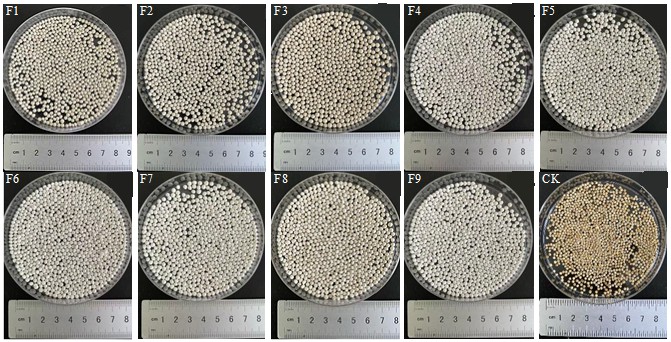
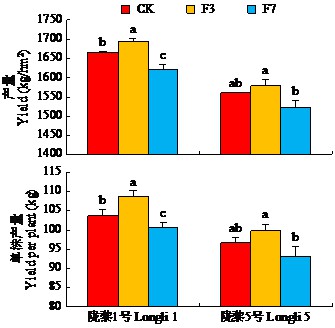
为改善藜麦播种质量,提升田间出苗率与保苗率,筛选最适用于藜麦的丸粒化包衣配方,以陇藜1号和陇藜5号为材料,采用不同填充料与不同添加量的粘合剂组成多种丸粒化配方,通过检测不同配方下藜麦丸粒化种子的丸粒化指标与发芽指标筛选出最优配方,并测定采用最优配方播种的藜麦在大田中的农艺性状与产量性状表现。结果表明,最优配方为填充料采用滑石粉80%和膨润土20%,并添加2.5%的羧甲基纤维素钠,其平均发芽率为91.33%,平均发芽势为86.00%,丸粒化种子理化性质最优(有籽率97.33%、单籽率95.00%、崩解率93.33%、抗压强度317.28 g和千粒重14.27 g)。大田生产试验表明,此配方对藜麦农艺性状无显著影响,但可促进藜麦萌发并提升产量。本研究筛选出的藜麦种子丸粒化配方各项指标合格,成分绿色安全,能使藜麦种子形状规则化,有效促进种子萌发与产量提升,可为藜麦种子丸粒化研究与应用以及机械化精量播种提供理论依据。

| [1] | 肖正春, 张广伦. 藜麦及其资源开发利用. 中国野生植物资源, 2014, 33(2):62-66. |
| [2] |
Zurita-Silva A, Fuentes F, Zamora P, et al. Breeding quinoa (Chenopodium quinoa Willd.): potential and perspectives. Molecular Breeding, 2014, 34(1):13-30.
doi: 10.1007/s11032-014-0023-5 |
| [3] | 任贵兴, 杨修仕, 么杨. 中国藜麦产业现状. 作物杂志, 2015(5):1-5. |
| [4] |
Li G T, Zhu F. Quinoa starch: Structure, properties, and applications. Carbohydrate Polymers, 2018, 181:851-861.
doi: S0144-8617(17)31354-1 pmid: 29254045 |
| [5] |
Angeli V, Silva P M, Massuela D C, et al. Quinoa (Chenopodium quinoa Willd.): An overview of the potentials of the “golden grain” and socio-economic and environmental aspects of its cultivation and marketization. Foods, 2020, 9(2):216-216.
doi: 10.3390/foods9020216 |
| [6] |
Micaela A D, Micaela P, Font G V D, et al. Fermentation of quinoa and wheat slurries by Lactobacillus plantarum CRL 778: proteolytic activity. Applied Microbiology and Biotechnology, 2013, 97(7):3129-3140.
doi: 10.1007/s00253-012-4520-3 |
| [7] |
Jancurová M, Minarovičová L, Dandár A, et al. Quinoa-a review. Czech Journal of Food Sciences, 2009, 27(2):71-79.
doi: 10.17221/32/2008-CJFS |
| [8] | 刘惠静, 王武台, 张烈, 等. 小粒蔬菜种子丸粒化研究及其应用前景. 天津农林科技, 2005(4):20-21. |
| [9] | 袁圆, 吴康云, 邢丹, 等. 适宜辣椒直播栽培的种子丸粒剂配方筛选研究. 耕作与栽培, 2021, 41(6):66-68. |
| [10] | 常瑛, 魏廷邦, 臧广鹏, 等. 种子丸粒化技术在小粒种子中的研究与应用. 中国种业, 2020(11):18-21. |
| [11] | 崔洪旭. 藜麦种子丸粒化包衣工艺参数优选与试验研究. 呼和浩特: 内蒙古农业大学, 2020. |
| [12] | Khampheng B, 沈镭, 钟帅, 等. 引发剂混合引发及包衣丸化对烟草种子萌发的影响. 江苏农业科学, 2020, 48(6):81-85. |
| [13] | 马学杰, 刘敏, 侯占峰, 等. 小粒牧草种子丸粒化包衣数值模拟与试验. 农业工程学报, 2023, 39(2):43-52. |
| [14] | 尚庆茂, 张伟丽. 葱蒜类蔬菜集约化育苗技术规程. 中国蔬菜, 2022(10):109-114. |
| [15] | 秦培友, 崔宏亮, 周帮伟. 藜麦种质资源描述规范和数据标准. 北京: 中国农业科学技术出版社, 2020. |
| [16] | 李安平, 李瑞祥, 张亚丽. 浅谈种子活力. 种子科技, 2009, 27(7):17-18. |
| [17] | 谢锦, 韩立朴. 我国种子丸粒化研究现状及展望. 中国生态农业学报, 2024, 32(4):605-615. |
| [18] | 姚东伟, 李明, 陈利明. 草种包衣技术研究与应用. 种子, 2010, 29(9):122-124. |
| [19] | 李睿, 黄文, 李卫军. 冰草种子丸粒化包衣配方的筛选. 现代农业科技, 2023(3):177-182. |
| [20] | 马英剑, 陈罗云, 臧吉强, 等. 大葱种子丸粒化及性能研究. 农药学学报, 2022, 24(5):1236-1247. |
| [21] | 崔红艳, 胡发龙, 方子森, 等. 丸粒化处理对胡麻种子萌发和幼苗生长的影响研究. 干旱地区农业研究, 2015, 33(2):26-31. |
| [22] | 王琼, 南楠, 陈红刚, 等. 唐古特大黄种子丸粒化配方筛选及质量评价. 中药材, 2024, 47(7):1625-1629 |
| [23] | 武高林, 杜国祯. 植物种子大小与幼苗生长策略研究进展. 应用生态学报, 2008, 19(1):191-197. |
| [24] | 王玉珍, 蔡丽平, 周垂帆, 等. 先锋植物类芦抗逆性及其应用. 草业科学, 2017, 34(8):1601-1610. |
| [25] | 陈红刚, 杜弢, 王晶, 等. 丸粒化处理对党参种子萌发及幼苗生长的影响. 中兽医医药杂志, 2017, 36(4):39-41. |
| [26] | 王文舒, 武志博, 刘宏义, 等. 花棒种子成苗降雨量及丸粒化技术研究. 安徽农业科学, 2022, 50(10):75-78. |
| [1] | 李文琦, 段雪妍, 胡一晨, 黄朝晖, 秦培友. 品种和采收期对藜麦芽苗菜总黄酮、总多酚及其抗氧化活性的影响[J]. 作物杂志, 2026, (2): 134–142 |
| [2] | 和桂青, 李兆光, 袁文珏, 和琼姬, 杨文高, 李燕, 王蕊, 叶磊, 侯志江. 藜麦生长发育特性及养分吸收分配动态变化规律研究[J]. 作物杂志, 2026, (2): 172–179 |
| [3] | 孙娟, 王新栋, 郄彦敏, 牛雪婧, 王丽娜, 耿立格. 引发处理对低发芽力小麦种子萌发和生理特性的影响[J]. 作物杂志, 2026, (2): 259–264 |
| [4] | 高艳梅, 冯鹏睿, 陈薇薇, 张萌, 张永清. 抗旱性藜麦幼苗对干旱胁迫的生理响应[J]. 作物杂志, 2026, (1): 182–188 |
| [5] | 杨文高, 袁文珏, 李兆光, 和桂青, 和琼姬, 王蕊, 李燕, 叶磊, 侯志江. 播期对滇西北冬播藜麦农艺性状和产量的影响[J]. 作物杂志, 2026, (1): 257–265 |
| [6] | 张业猛, 卢柯欣, 毛文钰, 张晓燕, 李文静, 杨修. 藜麦LEA基因家族鉴定及盐胁迫下的表达分析[J]. 作物杂志, 2025, (6): 100–111 |
| [7] | 李瑛, 赵永伟, 陈英, 马伟明, 李文珍, 张海杰. 化学诱变对胡麻“定亚23号”种子萌发和M1代主要农艺性状的影响[J]. 作物杂志, 2025, (5): 155–164 |
| [8] | 杜含梅, 谭露, 李声春, 王清海, 徐洲, 吴丹丹, 王安虎. 苦荞萌芽期镉耐受性及对幼苗生理特性的影响[J]. 作物杂志, 2025, (5): 209–220 |
| [9] | 闫晶蓉, 庞春花, 张永清, 毋悦悦, 侯钰晨, 王嘉祺, 乔曼. 脱硫石膏与腐植酸配施对盐碱地土壤及藜麦生长的影响[J]. 作物杂志, 2025, (5): 47–53 |
| [10] | 王兖薇, 武俊喜, 汪艳, 牟涛, 朗卓玛, 苗彦军. 盐碱胁迫对异株荨麻种子萌发的影响[J]. 作物杂志, 2025, (5): 67–73 |
| [11] | 李小雨, 黄杰, 杨钊, 柴继宽, 杨发荣, 魏玉明, 刘文瑜, 拜伟俊. 基于AHP法的观赏藜麦综合评价体系的建立与应用[J]. 作物杂志, 2025, (3): 70–77 |
| [12] | 张圣昌, 魏玉明, 马丽娜, 杨钊, 刘文瑜, 黄杰, 刘欢, 杨发荣. 种植密度和施肥对饲用型藜麦生长特性的影响[J]. 作物杂志, 2025, (2): 128–134 |
| [13] | 景茂雅, 张子玉, 张萌, 合佳敏, 严翻翻, 高艳梅, 张永清. 水杨酸浸种对盐胁迫藜麦种子萌发及幼苗生长的影响[J]. 作物杂志, 2025, (1): 194–201 |
| [14] | 赵海新, 徐令旗, 陈书强, 蔡永盛, 杜晓东, 杨丽敏, 黄晓群, 薛菁芳. 国内外种子丸粒化技术研究进展[J]. 作物杂志, 2024, (6): 18–25 |
| [15] | 鄂利锋, 徐金崇, 陈修斌, 权建华, 华军, 尹丽娟, 王舜奇, 赵文勤. 外源硅对盐胁迫下娃娃菜种子萌发及幼苗生理特性的影响[J]. 作物杂志, 2024, (6): 212–217 |
|
||