

作物杂志,2026, 第1期: 143–151 doi: 10.16035/j.issn.1001-7283.2026.01.018
水稻叶片的生理性状和形态特征受铬胁迫的影响研究
刘晴1( ), 孙露宏2, 高世伟1, 刘宇强1, 常汇琳1, 马成1, 王婧泽1, 王翠玲3, 聂守军1()
- 1黑龙江省农业科学院绥化分院,152000,黑龙江绥化
2农业农村部稻米及加工品质量与营养检验测试中心(桦川),154000,黑龙江佳木斯
3黑龙江省农业科学院农产品质量安全研究所,150000,黑龙江哈尔滨
Effects of Chromium Stress on Physiological Traits and Morphological Characteristics of Rice Leaves
Liu Qing1(), Sun Luhong2, Gao Shiwei1, Liu Yuqiang1, Chang Huilin1, Ma Cheng1, Wang Jingze1, Wang Cuiling3, Nie Shoujun1()
- 1Suihua Branch of Heilongjiang Academy of Agricultural Sciences, Suihua 152000, Heilongjiang, China
2Quality and Nutrition Inspection and Testing Centre for Rice and Processed Products (Huachuan), Ministry of Agriculture and Rural Affairs, Jiamusi 154000, Heilongjiang, China
3Quality and Safety Institute of Agricultural Products, Heilongjiang Academy of Agricultural Sciences, Harbin 150000, Heilongjiang, China
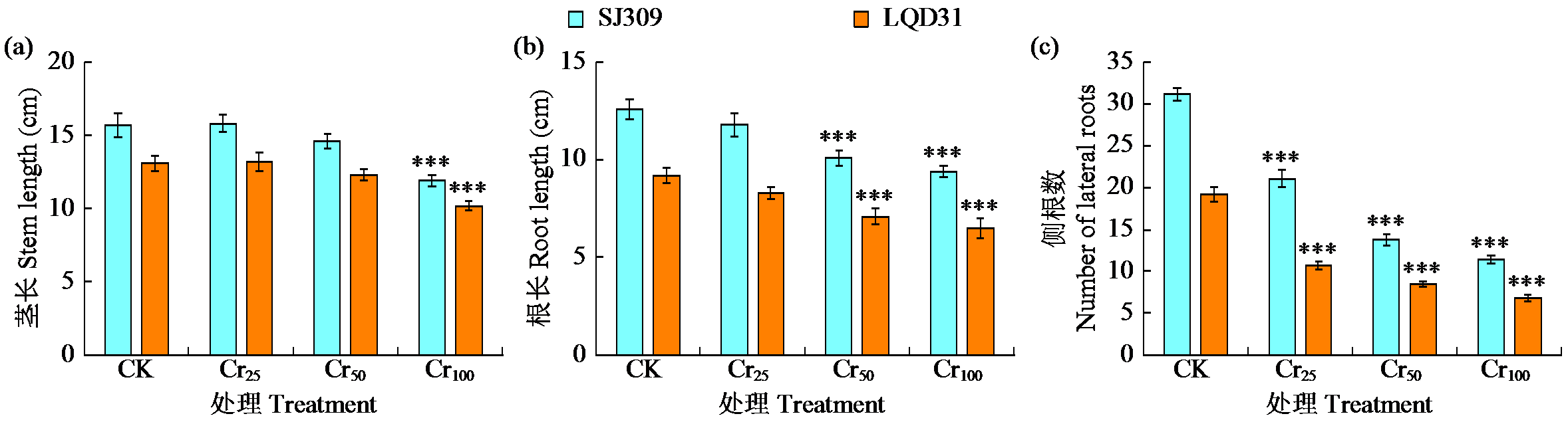
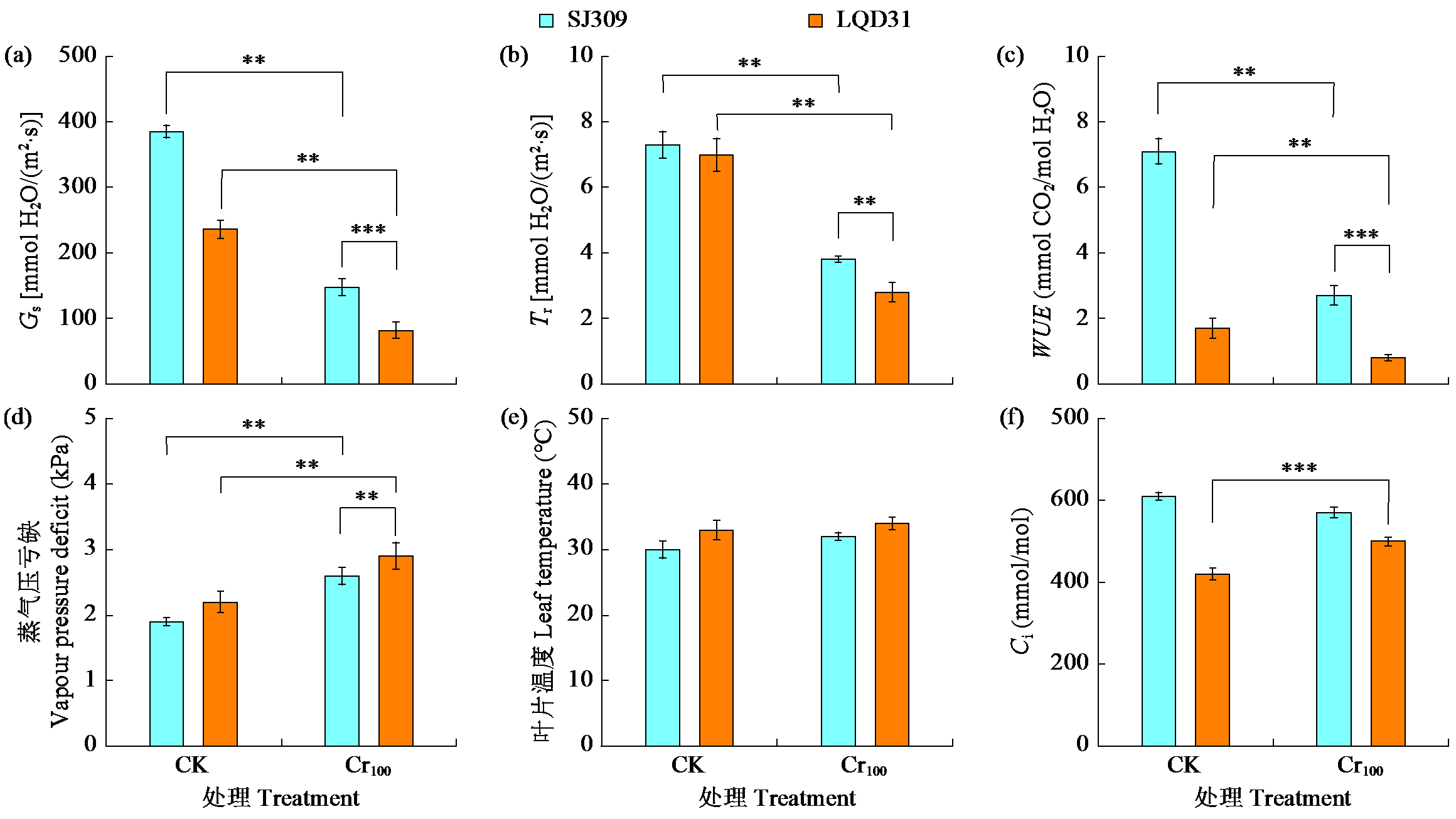
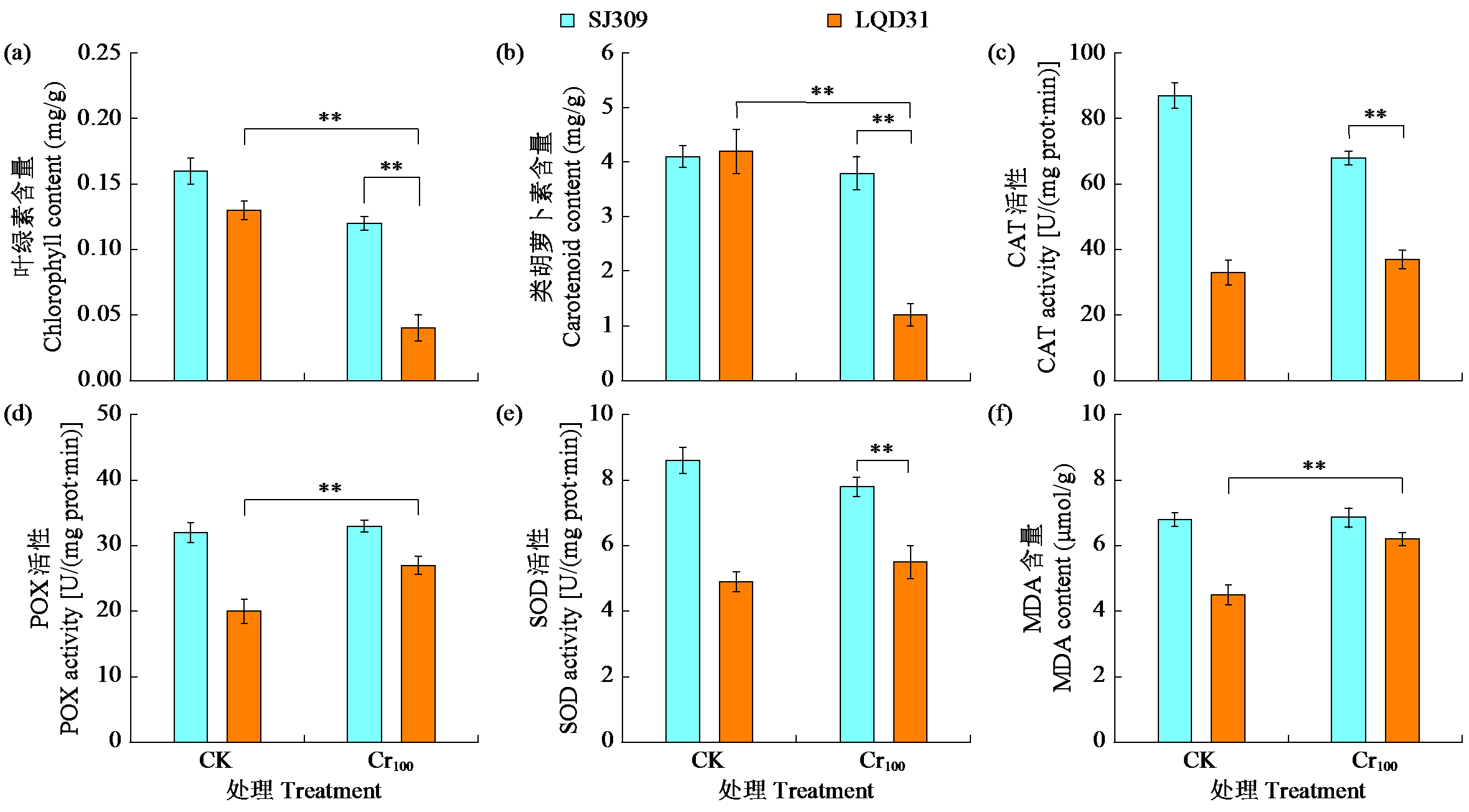
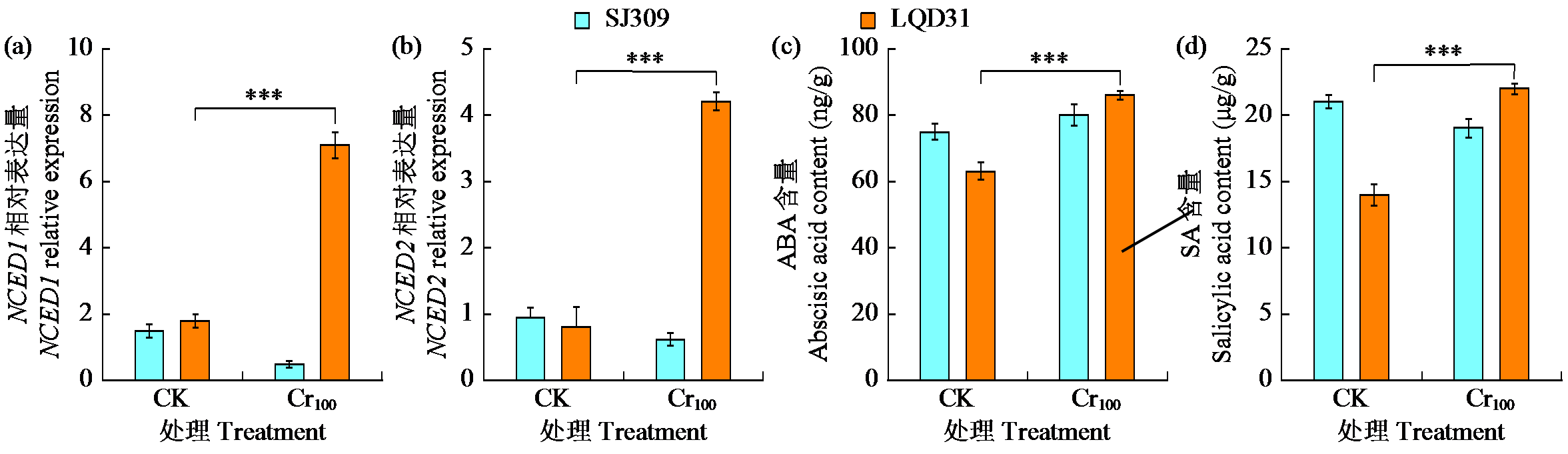
摘要: 以绥粳309(SJ309)和龙庆稻31(LQD31)2个水稻品种为材料,探究铬胁迫对水稻叶片生理性状与形态特征的影响。结果表明,铬主要在水稻根部富集,且SJ309比LQD31更有效地减少了铬的吸收与转移。在高浓度铬胁迫(100 μmol/L)下,2个品种的气孔导度、蒸腾速率、水分利用率及光合色素等生理特性均下降,叶片蒸气压亏缺、胞间CO?浓度和丙二醛含量则升高。经铬胁迫处理,仅LQD31的气孔保卫细胞气孔面积增大、孔径闭合,而SJ309无明显变化。与SJ309相比,LQD31的脱落酸和水杨酸含量显著增加,导致参与气孔孔径调节的NCED1和NCED2基因过度表达,表明LQD31对铬胁迫更为敏感。此外,铬胁迫使SJ309的非腺毛状体密度和长度显著增加,表明其能抵御紫外线损伤及多种环境胁迫。综上,水稻SJ309对铬胁迫耐受性更佳,其超积累特性可用于铬污染土壤的植物修复。






| [1] | Chidambaram A, Sundaramoorthy P, Murugan A, et al. Chromium induced cytotoxicity in blackgram (Vigna mungo L.). Journal of Environmental Health Science & Engineering, 2009, 6(1):17-22. |
| [2] | Reale L, Ferranti F, Mantilacci S, et al. Cyto-histological and morpho-physiological responses of common duckweed (Lemna minor L.) to chromium. Chemosphere, 2016,145:98-105. |
| [3] |
Ali S, Mir R A, Tyagi A, et al. Chromium toxicity in plants: signaling, mitigation, and future perspectives. Plants, 2023, 12(7):1502.
doi: 10.3390/plants12071502 |
| [4] | Singh D, Sharma N L, Singh C K, et al. Effect of chromium (VI) toxicity on morpho-physiological characteristics, yield, and yield components of two chickpea (Cicer arietinum L.) varieties. PLoS ONE, 2020, 15(12):e0243032. |
| [5] |
Eleftheriou E P, Adamakis I D S, Panteris E, et al. Chromium- induced ultrastructural changes and oxidative stress in roots of Arabidopsis thaliana. International Journal of Molecular Sciences, 2015, 16(7):15852-15871.
doi: 10.3390/ijms160715852 |
| [6] | Gill R A, Ali B, Islam F, et al. Physiological and molecular analyses of black and yellow seeded Brassica napus regulated by 5-aminolivulinic acid under chromium stress. Plant Physiology and Biochemistry, 2015,94:130-143. |
| [7] | Samrana S, Ali A, Muhammad U, et al. Physiological, ultrastructural, biochemical, and molecular responses of glandless cotton to hexavalent chromium (Cr6+) exposure. Environmental Pollution, 2020,266:115394. |
| [8] | Daud M K, Ali S, Variath M T, et al. Chromium (VI)-induced leaf-based differential physiological, metabolic and microstructural changes in two transgenic cotton cultivars (J208,Z905) and their hybrid line (ZD14). Journal of Plant Growth Regulation, 2022,41:391-403. |
| [9] | Ma J, Lv C F, Xu M L, et al. Photosynthesis performance, antioxidant enzymes, and ultrastructural analyses of rice seedlings under chromium stress. Environmental Science and Pollution Research, 2016,23:1768-1778. |
| [10] |
Basit F, Chen M, Ahmed T, et al. Seed priming with brassinosteroids alleviates chromium stress in rice cultivars via improving ROS metabolism and antioxidant defense response at biochemical and molecular levels. Antioxidants, 2021, 10(7):1089.
doi: 10.3390/antiox10071089 |
| [11] |
Panda S K, Choudhury S. Chromium stress in plants. Brazilian Journal of Plant Physiology, 2005, 17(1):95-102.
doi: 10.1590/S1677-04202005000100008 |
| [12] | Rucińska-Sobkowiak R. Water relations in plants subjected to heavy metal stresses. Acta Physiologiae Plantarum, 2016,38:1-13. |
| [13] |
Vernay P, Gauthier-Moussard C, Hitmi A. Interaction of bioaccumulation of heavy metal chromium with water relation, mineral nutrition and photosynthesis in developed leaves of Lolium perenne L. Chemosphere, 2007, 68(8):1563-1575.
doi: 10.1016/j.chemosphere.2007.02.052 |
| [14] | Daszkowska-Golec A, Szarejko I. Open or close the gate-stomata action under the control of phytohormones in drought stress conditions. Frontiers in Plant Science, 2013,4:138. |
| [15] |
Prodhan M Y, Munemasa S, Nahar M N E N, et al. Guard cell salicylic acid signaling is integrated into abscisic acid signaling via the Ca2+/CPK-dependent pathway. Plant Physiology, 2018, 178(1):441-450.
doi: 10.1104/pp.18.00321 pmid: 30037808 |
| [16] |
Lee S C, Luan S. ABA signal transduction at the crossroad of biotic and abiotic stress responses. Plant,Cell & Environment, 2012, 35(1):53-60.
doi: 10.1111/pce.2012.35.issue-1 |
| [17] | Gupta P, Bhatnagar A K. Spatial distribution of arsenic in different leaf tissues and its effect on structure and development of stomata and trichomes in mung bean, Vigna radiata (L.) Wilczek. Environmental and Experimental Botany, 2015,109:12-22. |
| [18] | 马宪梅, 黄晓飞. 土壤铬污染现状及修复方法研究. 北方环境, 2020, 32(5):61-63. |
| [19] | 王元元, 谷子寒, 陈平平, 等. 镉污染稻田玉米对水稻的季节性替代种植可行性研究. 作物杂志, 2022(4):187-192. |
| [20] | 李虎, 吴子帅, 刘广林, 等. 不同栽培条件对水稻籽粒镉含量及主要性状的影响研究. 作物杂志, 2024(4):203-208. |
| [21] | Ochoa M, Tierra W, Tupuna-Yerovi D S, et al. Assessment of cadmium and lead contamination in rice farming soils and rice (Oryza sativa L.) from Guayas province in Ecuador. Environmental Pollution, 2020,260:114050. |
| [22] | Geider R J, Osborne B A. Algal Photosynthesis. Boston:Springer,1992. |
| [23] |
Larkindale J, Huang B R. Thermotolerance and antioxidant systems in Agrostis stolonifera: involvement of salicylic acid, abscisic acid, calcium, hydrogen peroxide, and ethylene. Journal of Plant Physiology, 2004, 161(4):405-413.
pmid: 15128028 |
| [24] | Saha B, Mishra S, Awasthi J P, et al. Enhanced drought and salinity tolerance in transgenic mustard [Brassica juncea (L.) Czern & Coss.] overexpressing Arabidopsis group 4 late embryogenesis abundant gene (AtLEA4-1). Environmental and Experimental Botany, 2016,128:99-111. |
| [25] | Kumar A, Panigrahy M, Panigrahi K C. Optimization of soil parameters and cost effective way of growing Arabidopsis thaliana from an Indian perspective. International Journal of Basic and Applied Agricultural Research, 2018, 16(1):54-59. |
| [26] |
Vadassery J, Reichelt M, Hause B, et al. CML42-mediated calcium signaling coordinates responses to Spodoptera herbivory and abiotic stresses in Arabidopsis. Plant Physiology, 2012, 159 (3):1159-1175.
doi: 10.1104/pp.112.198150 |
| [27] | Singh S, Parihar P, Singh R, et al. Heavy metal tolerance in plants: role of transcriptomics, proteomics, metabolomics, and ionomics. Frontiers in Plant Science, 2016,6:165395. |
| [28] |
Shanker A K, Djanaguiraman M, Sudhagar R, et al. Differential antioxidative response of ascorbate glutathione pathway enzymes and metabolites to chromium speciation stress in green gram (Vigna radiata (L.) R. Wilczek. cv CO 4) roots. Plant Science, 2004, 166(4):1035-1043.
doi: 10.1016/j.plantsci.2003.12.015 |
| [29] |
Feleafel M N, Mirdad Z M. Hazard and effects of pollution by lead on vegetable crops. Journal of Agricultural and Environmental Ethics, 2013, 26(3):547-567.
doi: 10.1007/s10806-012-9403-1 |
| [30] |
Jabeen N, Abbas Z, Iqbal M, et al. Glycinebetaine mediates chromium tolerance in mung bean through lowering of Cr uptake and improved antioxidant system. Archives of Agronomy and Soil Science, 2016, 62(5):648-662.
doi: 10.1080/03650340.2015.1082032 |
| [31] | Atta M I, Bokhari T Z, Malik S A, et al. Assessing some emerging effects of hexavalent chromium on leaf physiological performance in sunflower (Helianthus annuus L.). International Journal of Scientific & Engineering Research, 2013, 4(8):945-949. |
| [32] |
Chandra R, Kang H. Mixed heavy metal stress on photosynthesis, transpiration rate, and chlorophyll content in poplar hybrids. Forest Science and Technology, 2016, 12(2):55-61.
doi: 10.1080/21580103.2015.1044024 |
| [33] |
Chen Y T, Li W L, Turner J A, et al. PECTATE LYASE LIKE 12 patterns the guard cell wall to coordinate turgor pressure and wall mechanics for proper stomatal function in Arabidopsis. The Plant Cell, 2021, 33(9):3134-3150.
doi: 10.1093/plcell/koab161 |
| [34] |
Gautam V, Kohli S K, Kapoor D, et al. Stress protective effect of Rhododendron arboreum leaves (MEL) on chromium-treated Vigna radiata plants. Journal of Plant Growth Regulation, 2021, 40(1):423-435.
doi: 10.1007/s00344-020-10111-6 |
| [35] |
Khetnon P, Busarakam K, Sukhaket W, et al. Mechanisms of trichomes and terpene compounds in indigenous and commercial Thai rice varieties against brown planthopper. Insects, 2022, 13 (5):427.
doi: 10.3390/insects13050427 |
| [36] |
Tang S, Liu Y L, Zheng N, et al. Temporal variation in nutrient requirements of tea (Camellia sinensis) in China based on QUEFTS analysis. Scientific Reports, 2020, 10(1):1745.
doi: 10.1038/s41598-020-57809-x pmid: 32019970 |
| [37] | Zaheer I E, Ali S, Saleem M H, et al. Role of iron-lysine on morpho-physiological traits and combating chromium toxicity in rapeseed (Brassica napus L.) plants irrigated with different levels of tannery wastewater. Plant Physiology and Biochemistry, 2020,155:70-84. |
| [38] | Gavassi M A, Silva G S, da Silva C M S, et al. NCED expression is related to increased ABA biosynthesis and stomatal closure under aluminum stress. Environmental and Experimental Botany, 2021,185:104404. |
| [39] |
Speirs J, Binney A, Collins M, et al. Expression of ABA synthesis and metabolism genes under different irrigation strategies and atmospheric VPDs is associated with stomatal conductance in grapevine (Vitis vinifera L. cv Cabernet Sauvignon). Journal of Experimental Botany, 2013, 64(7):1907-1916.
doi: 10.1093/jxb/ert052 pmid: 23630325 |
| [40] |
Zeng W, Melotto M, He S Y. Plant stomata: a checkpoint of host immunity and pathogen virulence. Current Opinion in Biotechnology, 2010, 21(5):599-603.
doi: 10.1016/j.copbio.2010.05.006 pmid: 20573499 |
| [41] | Elango D, Devi K D, Jeyabalakrishnan H K, et al. Agronomic, breeding, and biotechnological interventions to mitigate heavy metal toxicity problems in agriculture. Journal of Agriculture and Food Research, 2022,10:100374. |
| [1] | 孙茹梦, 张男, 殷佳, 汝艳, 景文疆, 张耗. 水稻根系分泌物对干旱胁迫的响应研究进展[J]. 作物杂志, 2026, (1): 1–8 |
| [2] | 高艳梅, 冯鹏睿, 陈薇薇, 张萌, 张永清. 抗旱性藜麦幼苗对干旱胁迫的生理响应[J]. 作物杂志, 2026, (1): 182–188 |
| [3] | 王德权, 刘中庆, 赵清海, 赵洪军, 孙刚, 王毅, 孙延国, 石屹, 姜滨, 吴开成. 基于不同温光尺度的烟草叶片发生模拟模型的建立与验证[J]. 作物杂志, 2026, (1): 231–239 |
| [4] | 闸雯俊, 李行润, 周发松, 冯芳, 吴边, 陈俊孝, 石少阶, 周雷, 王静, 游艾青. 水稻光温敏不育系19XS的选育及其特性分析[J]. 作物杂志, 2026, (1): 9–14 |
| [5] | 陈雷, 唐茂艳, 张战营, 钟晓媛, 高国庆, 张晓丽, 梁天锋, 潘英华. 花期高温胁迫下水稻种质资源的外观品质分析与评价[J]. 作物杂志, 2025, (6): 132–139 |
| [6] | 孙强, 阮辛森, 周志豪, 孙会娟, 徐冉, 凌冬, 赵翠荣. 不同类型水稻品种表型性状遗传多样性分析[J]. 作物杂志, 2025, (6): 28–36 |
| [7] | 滕文, 叶凡, 周舟, 王屿乐, 刘立军. 小麦和油菜秸秆还田处理对盐胁迫下水稻产量和品质的影响[J]. 作物杂志, 2025, (5): 11–18 |
| [8] | 植藓闳, 纪子贤, 许镇旺, 谭恩, 梁日深, 马帅鹏, 唐辉武. 水稻CYP450家族基因Os78A5的表达分析[J]. 作物杂志, 2025, (5): 135–141 |
| [9] | 彭彬峰, 陆楚盛, 尹媛红, 朱菲菲, 叶群欢, 潘俊峰, 刘彦卓, 胡香玉, 胡锐, 李妹娟, 王昕钰, 梁开明, 傅友强. 高温胁迫下铵硝混配营养促进水稻生长的生理机制[J]. 作物杂志, 2025, (5): 165–170 |
| [10] | 杜含梅, 谭露, 李声春, 王清海, 徐洲, 吴丹丹, 王安虎. 苦荞萌芽期镉耐受性及对幼苗生理特性的影响[J]. 作物杂志, 2025, (5): 209–220 |
| [11] | 都晗萌, 陈雨琼, 刘若彤, 陈英龙, 戴其根, 张洪程, 廖萍. 盐胁迫下喷施矮壮素和施用石膏对水稻产量及倒伏特性的影响[J]. 作物杂志, 2025, (5): 29–34 |
| [12] | 杨林生, 习敏, 涂德宝, 李忠, 周永进, 许有尊, 孙雪原, 吴文革. 长江三角洲地区主要类型水稻生产资源投入及碳、氮足迹评估[J]. 作物杂志, 2025, (4): 150–156 |
| [13] | 陶祖豪, 王慰亲, 郑华斌, 向军, 唐启源. 水肥及化控对晚稻有序机抛秧秧苗素质的影响[J]. 作物杂志, 2025, (4): 224–230 |
| [14] | 赫兵, 王晓航, 李超, 罗立强, 张强, 韩康顺, 陈殿元, 严光彬, 刘振蛟. 1987-2022年吉林省水稻审定品种数据分析[J]. 作物杂志, 2025, (3): 16–22 |
| [15] | 曹正男, 赵振东, 胡博, 于涵, 宁晓海, 赵泽强, 曹立勇. 氮肥与促腐菌肥配施对寒地水稻秸秆还田腐解效果及产量的影响[J]. 作物杂志, 2025, (3): 172–177 |
|
||